19 Classy Haircuts 2027 for Thick Hair with Face-Framing Layers
Classy Haircuts 2027 for Thick Hair featuring collarbone lobs with face-framing layers and shoulder-length styles with side parts.


Thick hair has a reputation for being a lot, but the right cut turns that bulk into something you can actually wear. The shift right now is toward soft face-framing layers and curtain bangs that move with your natural texture instead of fighting it.
These 19 Classy Haircuts for Thick Hair cover everything from collarbone lobs to ear-length crops, so you can find the shape that works with your density and your morning schedule. Whether your hair is straight, wavy, or curly, each cut is built to remove weight, add movement, and keep you out of the styling rut where thick hair either poofs or falls flat.
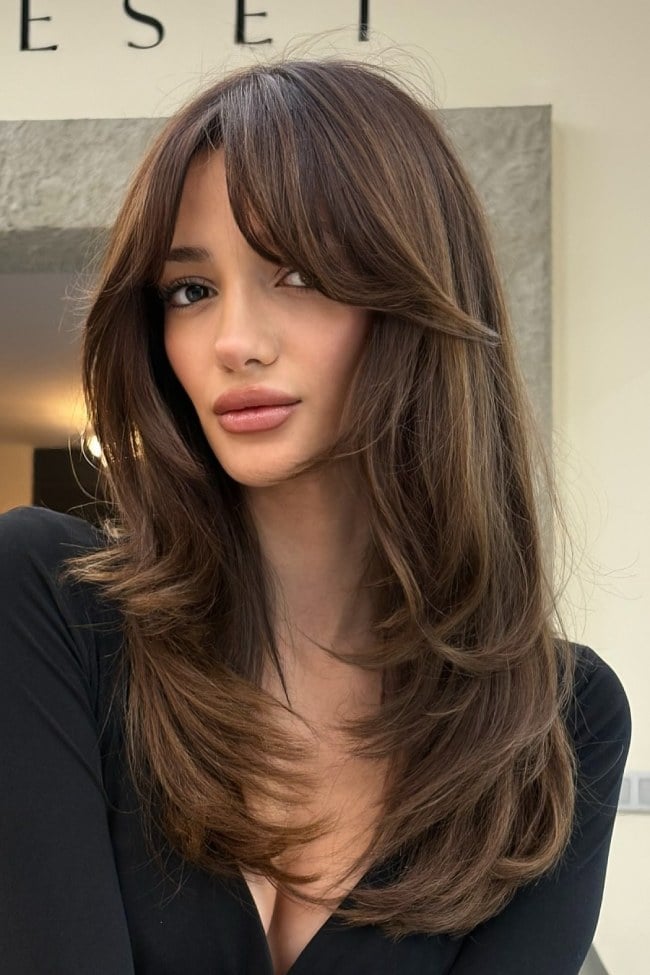
Collarbone Lob With Soft Face-Framing Layers
This lob lands right at the collarbone, with soft face-framing layers and curtain bangs that break up the weight of thick, straight hair. The middle part and those lighter pieces around the jaw make it a natural fit for oval and heart-shaped faces. Ask your stylist for: collarbone lob with soft face-framing layers and curtain bangs. A round brush and a blow-dryer are your tools here, directing the bangs to the sides. Plan on a trim every six to eight weeks to keep the shape crisp and the ends blunt.
Shoulder Length Layers With Side Part

Wondering how to get those curtain bangs to actually behave with thick, wavy hair? This shoulder-length cut uses soft face-framing layers and a side part to distribute volume without the dreaded triangle shape. Ask your stylist for: shoulder length cut with soft face-framing layers and curtain bangs, side part.
The side part adds lift at the root, which helps balance a longer face shape. Style it with a large-barrel curling iron for gentle waves, or braid damp hair overnight. Layers will need a refresh every eight to ten weeks to keep the movement going.
Mid-Back Layered Shag With Curtain Bangs

A layered shag at mid-back length uses long curtain bangs and plenty of internal layers to prevent thick, wavy hair from feeling heavy. The subtle balayage adds depth without a harsh grow-out line. Ask your stylist for: mid-back layered shag with long curtain bangs.
Daily styling is straightforward: a sea salt spray on damp hair, then air dry or diffuse. The balayage will need a toning appointment every three to four months, but the cut itself is low-maintenance between trims. A quick list of styling steps: apply a texturizing spray to damp hair, scrunch upward, and let it dry. That is it.
Collarbone Layers With Sweeping Curtain Bangs
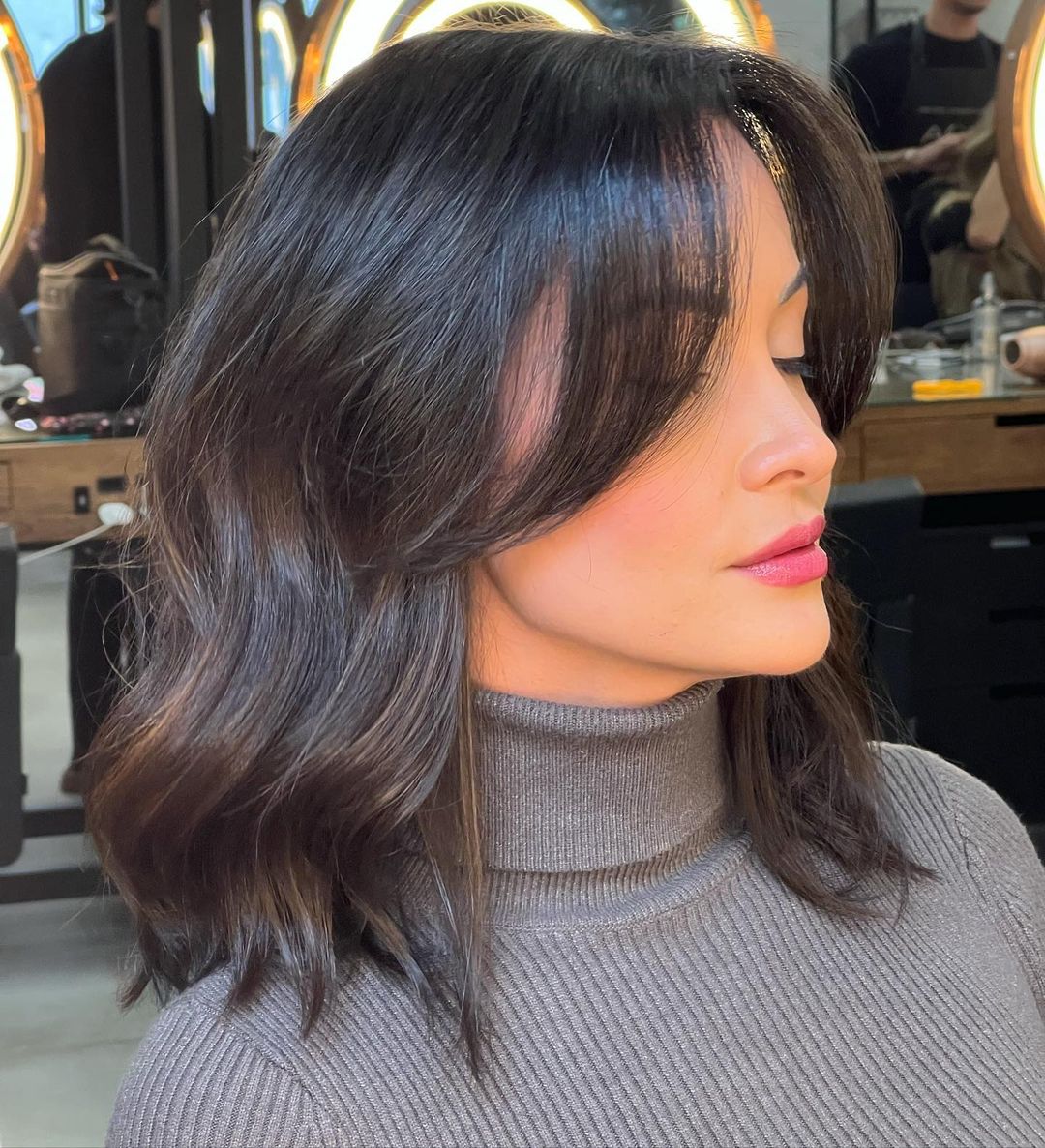
If a blunt bob feels too severe for thick hair, this collarbone cut with soft layers and prominent curtain bangs offers a softer alternative. The sweeping bangs frame the face, which works well for square and round face shapes. Ask your stylist for: collarbone length with soft layers and sweeping curtain bangs.
It is a solid choice for the work week, styled with a texturizing spray and a quick scrunch. The layers stay flattering for about eight to ten weeks before they need a trim, and the bangs may need a touch-up sooner if they start grazing your eyes.
Collarbone Lob With Blonde Balayage
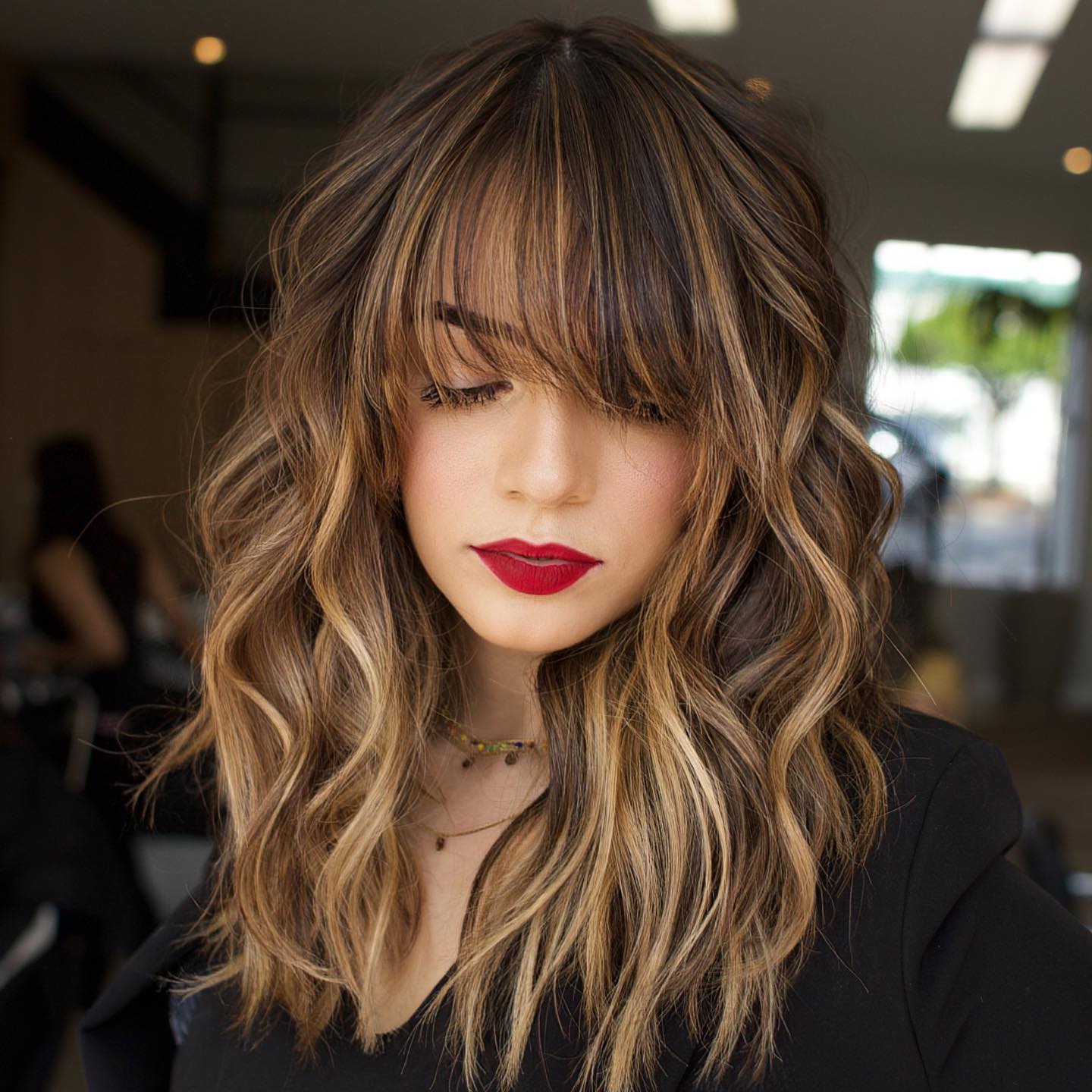
A collarbone lob gains dimension from a blonde balayage applied over a dark brown base, with curtain bangs and a middle part tying the look together. The hand-painted technique places lighter pieces where the hair naturally falls, which reduces the contrast against regrowth. Ask your stylist for: collarbone lob with curtain bangs and blonde balayage. This is a salon-only job, not something to attempt at home. The highlights will need a toning session every three to four months, but the lived-in effect means you can skip the touch-up for a while.
Collarbone Shag With Face-Framing Layers
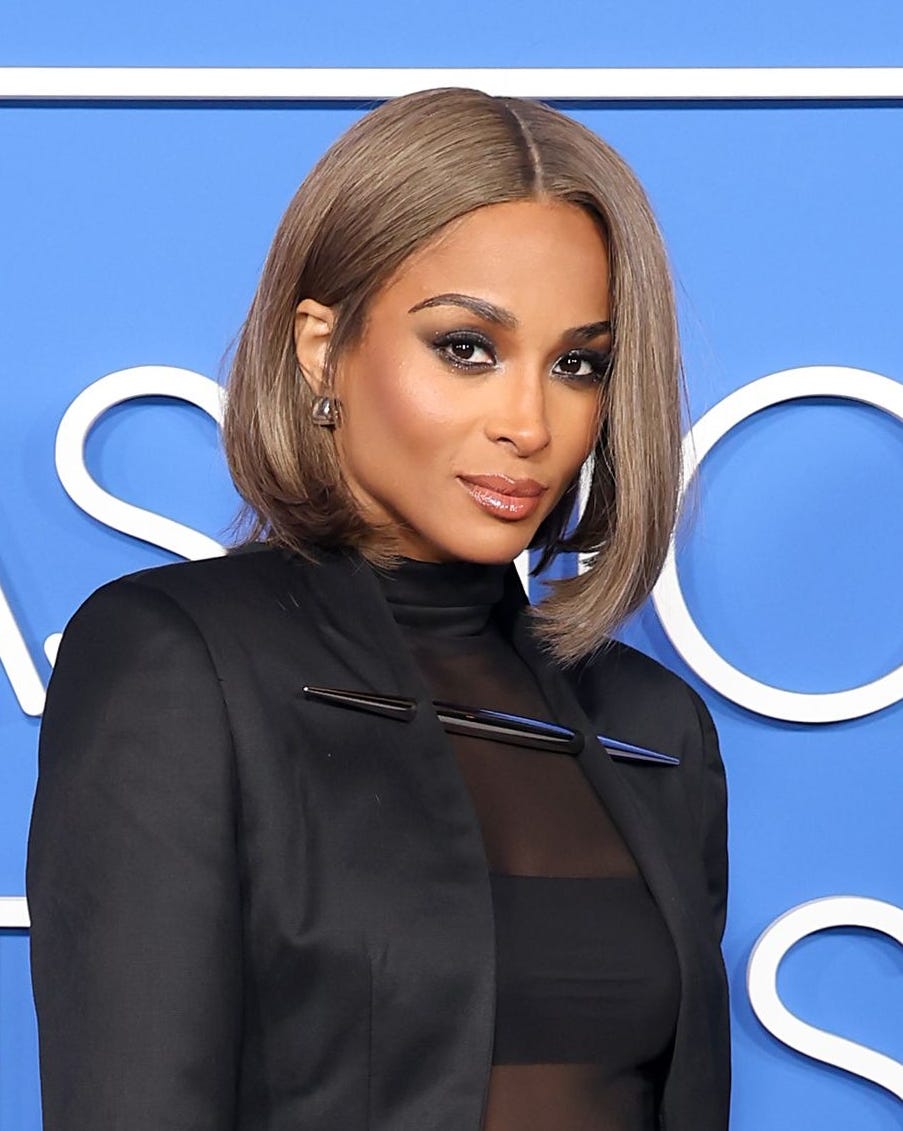
Can thick, wavy hair pull off a shag without turning into a triangle? Yes, if it stays at collarbone length with curtain bangs and a middle part. The shag layers remove bulk where thick hair gets heavy, while the face-framing pieces keep the shape soft around the jaw. Ask your stylist for: collarbone length shag with curtain bangs and face-framing layers. This cut works best for medium to coarse density waves. Straight or fine textures may lack the grip a shag needs to hold its shape.
Collarbone Lob With Face-Framing Bangs

A lob with face-framing bangs needs a trim every six weeks. That is the trade-off for soft, wispy pieces that blend into the length rather than sitting as a blunt line across the forehead. The collarbone lob here uses a middle part and gentle waves on thick auburn hair, with the bangs sweeping toward the cheekbones. Ask your stylist for: collarbone lob with soft face-framing bangs. The drawback: those bangs will graze your lashes in three weeks and need a precision snip to stay out of your eyes.
Collarbone Layers With Defined Curls
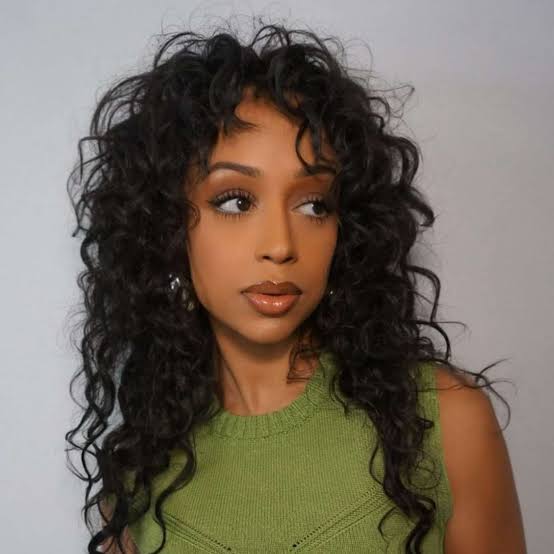
The design is simple: collarbone length, curtain bangs, and layers cut to match the curl pattern rather than fight it. The dark brown base has subtle highlights that catch light in the bends of each wave. Ask your stylist for: collarbone length layered cut with curtain bangs for natural curls. Be specific that you want the layers cut dry, curl by curl, so each ringlet lands at a different length. This cut is for fall and winter, when defined texture stands out against heavier coats and scarves.
Collarbone Layered Cut With Side Part

No bangs means no bang-trim appointments. That is the quiet advantage of a collarbone layered cut with a deep side part and face-framing layers. The thick wavy hair here falls in a smooth blowout, with subtle highlights adding depth through the mid-lengths. Ask your stylist for: collarbone length layered cut with face-framing layers, side part. The grow-out is forgiving: layers blend into the next cut without leaving an awkward shelf. A trim every eight weeks keeps the ends from splitting, but the shape holds well between visits.
Collarbone Layers With Outward Flipped Ends
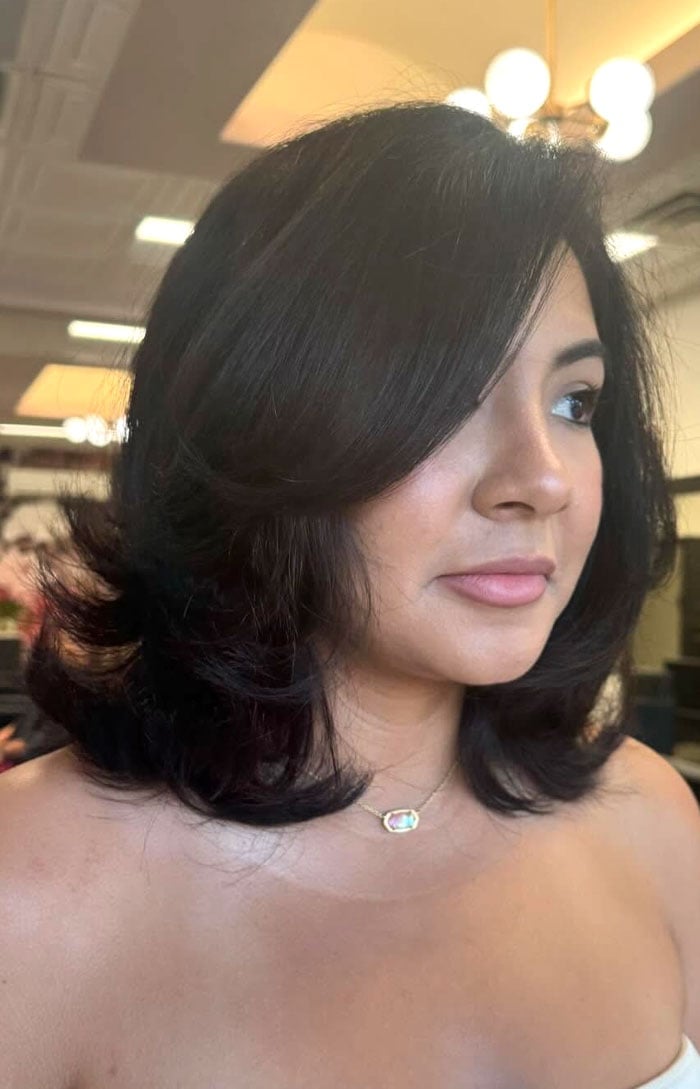
This is not a 90s flip, though it borrows the same blowout technique. The collarbone layered cut uses a round brush to direct the ends outward, creating volume through the mid-lengths on thick straight hair. A side part and side view show the layers stacking from shorter at the nape to longer at the front. Ask your stylist for: collarbone length layered cut with outward flipped ends, side part. The drawback: the flip relies on a round brush and a heat protectant; air-drying produces a straight, unremarkable shape. Salon blowout is ideal, but a home round brush in the right hands does the job in about 15 minutes.
Mid-Back Long Layers With Face-Framing Bangs
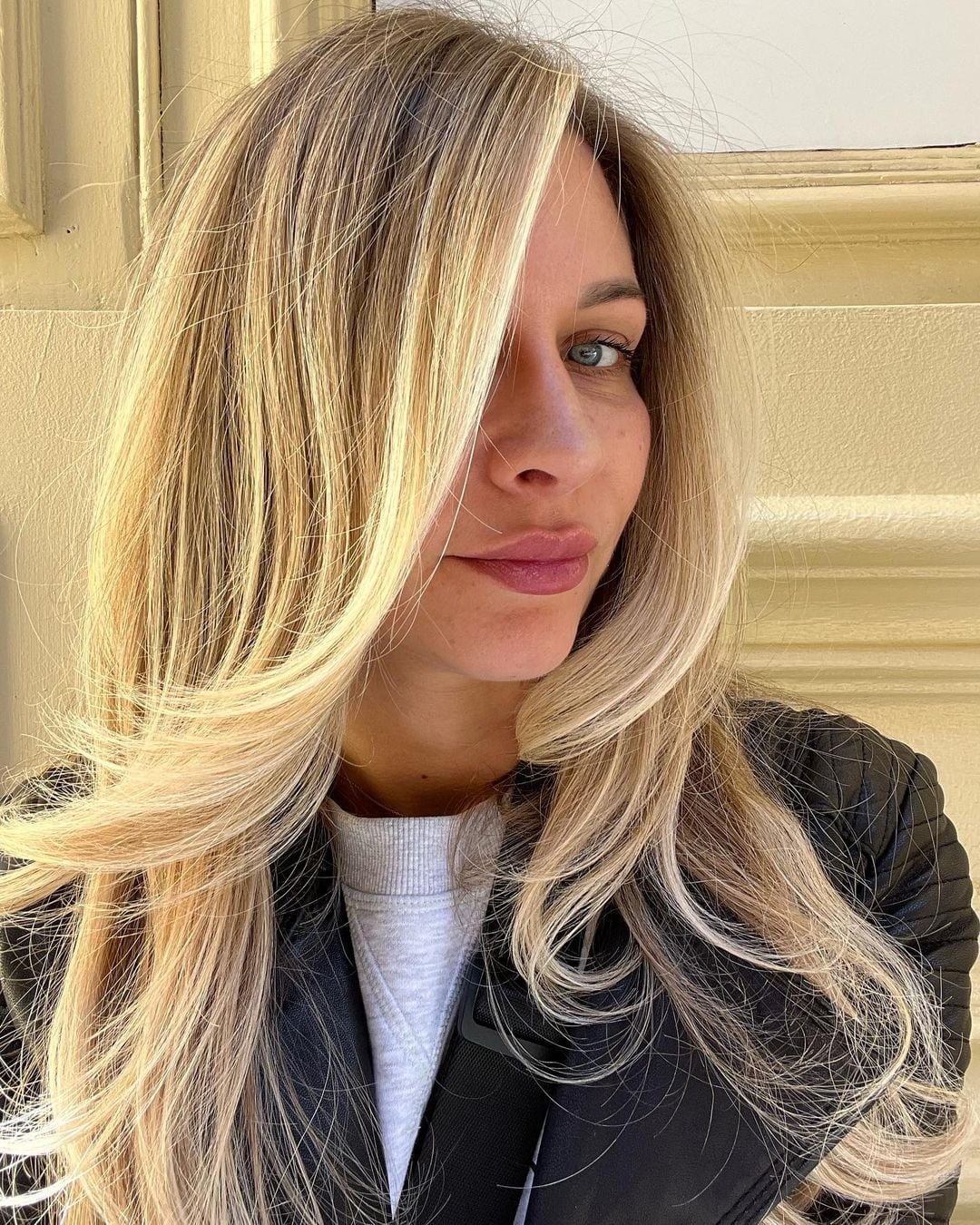
Can mid-back length and thick hair ever look light? Yes, but only if the cut does the work. Long layers keep the bulk from settling at the bottom, and face-framing bangs break up the weight around the cheekbones. The side-part blowout adds polish, but the real lift comes from the layering underneath.
Thick, wavy hair at mid-back length is the starting point. An oval face shape benefits most from the face-framing bangs, but a round face can also wear them with the layers kept longer. Ask your stylist for: mid-back length with long layers and face-framing bangs. A heat protectant before blow-drying is the only styling essential. Plan a trim every 10-12 weeks to keep the layers from growing heavy.
Shoulder Length Layers With Full Bangs
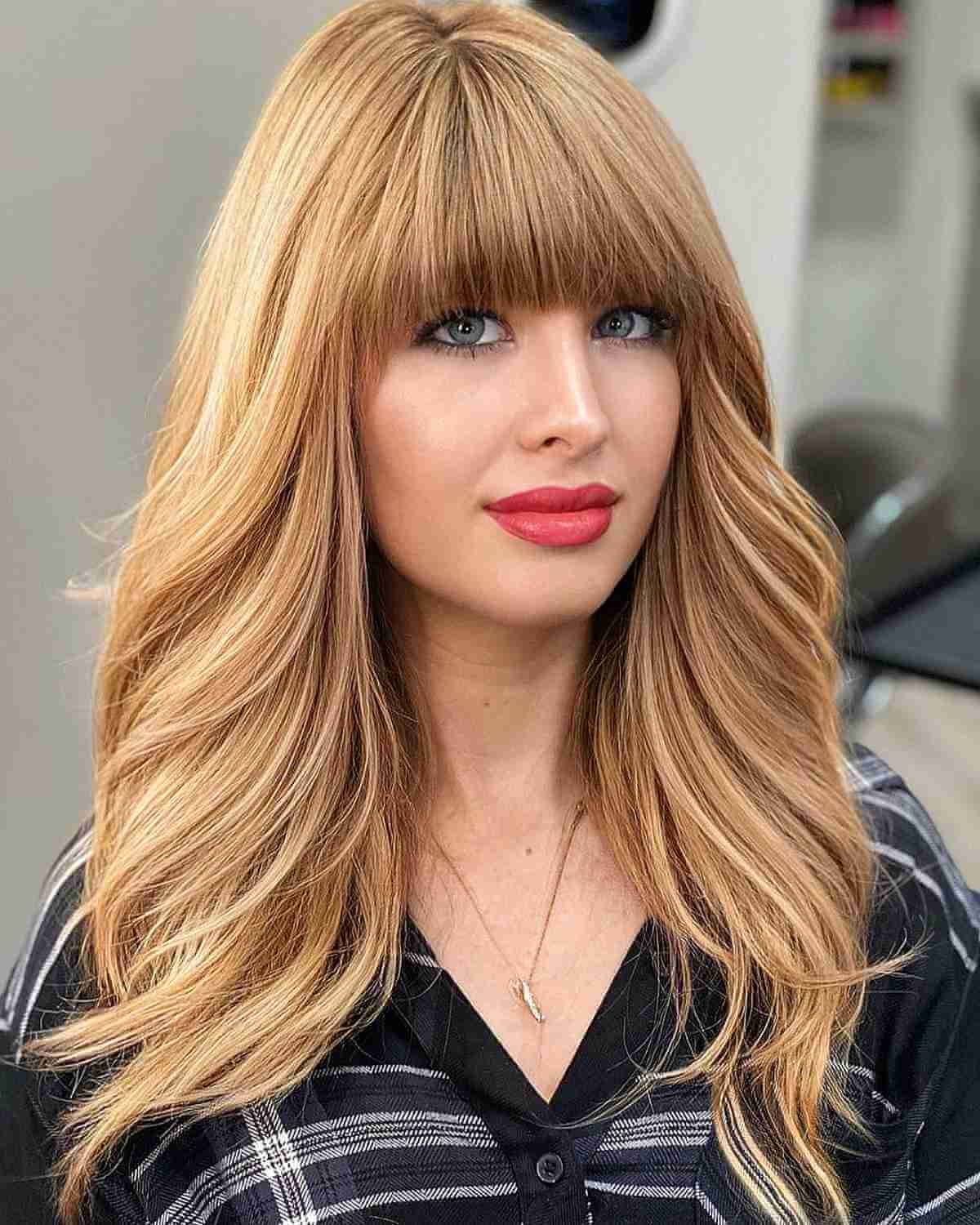
Full bangs on thick hair are a commitment, but the payoff is a dense, weighty fringe that holds shape without constant pinning. The shoulder-length layers underneath break up the density and add movement. Ask your stylist for: shoulder length with long layers and full bangs. A volumizing spray at the roots before blow-drying will lift the crown. Bangs need a trim every 4-6 weeks. The honey blonde highlights add visual texture, which makes the thickness appear soft.
Shoulder Shag With Wispy Bangs

The shag works because its layers are cut short and close together, which lets thick hair move instead of sitting in one dense sheet. The wispy bangs soften the forehead and blend into the cut, so there is no harsh line where the fringe starts. A texturizing paste worked through dry hair gives the layers separate definition. This is a bohemian, casual style that looks better on day two than day one. Trim the layers every 8-10 weeks to maintain the shape. It holds a blowout for about a day before settling into its natural wave.
Collarbone Lob With Textured Waves

Textured waves on a collarbone lob can be achieved without heat damage. The cut itself does half the work. The lob is precision-cut, then the ends are point-cut to remove weight and create a jagged edge. Wispy bangs soften the face. The dark brown base with blonde balayage adds dimension, so the waves read as separate pieces. Ask your stylist for: collarbone lob with wispy bangs and textured ends. A texturizing spray on damp hair, then air-drying with occasional scrunching, gives the same finish as a curling iron. The textured ends can look frayed if you skip a trim past eight weeks. This is a salon cut, but the styling is DIY-level easy.
Ear Length Stacked Bob With Side Part
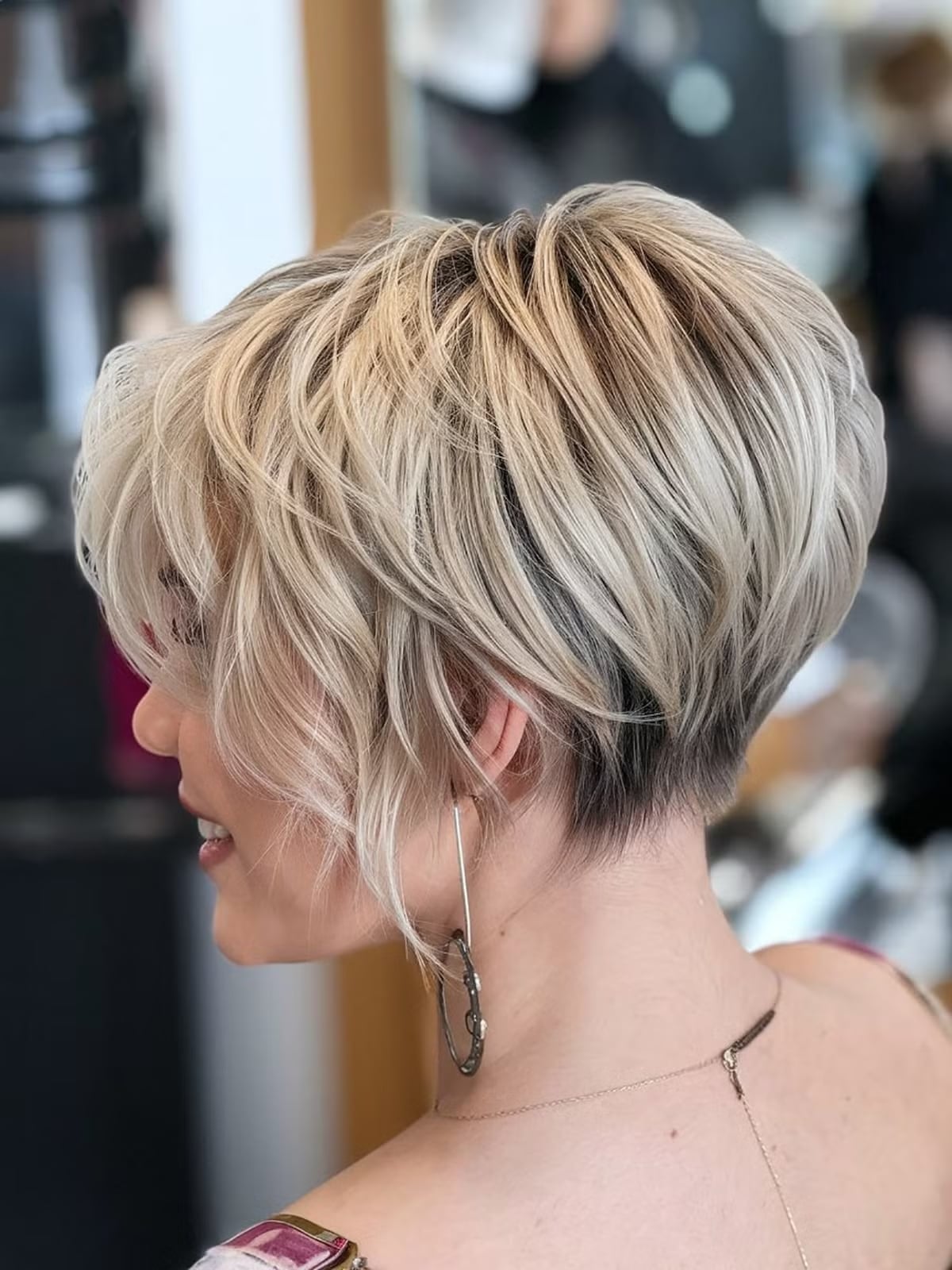
A stacked bob is not a blunt bob. The difference is in the back: stacked layers build volume at the crown, while the front stays longer, grazing the ear. For thick hair, this is a smarter choice than a one-length bob, which can look like a helmet. The side part adds asymmetry. Ask your stylist for: ear length stacked bob with a side part. Blow-dry with a round brush, lifting at the crown, to make the most of the stacked shape. Trim every 6-8 weeks, because the stacked layers lose their architecture faster than a blunt cut. The ash blonde with darker roots means the grow-out is forgiving.
Ear Length Pixie Bob With Side-Swept Bangs
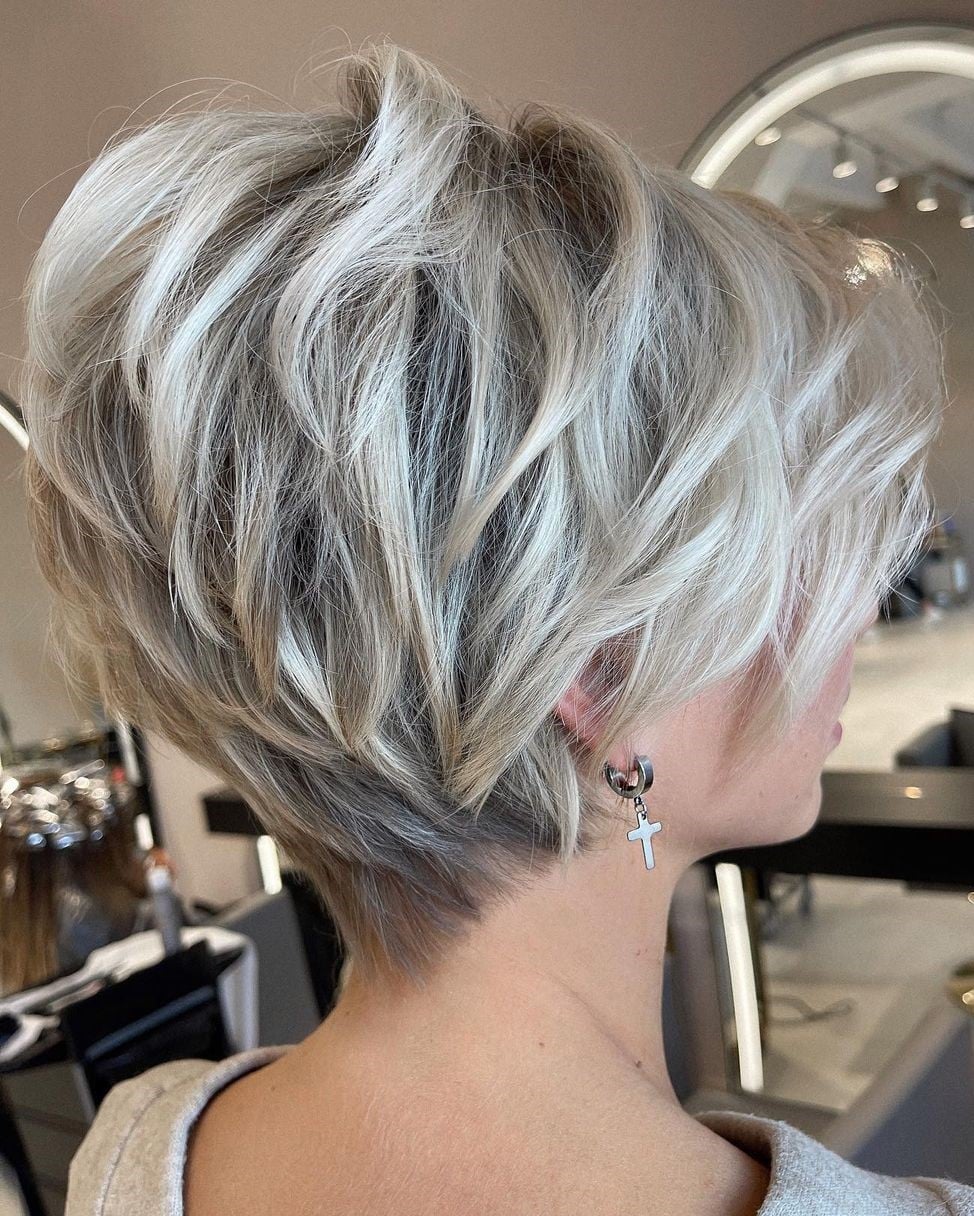
This ear-length pixie bob uses choppy layers to break up dense thickness, with side-swept bangs that sweep across the forehead. The cut works best on thick, wavy hair and suits angular face shapes by adding softness around the jaw. Ask your stylist for: ear length pixie bob with choppy layers and side-swept bangs. A pomade or wax defines the texture; the sharp lines need a trim every four to six weeks.
Ear Length Short Layers With Side-Swept Bangs, Straight
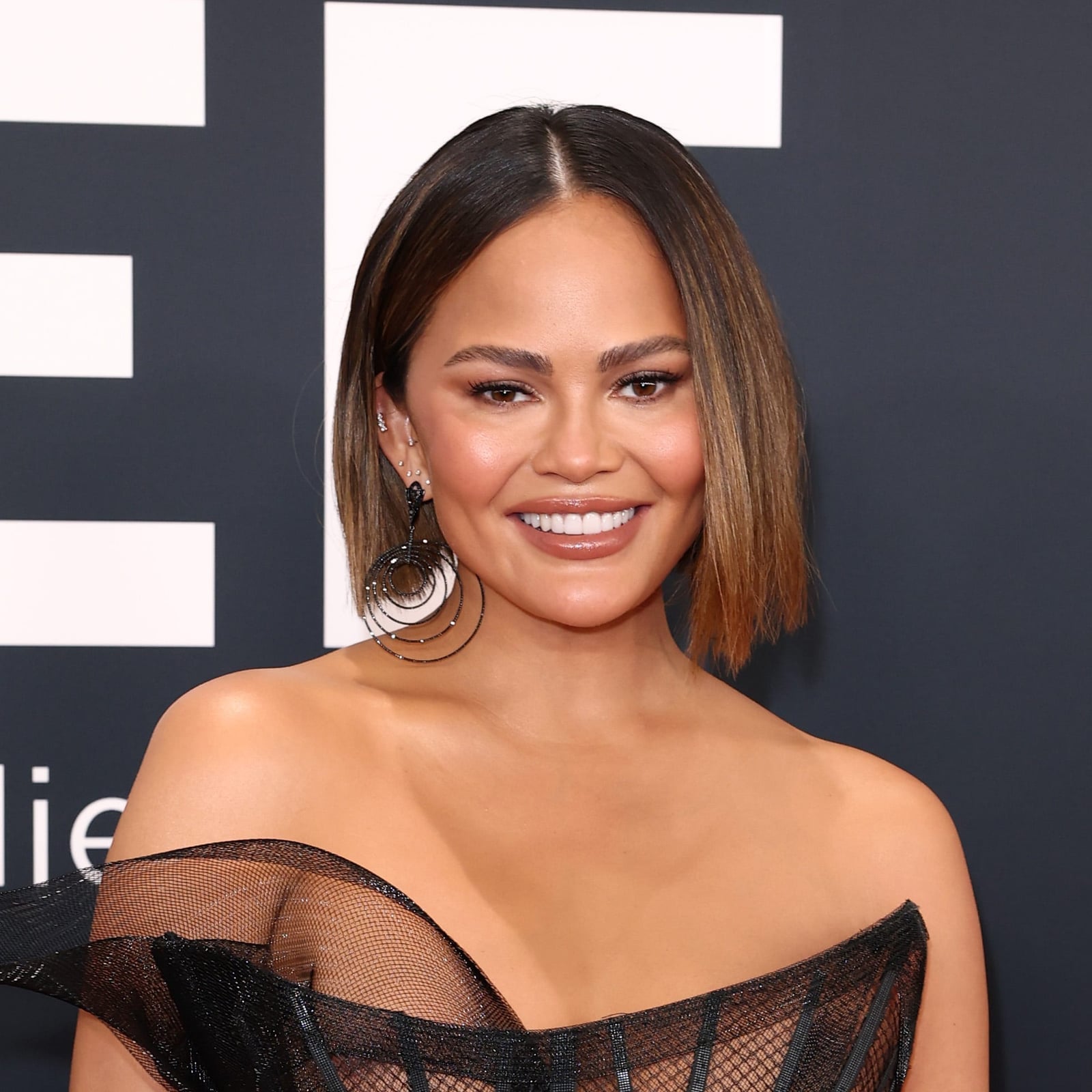
Short layers cut to ear length remove bulk from thick, straight hair while side-swept bangs keep the front light. The subtle highlights add dimension without a full color commitment. Ask your stylist for: ear length short layered cut with side-swept bangs. A smoothing serum before blow-drying gives a sleek finish. This is a salon cut only: the interior layering requires a stylist’s eye, and the sharp line needs a trim every four to six weeks. The grow-out phase is short, so booking regular appointments matters more than with longer styles.
Ear Length Short Layers With Natural Curls
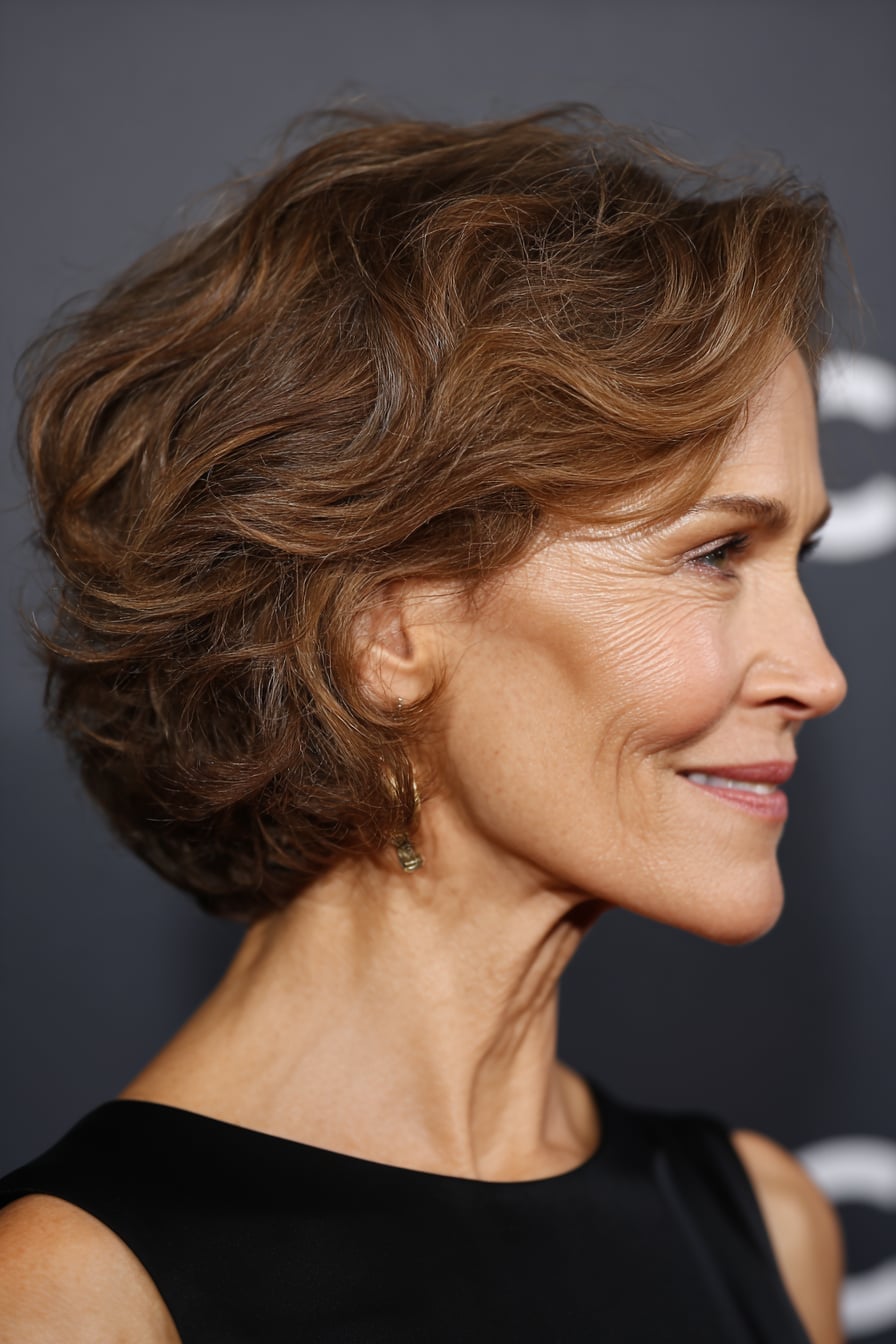
Does the volume get away from you? Short layers cut to ear length remove enough weight to let natural curls spring up without turning into a triangle. The side part breaks up the roundness. Ask your stylist for: ear length short layered cut for natural curls, side part. A curl-defining cream and scrunching are enough daily styling, but the honest drawback is that dry brushing destroys definition. A trim every eight to ten weeks keeps the shape without losing length.
Chin Length Blunt Bob With Micro Bangs

It is not a soft lob with wispy ends. This is a chin-length blunt bob cut with a single, clean line, and micro bangs that stop well above the brow. The blunt edge requires a straight-across technique, not point cutting, to hold its weight on thick hair. Ask your stylist for: chin length blunt bob with micro bangs. A flat iron and smoothing serum are the minimum for the sleek finish; the line needs a trim every four to six weeks.
Final Thoughts
For thick hair, prioritize cuts with strategic layers to remove weight and encourage movement. Opt for styles that complement your natural texture, whether it’s straight, wavy, or curly, to minimize styling time.
- Schedule trims every 6-10 weeks to maintain shape and remove weight.
- Use texturizing sprays or sea salt sprays to enhance natural waves and body.
- Invest in a good quality blow dryer with a diffuser for curly textures.
- Consider a deep conditioning treatment monthly to keep thick hair hydrated and smooth.
- When styling straight, use a flat iron with caution to avoid heat damage.
Manageable volume and sophisticated shape await with the right cut.