20 Classy Ombré Hair 2027 for Collarbone Lobs
Classy Ombré Hair 2027. See 20 sophisticated ombré hairstyles perfect for a collarbone lob, featuring blonde ombré and balayage. Save your favorite looks.

Classy ombré hair is a seamless color gradient that moves from a deeper root to a lighter end, and this season the shift is softer and more lived-in than the stark two-tone versions of the past. The focus is on natural transitions that work with your cut, not against it, so the color has room to move.
Inside, you’ll find 20 takes on Classy Ombré Hair, from a collarbone lob with curtain bangs to a mid-back ash-to-silver blend, covering every length and texture in between. Whether your hair is fine and falls flat or you’re tired of a visible grow-out line, there’s a gradient here that solves the problem without a hard reset.
Collarbone Lob With Curtain Bangs Ombré
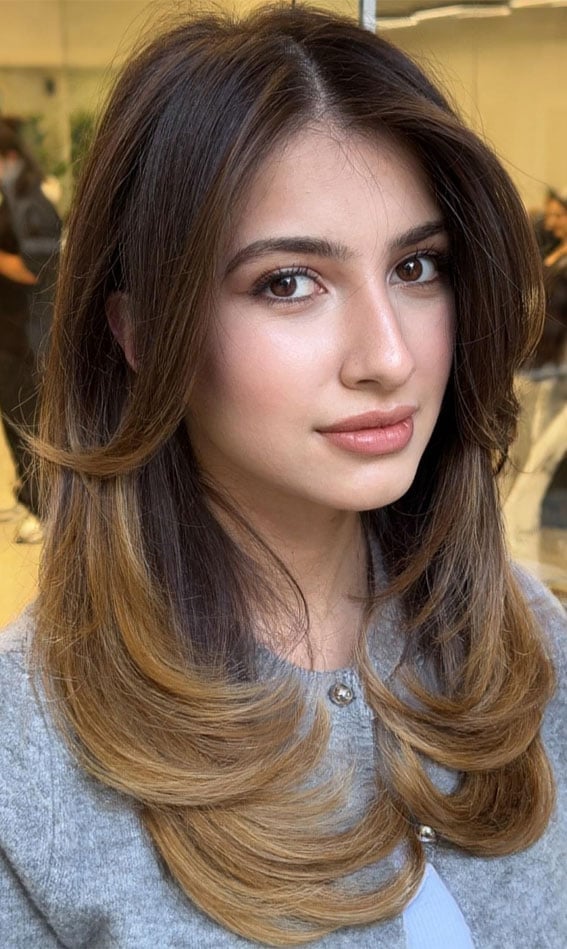
You want the ombré to look intentional, not like you forgot about a root appointment. This collarbone lob gets it right with a middle part, thick face-framing layers and curtain bangs that sweep the cheekbones, all wavy and glossy from a round-brush blowout. The color drops from dark brown to a lighter blonde through the lower half, so the transition happens where the layers move. Medium to thick hair starting at collarbone length gets the best volume from the cut. Ask your stylist for: collarbone lob with face-framing layers and curtain bangs, dark brown to blonde ombré. A trim every eight weeks keeps the shape and the fringe from grazing your lashes.
Wavy Lob With Side Swept Bangs Balayage
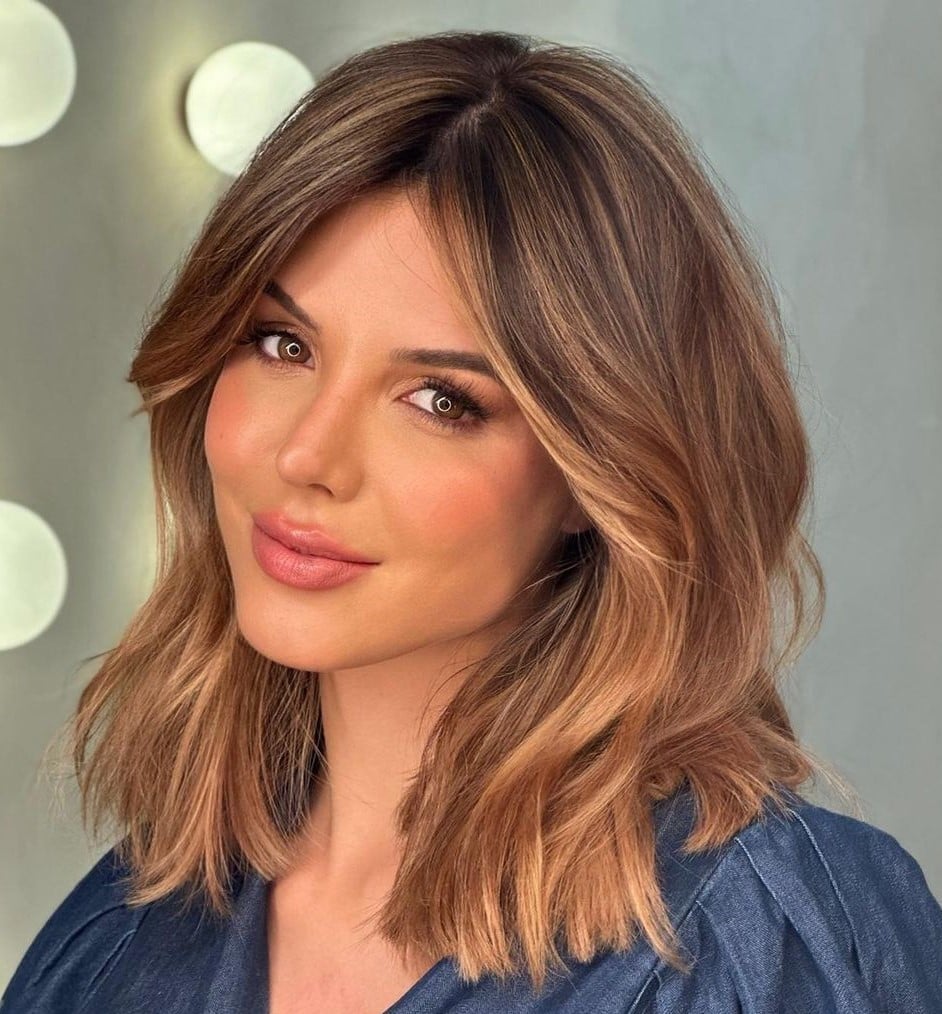
A blunt lob keeps a clean line, but this wavy version trades that for something softer. The side-swept bangs and side parting break up the shape, so the collarbone length feels less severe than a straight-across cut. Brown hair gets subtle blonde balayage painted through the lengths, light enough to read as ombré but not so light that the regrowth screams. Medium texture and wavy styling let the layers move without looking piecey. Ask your stylist for: shoulder length lob, wavy blowout, side swept bangs, brown with blonde balayage. Angular faces benefit from the diagonal line the bangs create.
Collarbone Lob With Subtle Blonde Balayage
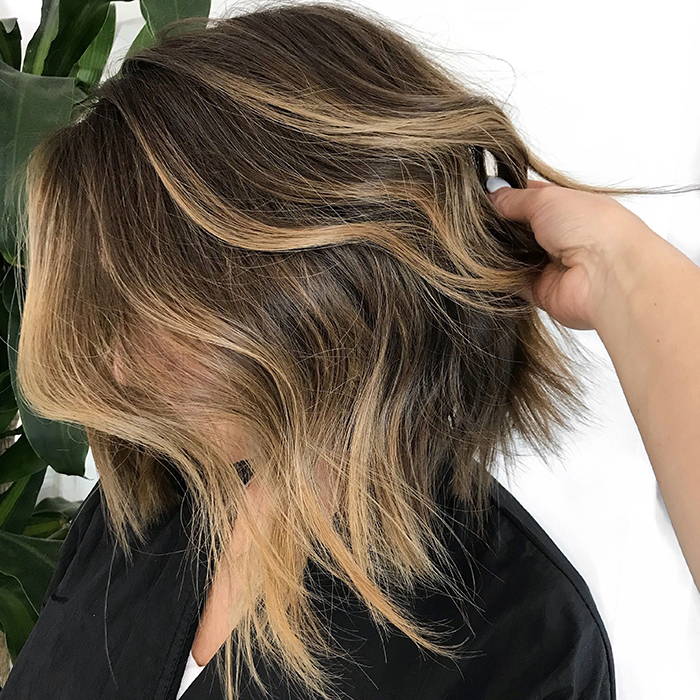
The design here is about restraint. A collarbone lob with side-swept bangs and a wavy blowout, but the blonde balayage stays close to the ends rather than creeping up the shaft. That means the brown base is the main color, and the lighter pieces are visible when the hair moves. Side parting keeps the fringe from flopping into your eyes. Ask your colorist for: collarbone lob, wavy blowout, side swept bangs, brown with subtle blonde balayage. The upkeep is honest: trim the baseline every six weeks, and book a toning appointment at eight to prevent the blonde from turning brassy.
Layered Collarbone Lob With Blonde Ombré
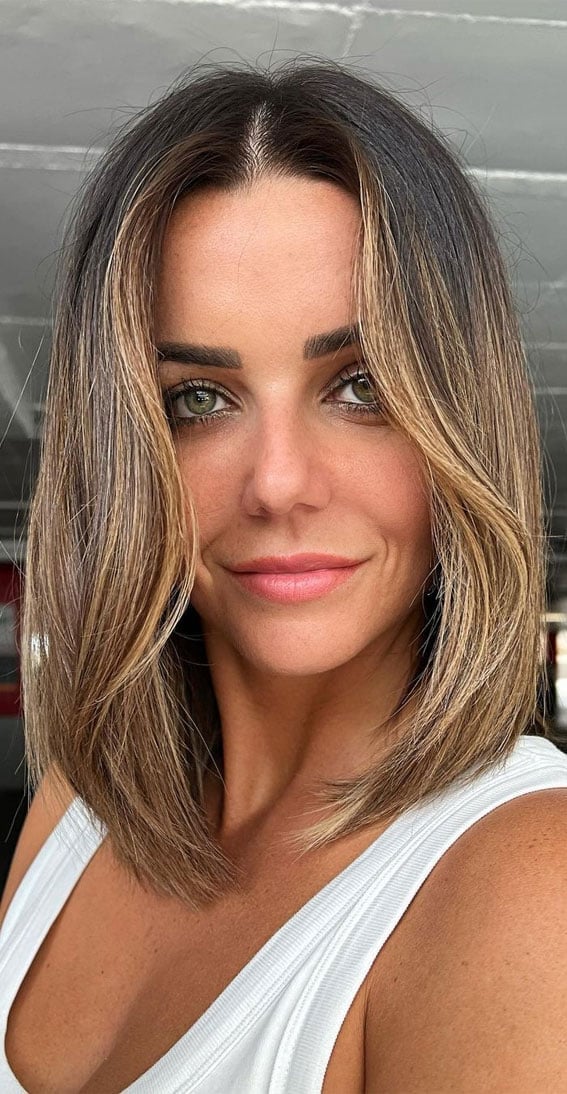
An ombré that starts high on the head can look harsh, so this one concentrates the blonde on the lower lengths. The collarbone lob has visible layers throughout, cut to stack volume at the crown and taper toward the ends. Subtle waves keep the dark brown to blonde gradient smooth rather than striped. Medium density hair benefits from the layering, which prevents the weight from pulling the wave out. Ask your colorist for: collarbone lob with layers, dark brown to blonde ombré on ends. Round faces get a little elongation from the vertical line the layers create.
Bob With Pink Ombré Tips
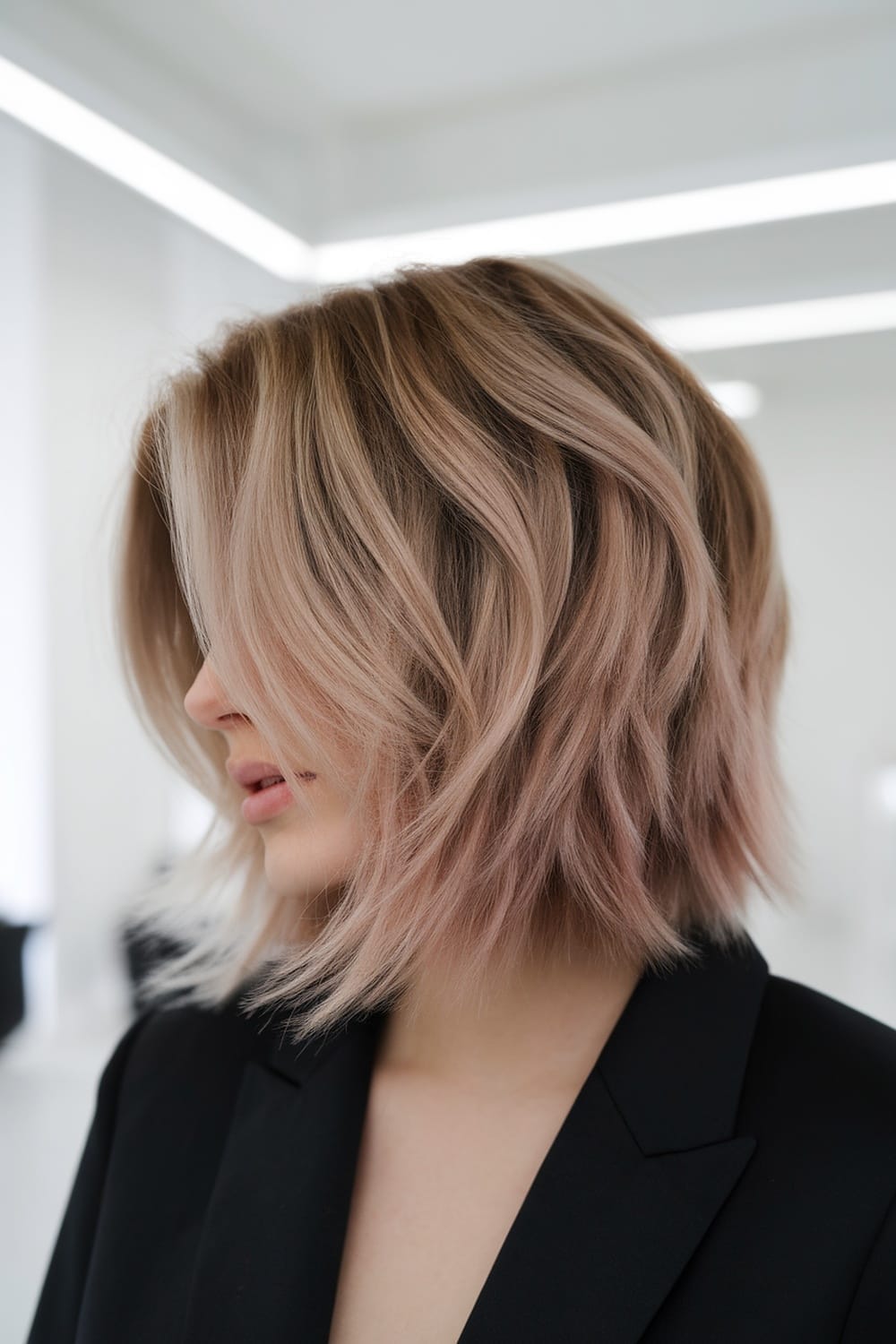
Does a bob with pink tips work on medium density hair? Yes, if the cut has structure. This collarbone bob uses soft layers and curtain bangs to frame the face, then drops the color from a dark blonde base to a subtle pink at the ends. The wavy blowout keeps the transition natural. Side parting lets the bangs blend into the layers instead of sitting as a separate piece. Ask your colorist for: collarbone bob with layers and curtain bangs, dark blonde to pink ombré tips. The pink sits on the lower third, so fading happens slowly and root regrowth is minimal.
Angled Bob With Lived-In Ombré
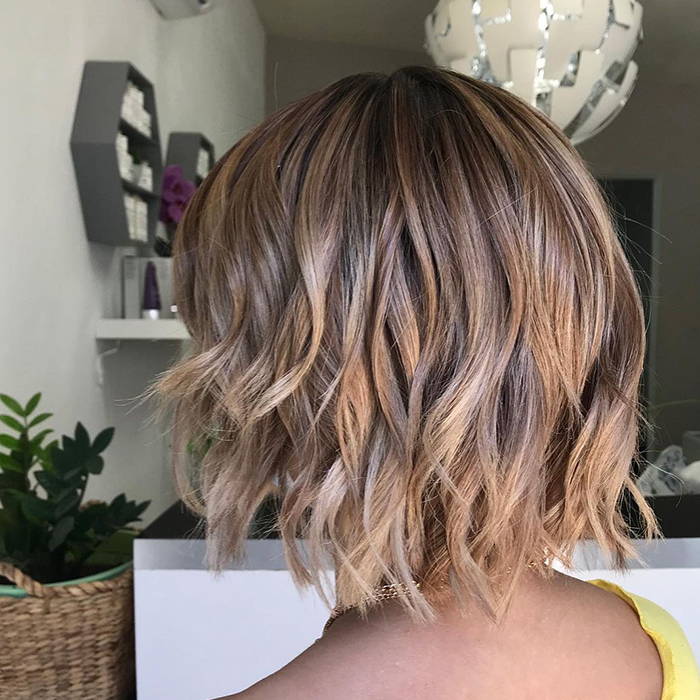
An angled bob is a study in geometry, and this one adds a wavy blowout and curtain bangs to soften the sharp lines. The dark brown base melts into blonde and caramel ombré highlights that end around the chin, giving the cut a lived-in feel. It suits medium wavy hair that already sits at chin length, and the forward angle helps elongate a round face. Ask your stylist for: angled bob with layers and curtain bangs, dark brown to blonde and caramel ombré. The trade-off is the daily styling: a wavy blowout needs a round brush and a few minutes with a heat tool, and the baseline demands a trim every four to six weeks to hold its shape.
Long Wavy Hair With Soft Blonde Ombré
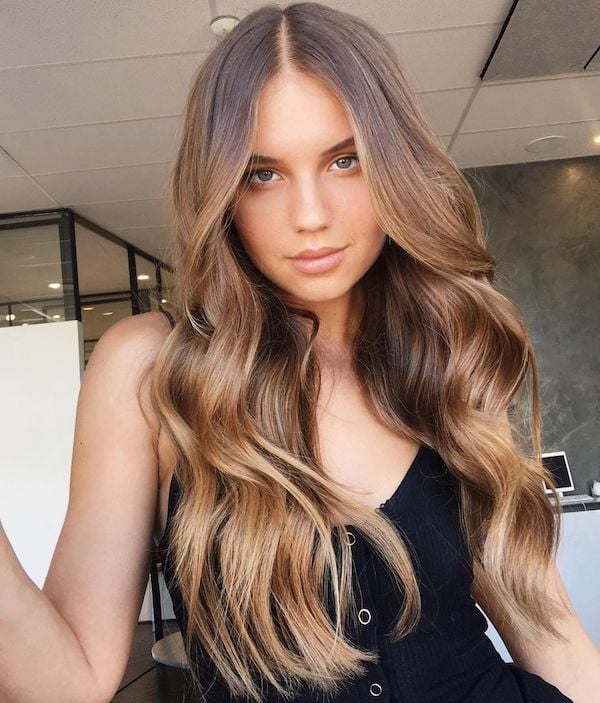
Long wavy hair with a soft blonde ombré sits close to a full balayage, but it keeps the roots deeper and the transition gentler. Fine hair benefits from the loose waves and curtain bangs, which add volume and frame the face without weighing it down. This works best starting at shoulder length or longer, and the curtain bangs soften square and round faces. Ask your colorist for: long wavy hair, curtain bangs, medium brown to blonde soft ombré. The blend is achievable at home if you are confident with foils, but the curtain bangs are the tricky part: cutting them yourself can go sideways fast. A salon visit handles the angle and the face-framing pieces in one sitting, then you maintain with a root product and a smoothing cream on the ends. Expect a trim every 8 to 10 weeks to keep the bangs from growing past their sweet spot.
Mid-Back Ombré With Soft Waves
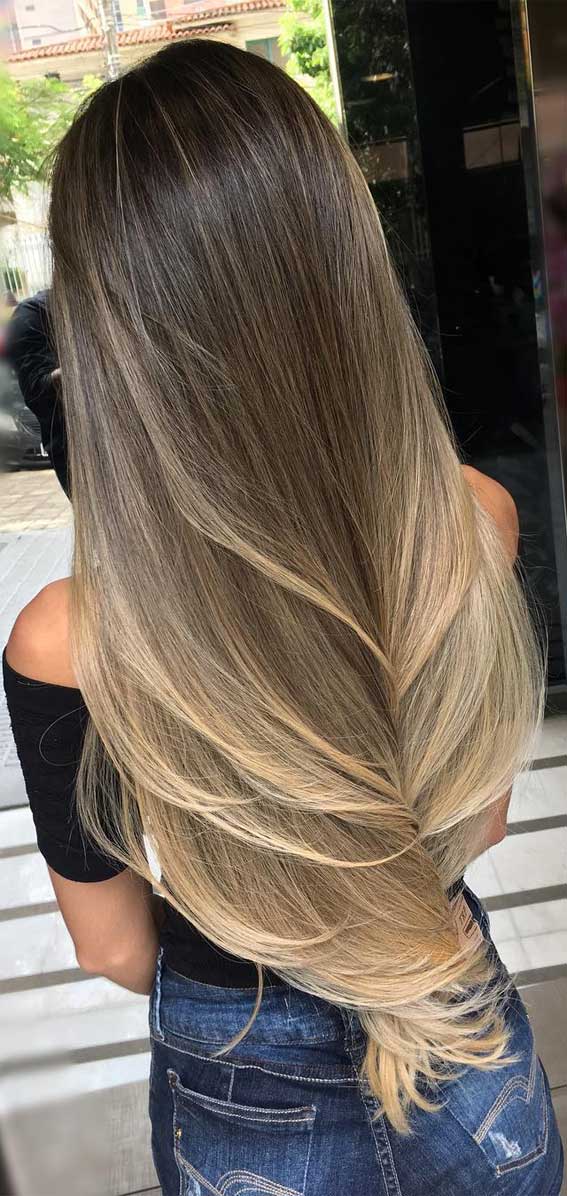
Mid-back length hair with a dark brown to blonde ombré is a low-maintenance pick for summer, when you want to spend time outside instead of in a salon chair. The layers and soft waves add movement, and the seamless gradient means you can skip touch-ups for months. It suits thick wavy hair that starts at shoulder length or longer, with face-framing layers that complement most face shapes. Ask your colorist for: mid-back length hair, soft waves, dark brown to bright blonde ombré. The grow-out is forgiving, so a vacation can happen without a root panic. Detangle wet hair with a wide-tooth comb to keep the waves defined, and book a trim every 8 to 10 weeks to keep the ends healthy.
Thick Wavy Hair With Natural Ombré
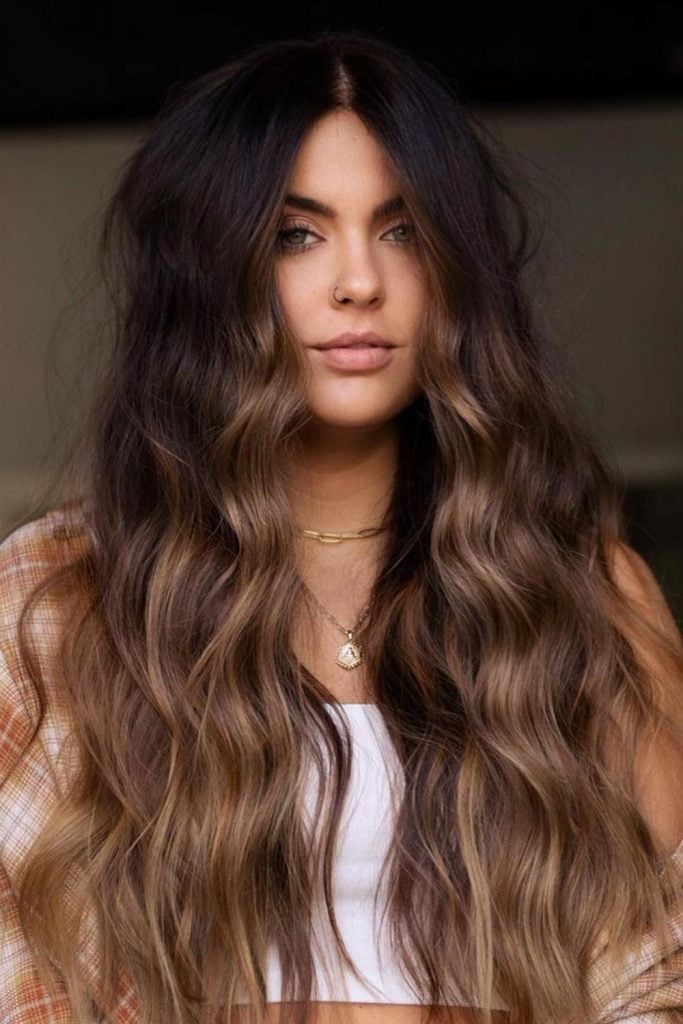
The air-dried texture and natural ombré from dark brown to light brown create a sun-kissed color blend. Long layers give thick wavy hair room to move without turning into a triangle, and the middle parting keeps the blend visible. This style suits thick wavy hair at shoulder length or longer, with the layers adding movement. Ask your colorist for: mid-back thick wavy hair, long layers, natural dark brown to light brown ombré. To get the lived-in feel, skip the blow dryer and apply a curl-enhancing cream on wet hair, then let it dry on its own. A trim every 8 to 10 weeks keeps the layers from getting heavy.
Mid-Back Ombré With Seamless Blend
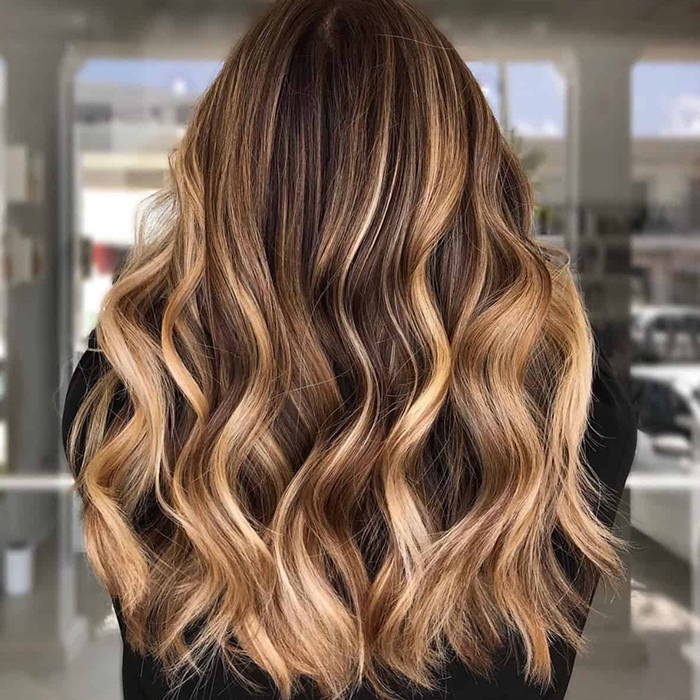
How does a seamless ombré blend stay looking fresh when your roots grow out? The answer is in the placement: the dark brown base extends far enough down that the blonde only starts past the shoulders. This mid-back length cut with long layers suits thick wavy hair that is shoulder length or longer, and the layers help the color melt read as one continuous gradient. Ask your colorist for: mid-back thick hair, seamless dark brown to blonde ombré. The upkeep is mostly about the ends: the blonde can turn brassy, so a purple shampoo every few washes keeps it cool, and a trim every 8 to 10 weeks prevents split ends from creeping up. The grow-out is forgiving, but the blend does need a refresh every six months to keep the transition from becoming a hard line.
Long Layered Hair With Caramel Ombré
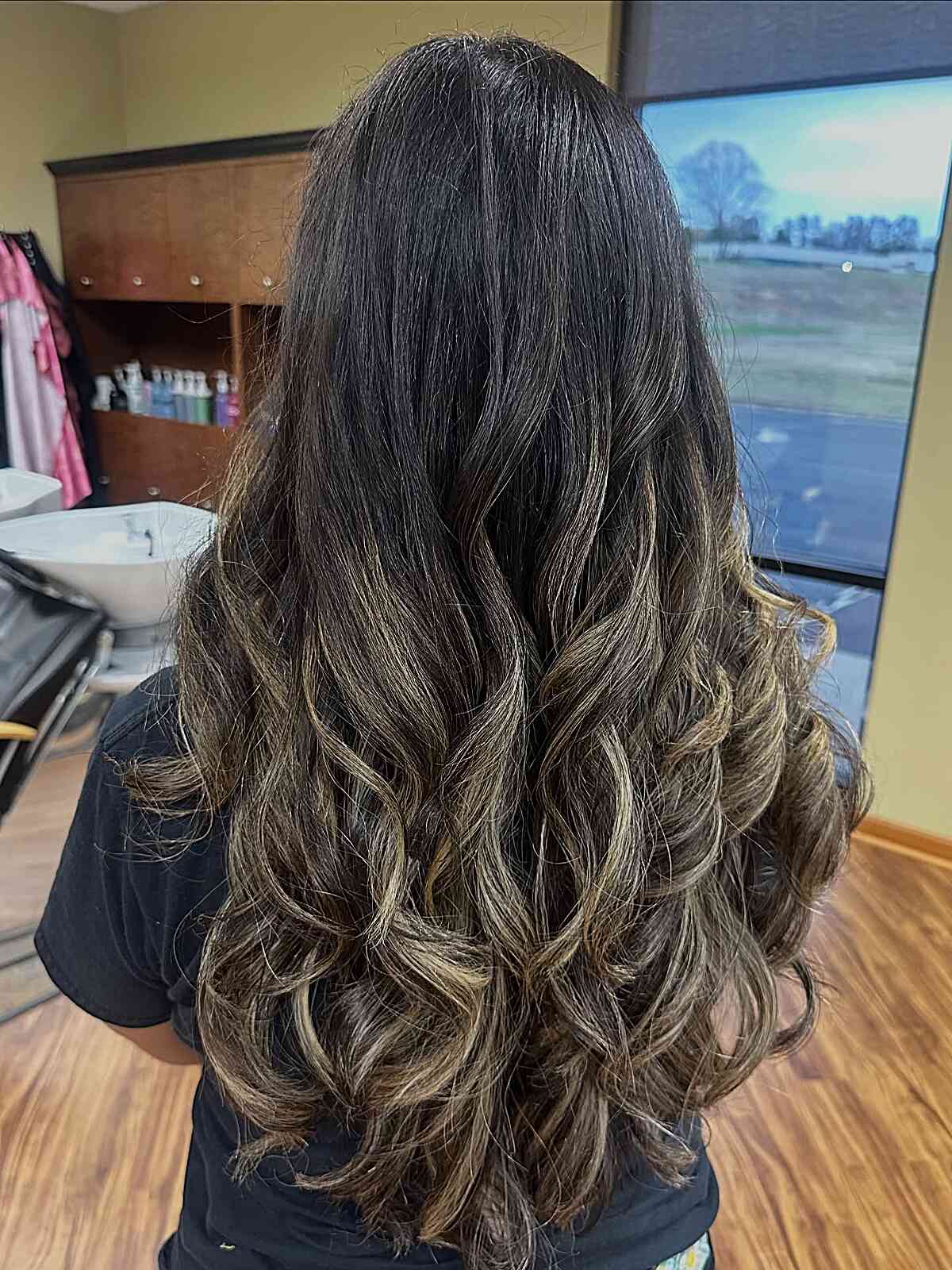
A gradual dark brown to caramel ombré relies on long layers to show off each shade shift. Thick hair from shoulder length up can carry the weight, but mid-back is where the transition really breathes. A middle parting keeps the color balanced on both sides, and loose curls add a polished finish without fighting the texture. Ask your stylist for: long thick layers, dark brown to caramel ombré, loose curls. The gradual transition matters more than the end tone, so specify you want a soft blend and not a hard line.
Long layers prevent the curls from falling flat at the roots while keeping the ends light enough to hold shape. A trim every eight to ten weeks maintains the cut and prevents the caramel from looking dull. This is a salon-only project, but the result looks carefully planned.
Mid-Back Ombré With Warm Blonde
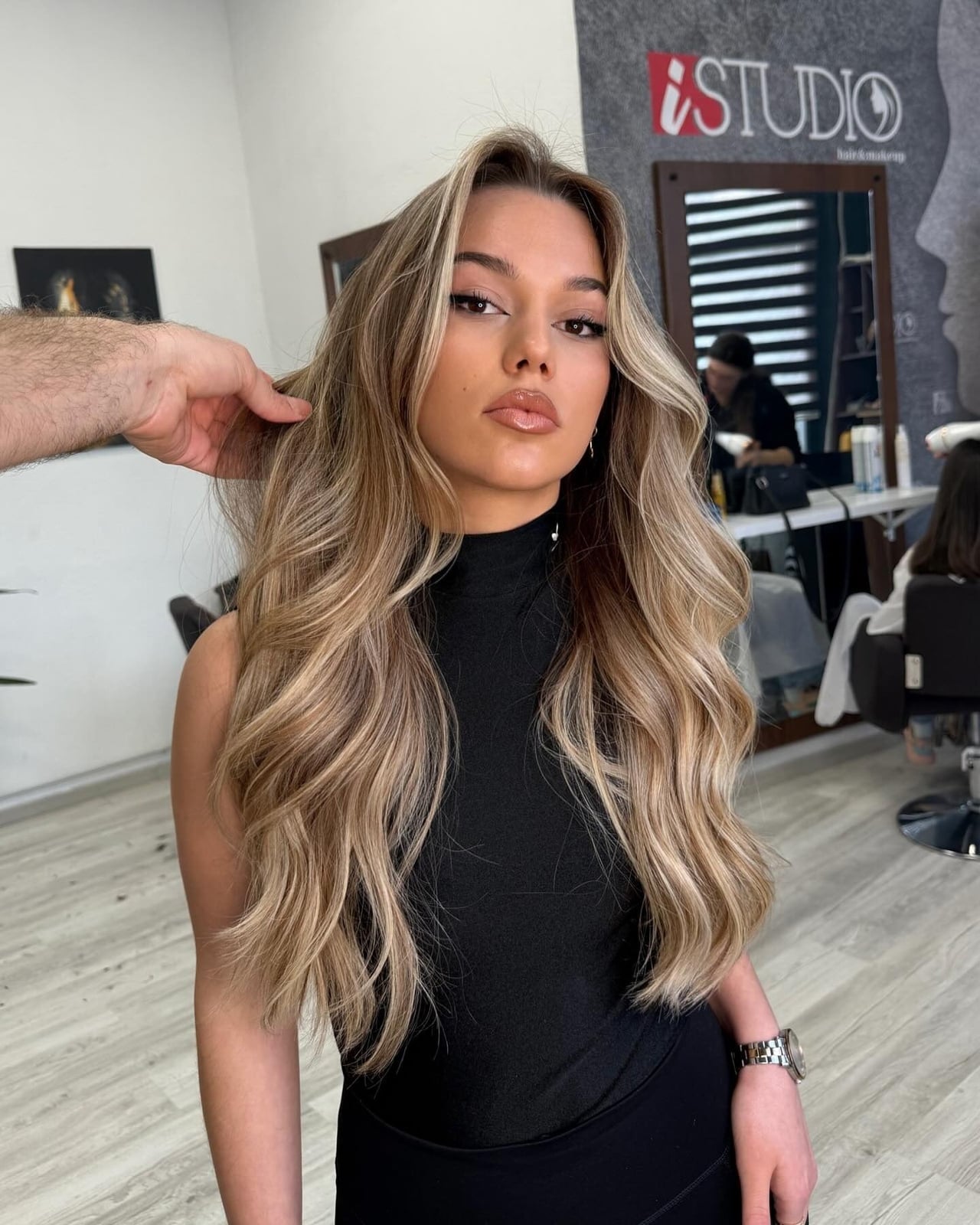
If cool blonde ombré feels icy, warm blonde ombré has a golden finish. The dark brown base keeps roots grounded while the ends lift into a golden tone. Loose waves let the color breathe without over-styling. Ask your stylist for: mid-back thick wavy hair, dark brown to warm blonde ombré. Thick, wavy hair at shoulder length or longer is the ideal starting point; the texture helps the blend look natural.
Mid-Back Ombré With Caramel Blonde, Wavy
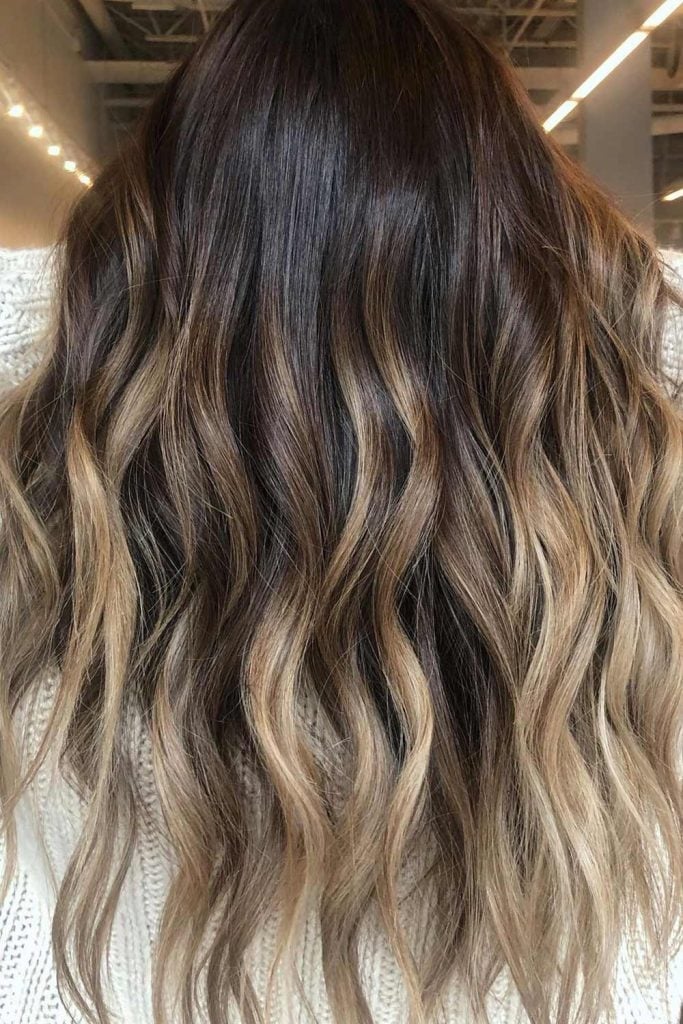
Does a warm caramel blonde ombré actually work on everyone? Close, but not quite. The dark brown base and golden caramel ends suit medium to olive undertones best, while very fair complexions can look washed out without a deeper root. Thick, wavy hair from shoulder length onward gives the color enough surface to show the gradient. Ask your stylist for: mid-back thick wavy hair, natural dark brown to caramel blonde ombré. A middle parting and loose waves keep the effect soft and lived-in. This is a salon-only commitment, but the grow-out is forgiving because the base matches the natural root color.
Mid-Back Wavy Blowout With Caramel Ombré, Layers
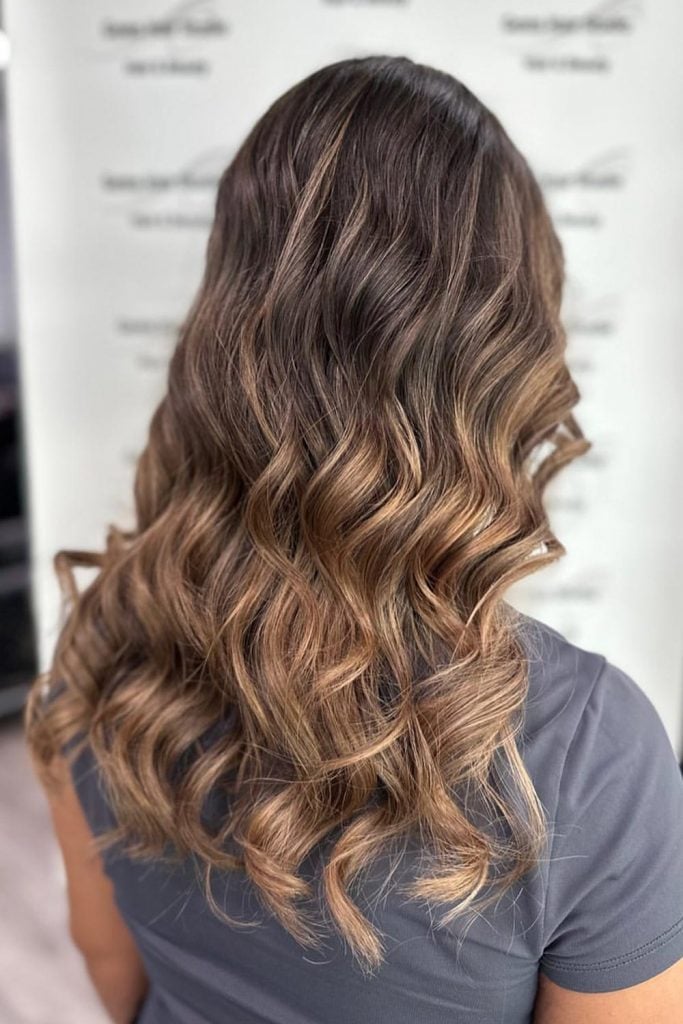
A wavy blowout softens the ombré transition while adding volume. The dark brown base shifts into caramel through the ends, and the layers ensure the color lands at different points without a harsh line. A middle parting keeps the look symmetrical. Ask your stylist for: mid-back hair, wavy blowout, dark brown to caramel ombré. Thick, wavy hair from shoulder length up holds the blowout shape longer, and the layers prevent the ends from looking too heavy. The technique relies on a large round brush and a smoothing serum for the glossy finish.
Long Layered Hair With Sun-Kissed Ombré
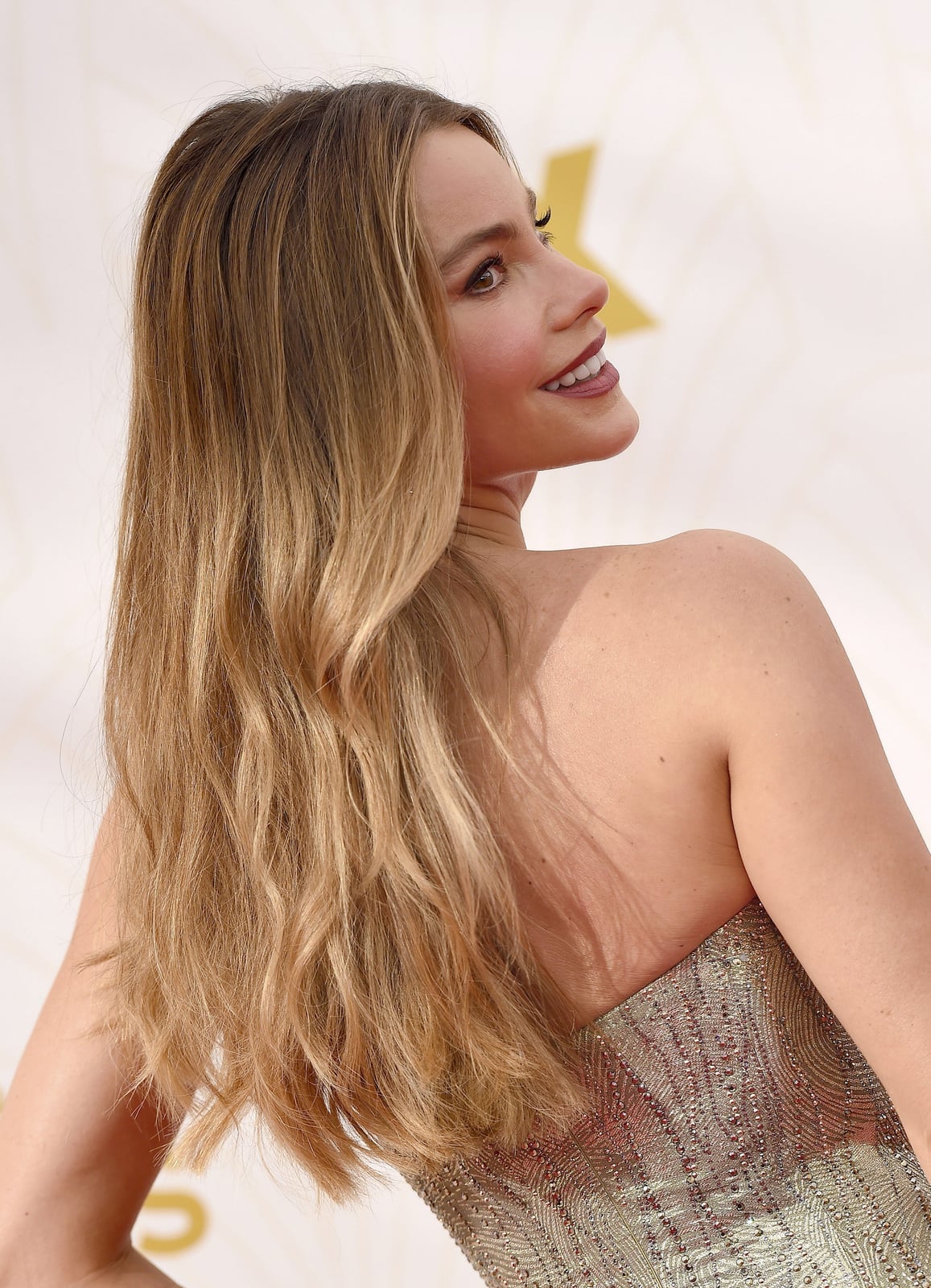
Sun-kissed ombré is the hair equivalent of a warm-weather wardrobe: it belongs in spring and summer. The warm blonde base lightens into a softer blonde at the ends, with long layers breaking up the color so it looks like the sun hit different strands at different angles. A side parting adds asymmetry, and loose waves give it a relaxed finish. Ask your stylist for: long layered hair, warm blonde to sun-kissed blonde ombré, loose waves. Medium density hair at shoulder length or longer works best, and a trim every eight to ten weeks keeps the ends healthy enough to catch the light.
Mid-Back Ash Blonde To Silver Ombré
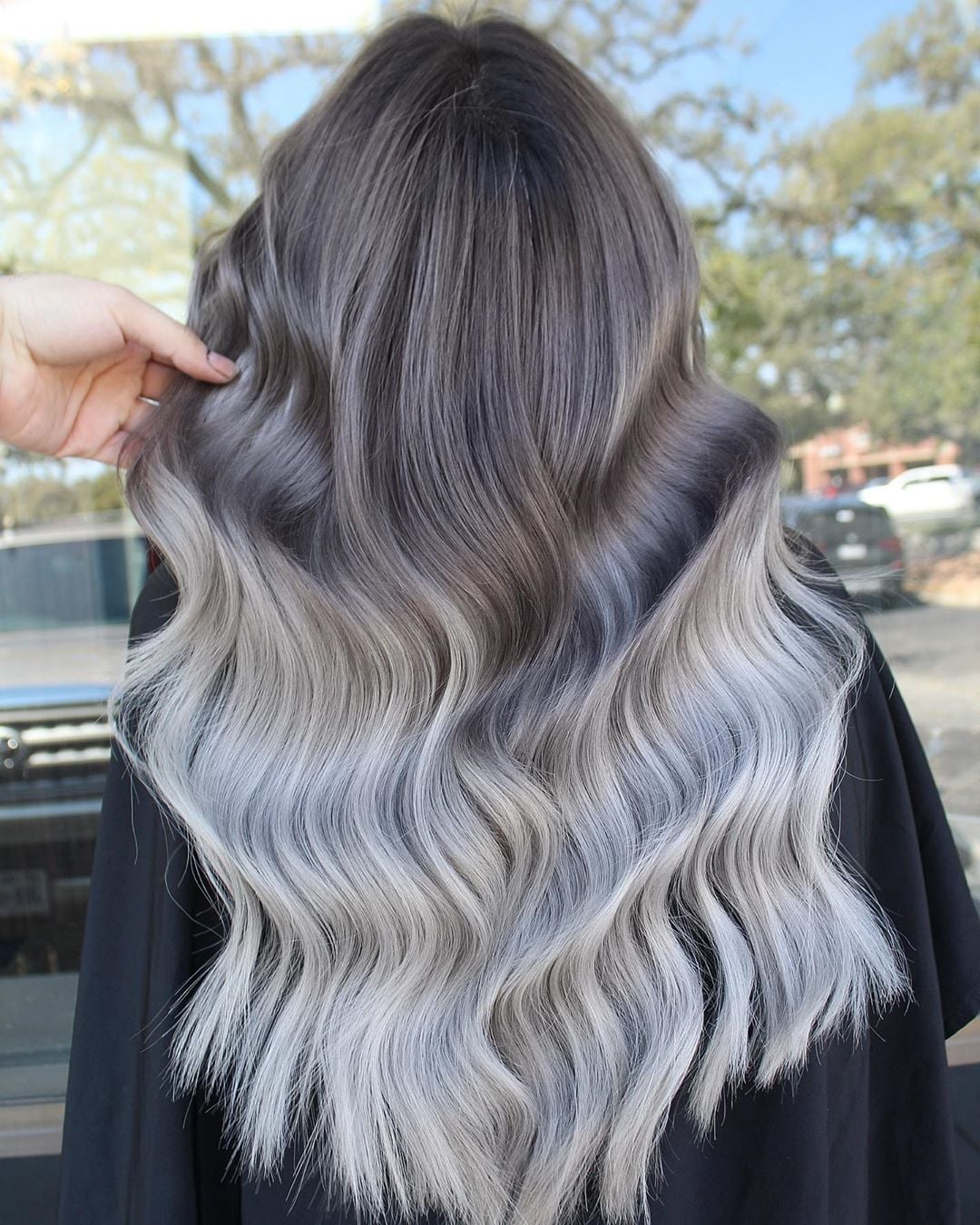
A dark ash blonde base melting into a silver end is a design that asks for precise toning, not guesswork. The mid-back length gives the gradient room to breathe, and the loose waves on thick hair emphasize the shift in tone. No bangs here, just a middle part that lets the color do the work.
Thick hair that starts at shoulder length or longer carries this look best. Ask your colorist for: mid-back hair, dark ash blonde to silver ombré. The silver side of the spectrum needs maintenance: a purple shampoo and conditioner keep brassiness at bay, and a trim every 8 to 10 weeks keeps the ends healthy enough to hold the tone.
Long Grey To Silver Blonde Ombré
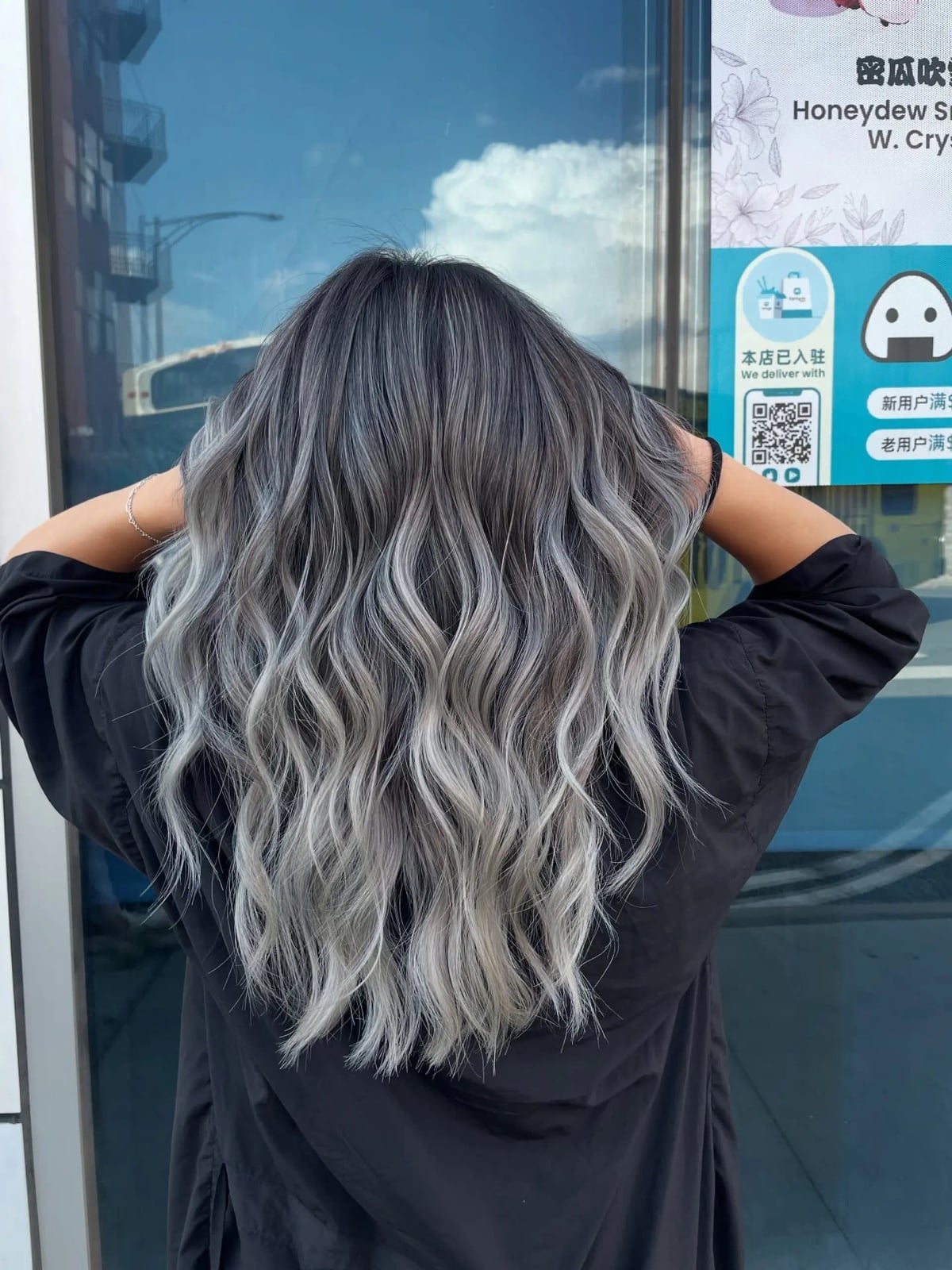
Starting with a dark grey base and moving into a bright silver blonde is a commitment to the cool side of the color wheel. The long layers on this thick, wavy hair let the transition show clearly, and the middle part keeps the look symmetrical without bangs.
The honest trade-off: true silver requires lifting the hair to a very pale canvas, which can mean multiple sessions and some compromise on condition. Thick hair starting at shoulder length or longer handles the process better. Ask your colorist for: long thick hair, dark grey to silver blonde ombré. This is not a single-afternoon project, but the finish is deliberate and polished.
Mid-Back Hair With Rose Gold Ombré
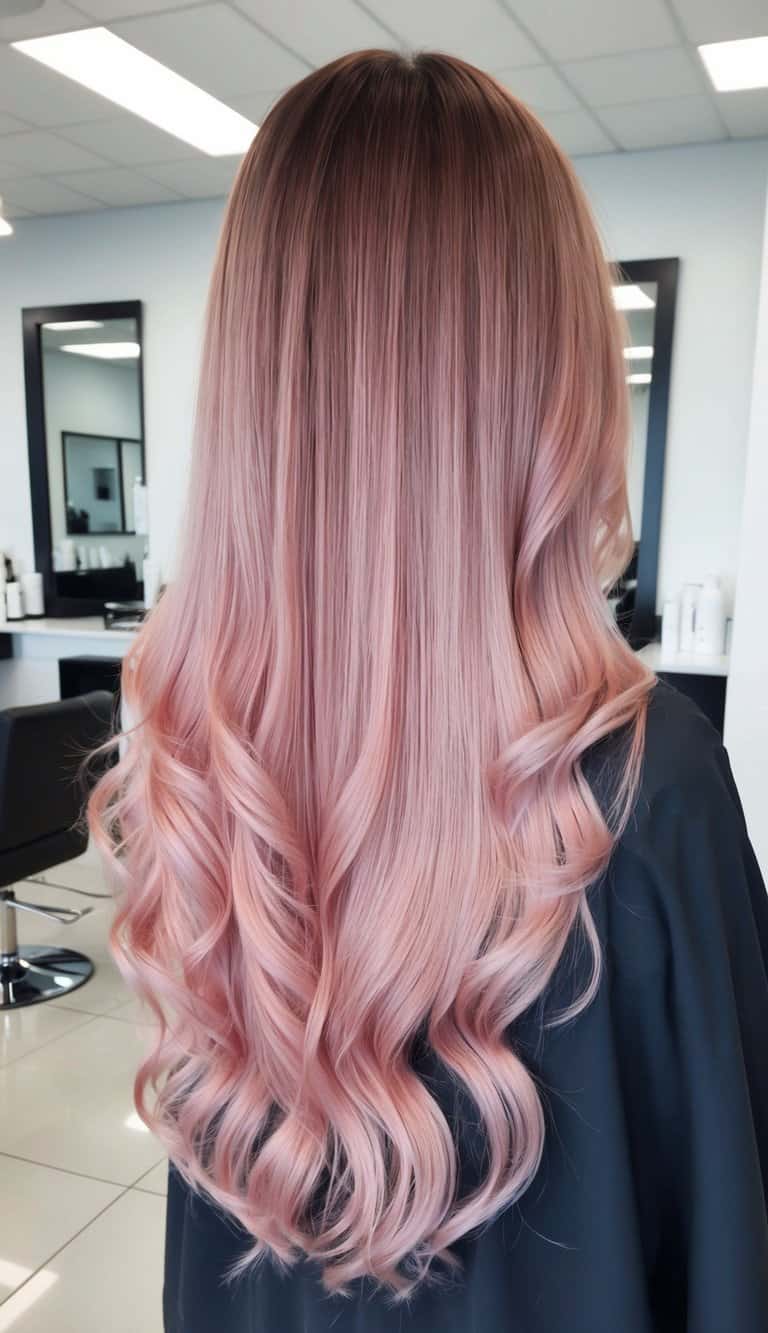
How do you get a rose gold that looks like a custom blend rather than a pink mistake? The answer is in the base. A brown to rose gold ombré on long, thick hair with loose curls creates a warm, dimensional effect that reads as soft, not loud. The middle part and no bangs keep the focus on the color shift.
Thick hair starting at shoulder length or longer gives the layers room to show the curl pattern. Ask your colorist for: mid-back hair with layers, brown to soft rose gold ombré. Be specific about the intensity: a muted rose gold stays classy, while a brighter version leans more editorial. A color-depositing conditioner helps stretch the time between salon visits.
Mid-Back Vibrant Pink Ombré
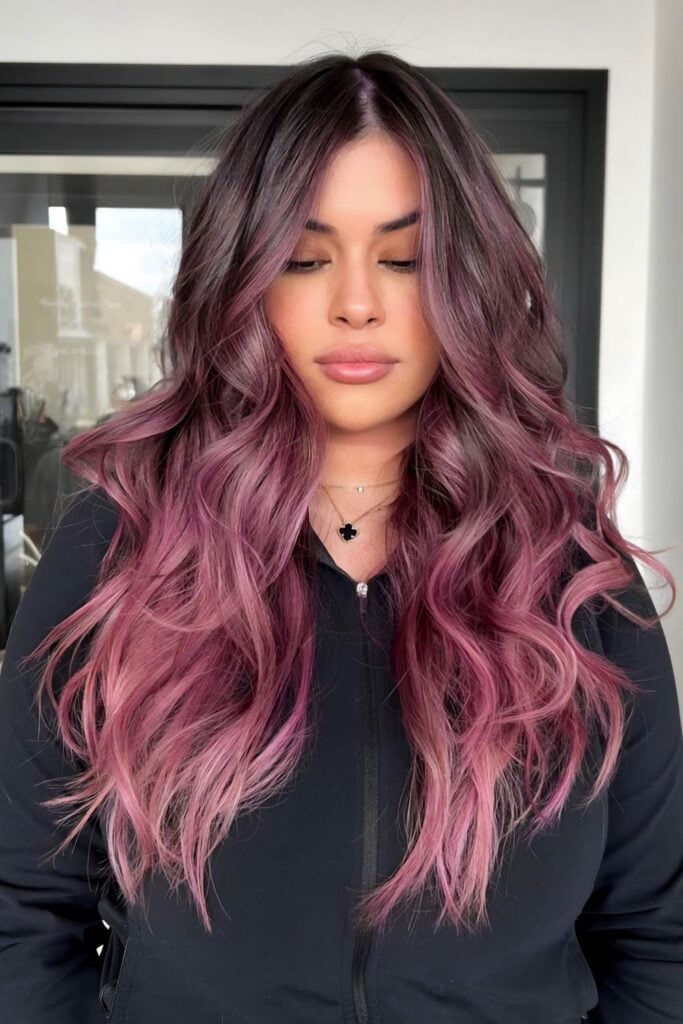
Vibrant pink ombré is not a subtle color shift, but it can be a sophisticated one when the base is a rich dark brown. The thick, wavy texture and loose waves give the pink ends a soft, blended transition, and the middle part keeps the look balanced without bangs.
This is a salon-only project: getting the pink saturation even and the fade seamless requires a professional hand. Thick, wavy hair starting at shoulder length or longer provides the weight and texture to carry the color. Ask your colorist for: mid-back thick wavy hair, dark brown to vibrant pink ombré. A DIY kit risks uneven coverage and a muddy tone, so book the appointment and let the pro handle the lift.
Mid-Back Dark Blonde To Light Blonde Ombré
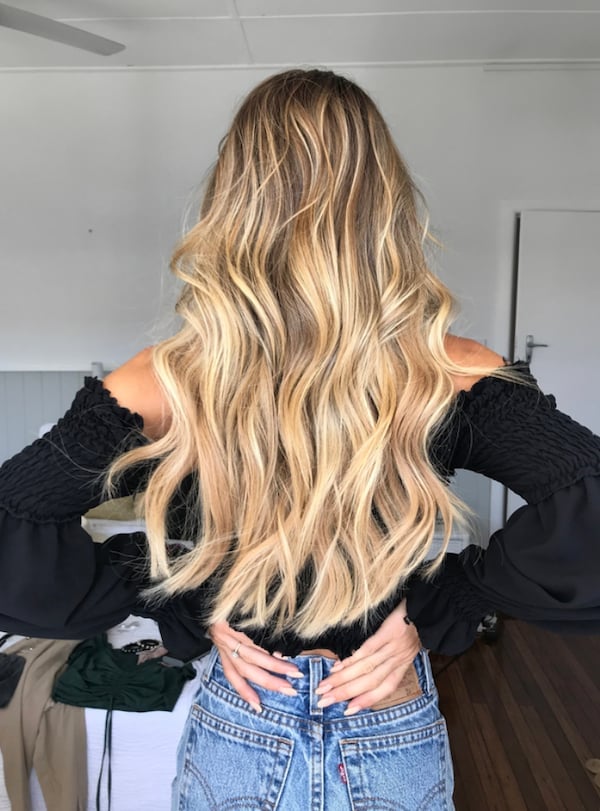
A dark blonde to light blonde ombré is the quiet sibling of the more dramatic color transitions: it shifts tone without shouting. The mid-back length on thick, wavy hair gives the gradient a natural flow, and the loose waves catch the light in a way that straight hair cannot. No bangs, just a middle part that lets the color speak.
This subtle shift suits anyone who wants a lighter end without a visible root line. Thick hair starting at shoulder length or longer works best, with long layers adding movement. Ask your colorist for: mid-back thick hair, dark blonde to light blonde ombré. Compared to a platinum end or a vivid shade, this is a low-commitment ombré that grows out gracefully and needs less frequent toning.
Final Thoughts
For a truly classy ombré, prioritize seamless blending and choose tones that complement your natural base color, avoiding harsh lines or overly contrasting shades. That means your lighter pieces should start low enough to feel like a shadow, not a stripe.
- Trim the baseline every six to eight weeks to maintain shape and bluntness.
- Use a color-safe shampoo and conditioner to preserve the ombré tones.
- Deep condition weekly to combat dryness, especially on the lighter ends.
- Avoid excessive heat styling; use a heat protectant when necessary.
- Tone every 8-12 weeks to keep blonde bright and brass-free.
Ombré remains a versatile and elegant choice for adding dimension.


