20 Purple Hair Dye Styles 2027 for a Bold Look
Purple Hair Dye Styles 2027 featuring deep purple ombre, vibrant pixie cuts, and midnight purple shades. See the looks and save your favorite.

Purple hair dye has moved past its novelty phase and settled into the permanent rotation. This year, deep jewel tones and soft pastels sit side by side, while lived-in color techniques like balayage and ombre keep the grow-out line from shouting at you.
This collection of 20 Purple Hair Dye Styles covers everything from a low-maintenance root shadow to a full-on violet commitment. Whether your hair is fine and straight or thick with natural wave, there is a shade and technique here that will not fight your texture. The struggle of a visible root line or a tone that fades to brassy in two weeks gets addressed directly.
Deep Purple Ombre on Long Straight Hair
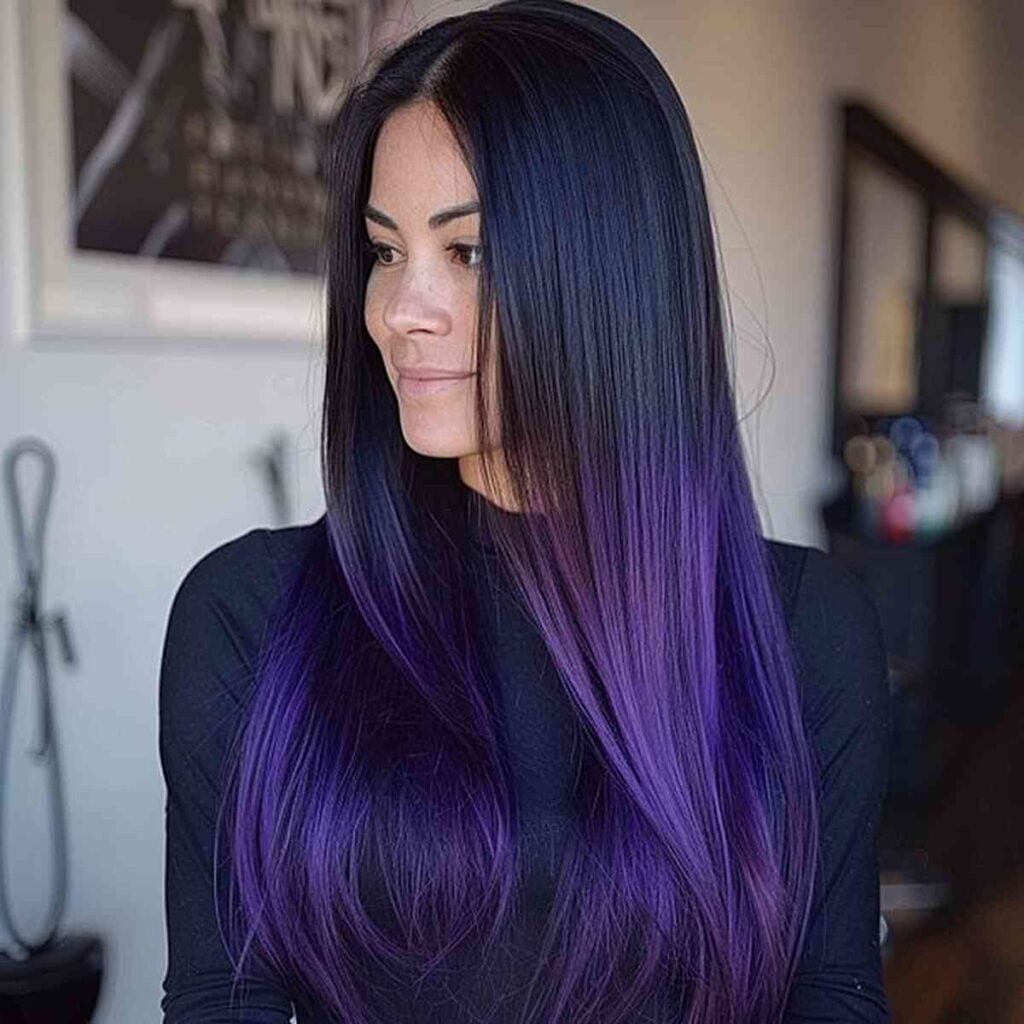
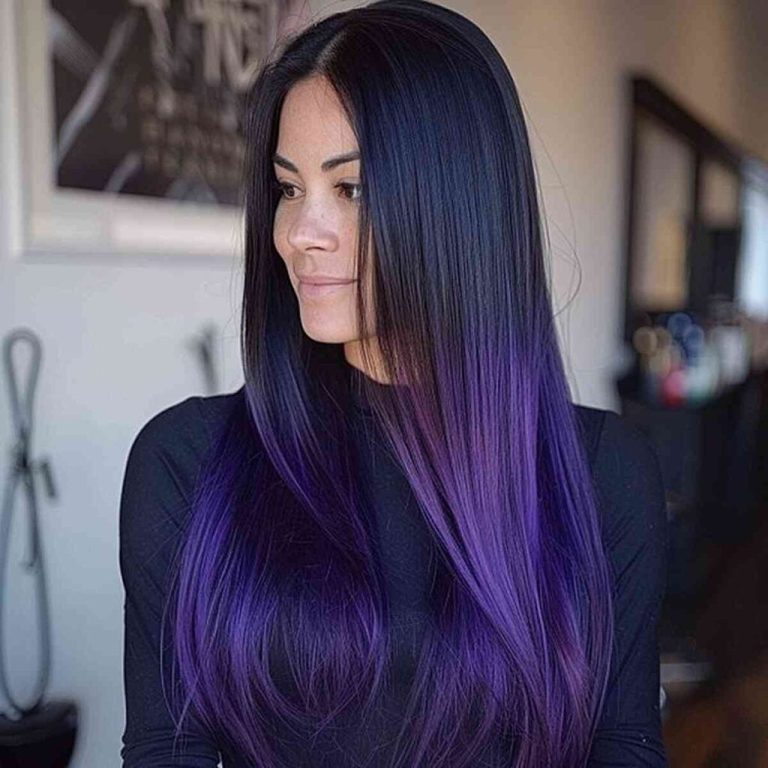
A gradient from black roots to vibrant purple ends works because the contrast is deliberate and the transition gradual. On long, straight, thick hair with a middle part, the color reads as a design rather than a happy accident. Ask your colorist for a deep purple ombre with a black base. The deep purple ombre effect requires pre-lightening the mid-lengths and ends to a pale yellow before applying the violet shade. Straight, glossy styling shows off that gradient best, so a flat iron and a heat protectant are your friends here. The grow-out is forgiving. The dark root means you can stretch to eight or nine weeks between touch-ups. A color-depositing conditioner every other wash keeps the purple from fading into an indeterminate beige.
Thick, straight hair of at least mid-back length holds this look best because the weight pulls the line clean. Those with finer textures may find the ombre transition looks softer, which is not necessarily a bad thing.
Vibrant Purple Ombre With Blunt Bangs
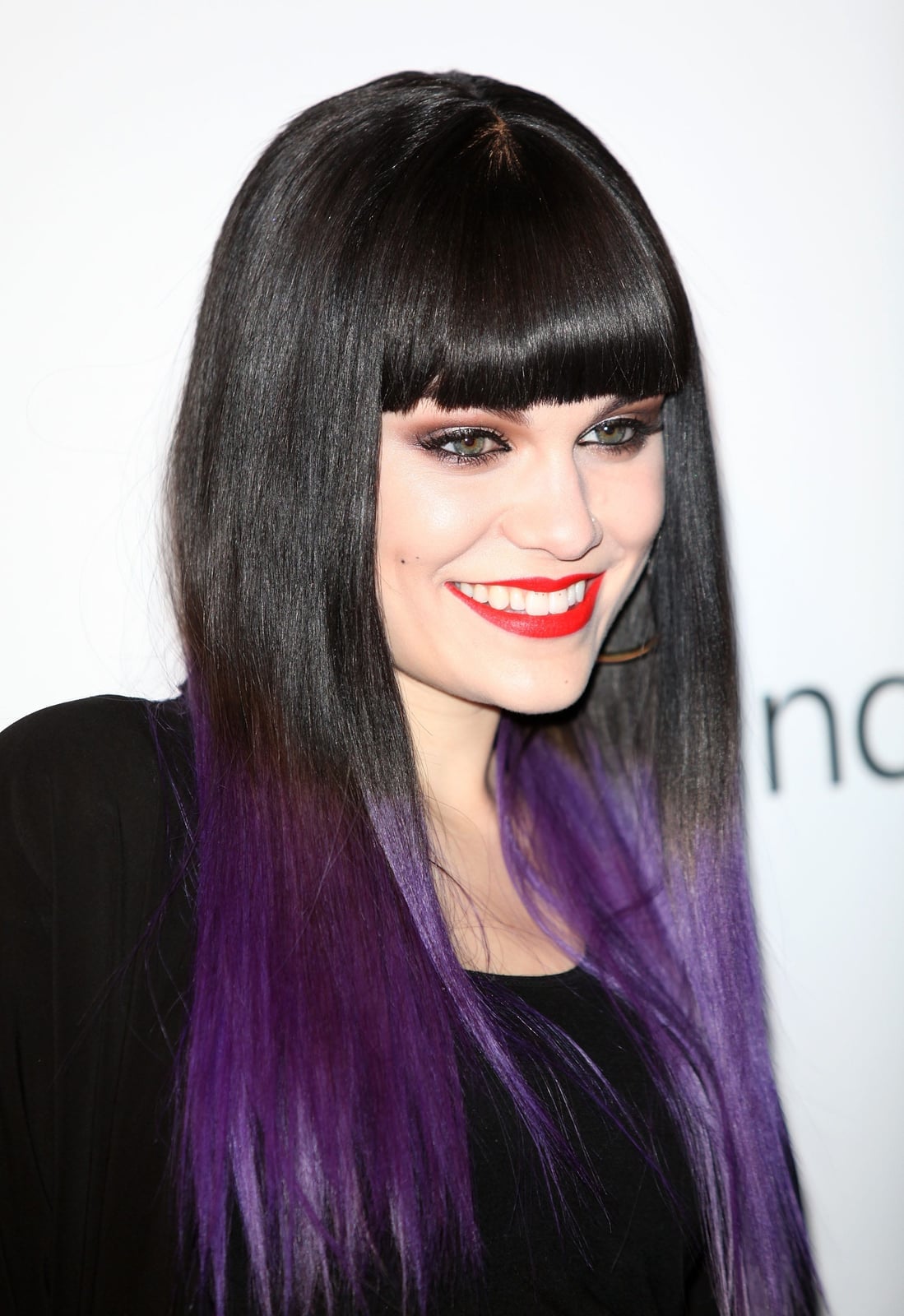
How do you describe a color shift that starts at the roots and gets louder as it goes down? The answer is in the bangs. Long, thick, straight hair with a dark base shifts into a vibrant purple ombre at the ends, and the blunt bangs cut straight across in the dark base shade. That contrast is the point. Ask your colorist for a vibrant purple ombre with blunt bangs and a straight blowout. The blunt bangs anchor the look in something graphic while the color does the rest. The middle part keeps everything symmetrical, and the straight blowout emphasizes the clean line where the color begins. This combination works best on those with oval or longer face shapes, as the horizontal line of the bangs shortens the visual length of the face. The straight styling also means you need a good heat protectant and a flat iron you trust.
Vibrant All-Over Purple Pixie Cut
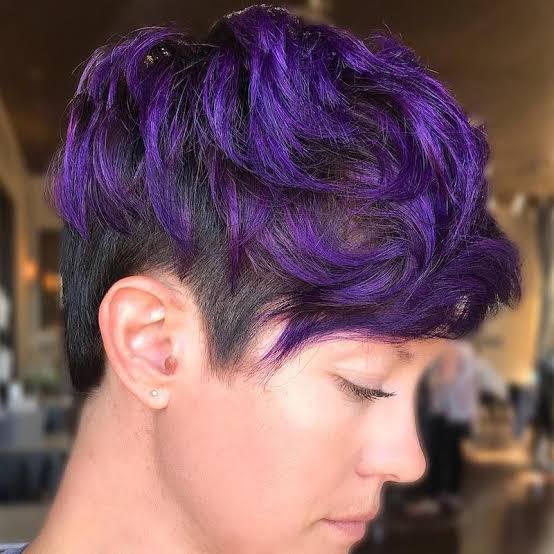
A pixie cut in a rich, vibrant purple with darker undertones relies on texture to keep it from reading as a solid block of color. The short sides and longer, swept-back top layers give the eye somewhere to go. Ask your colorist for a vibrant all-over purple pixie with a textured top. Fine, curly hair works well here because the natural volume and curl pattern add the movement this cut needs. The side view confirms the shape: shorter at the nape, longer on top, with the purple shade consistent throughout. This is a salon-only proposition, the bleach required to lift dark hair to a true vibrant purple on short hair takes precision. The payoff is a cut that needs minimal daily styling: a dab of texturizing paste and you are done. Best reserved for spring and summer, when the shorter length feels practical and the color can fade gradually into something softer.
Rich Midnight Purple With Face-Framing Layers
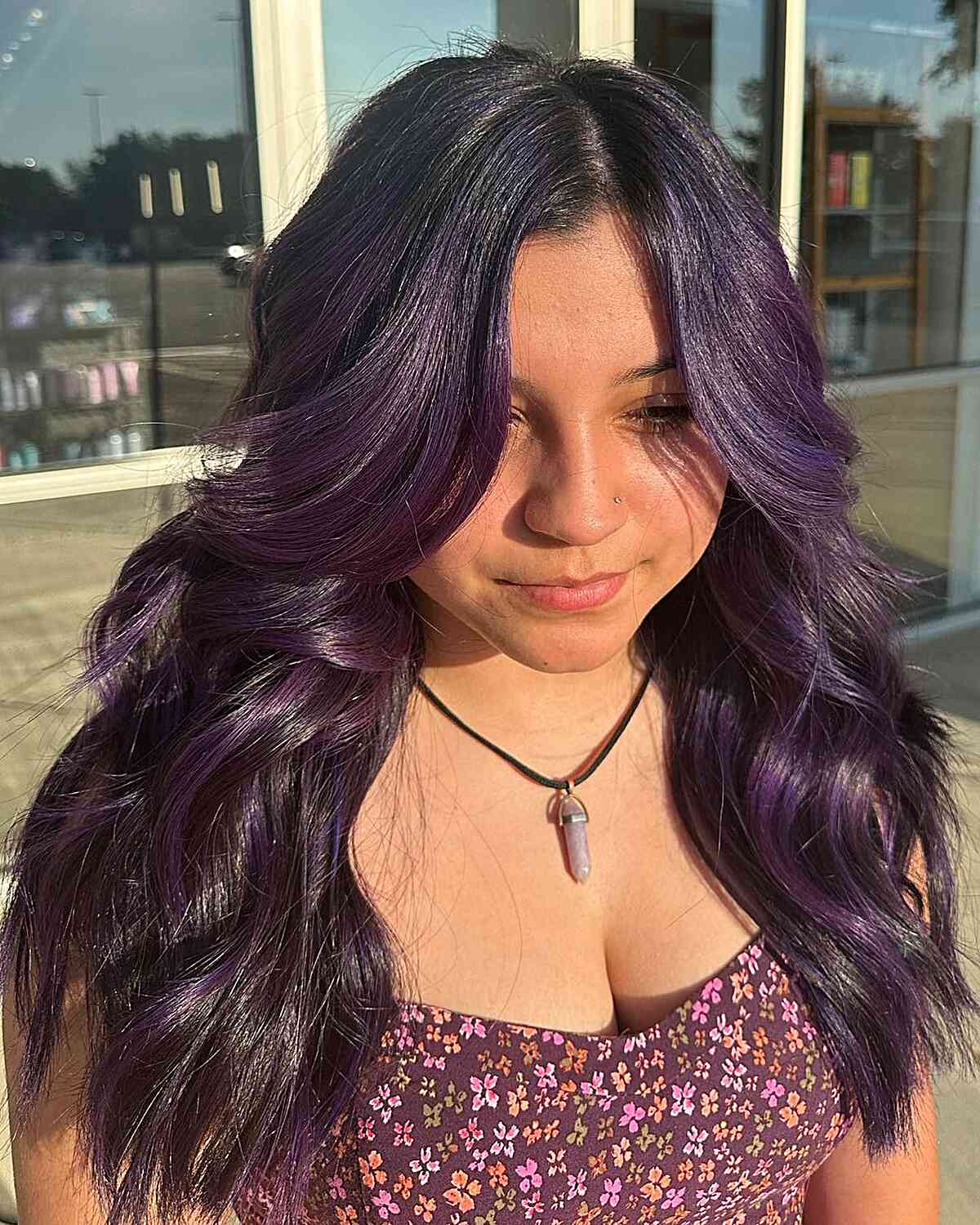
Midnight purple is the shade that looks black in dim light and reveals its color in the sun. This version sits on mid-back length, wavy, medium-density hair with face-framing bangs and soft waves. Unlike a vibrant purple that announces itself from across the room, this one waits for a second look. Ask your colorist for midnight purple with face-framing bangs and soft waves. The face-framing layers soften the line around the jaw and create movement through the length. To keep the waves defined and the color glossy, use a round brush during blow-drying to emphasize the layers around the face. A color-safe shampoo is essential here, as the deep tone can pull warm or muddy without proper care. Toning appointments every six to eight weeks keep the midnight shade from drifting toward brown. Face-framing bangs also need a trim every four weeks to stay at the right length.
Lavender Highlights on Dark Hair
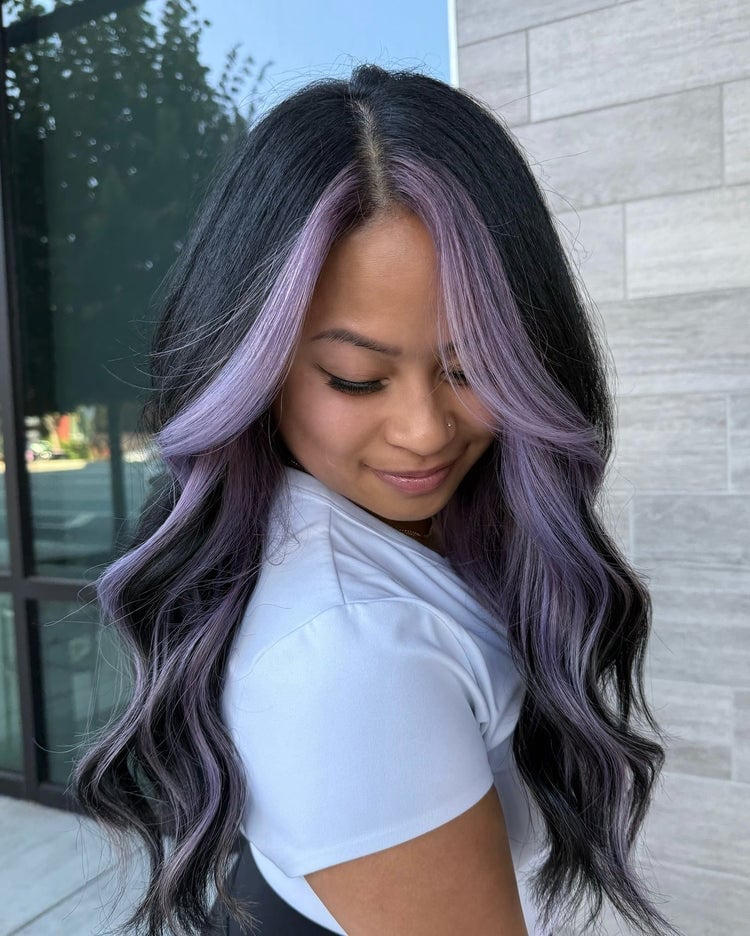
Lavender highlights on a black base read as subtle only until you turn your head. On long, dark, wavy hair with a middle part and curtain bangs, the highlights wrap around the face and continue through the length. The contrast is striking because the base is so deep. Ask your colorist for a dark base with lavender face-framing highlights. This is a salon-only technique: the stylist must pre-lighten selected sections to a pale blonde before applying the lavender tone, and the placement around the face determines how much the color reads. A purple shampoo used once a week keeps the lavender from turning brassy or washing out to a dingy gray. The grow-out is less obvious than with all-over pastels because the dark root is the intended base. The curtain bangs catch the light and show the lavender first, which is the whole idea. This is not a DIY project. The lifting and toning require precision.
Purple Balayage Lob With Wavy Texture
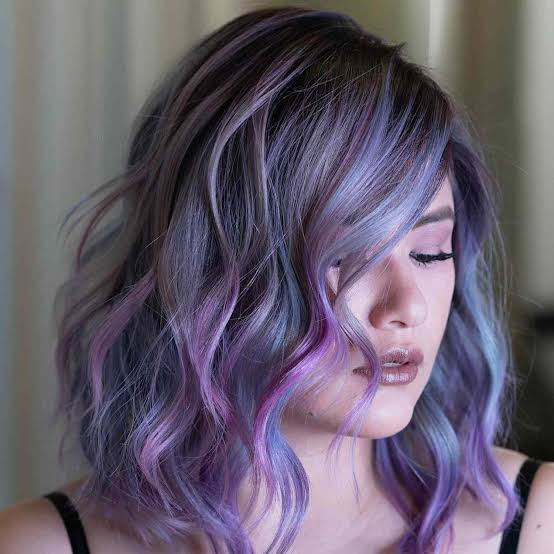
Balayage on a collarbone lob works because the hand-painted color lands where the waves naturally turn, not in a straight line across the ends. The darker base keeps the roots low-maintenance while the lighter purple pieces wrap through the lengths. Curtain bangs pull the color forward, so the purple reads even when the hair is down. Ask your colorist for: collarbone lob, purple balayage, curtain bangs.
Start with a wave-enhancing mousse on damp hair, then dry with a diffuser on low heat. A texture spray at the ends will keep the bend soft, not crunchy. This style works for everyday wear and for occasions where you want the color to move when you do. The lob needs a trim every six to eight weeks to keep the shape clean and the bangs grazing the brows.
Muted Purple Bob With Subtle Highlights
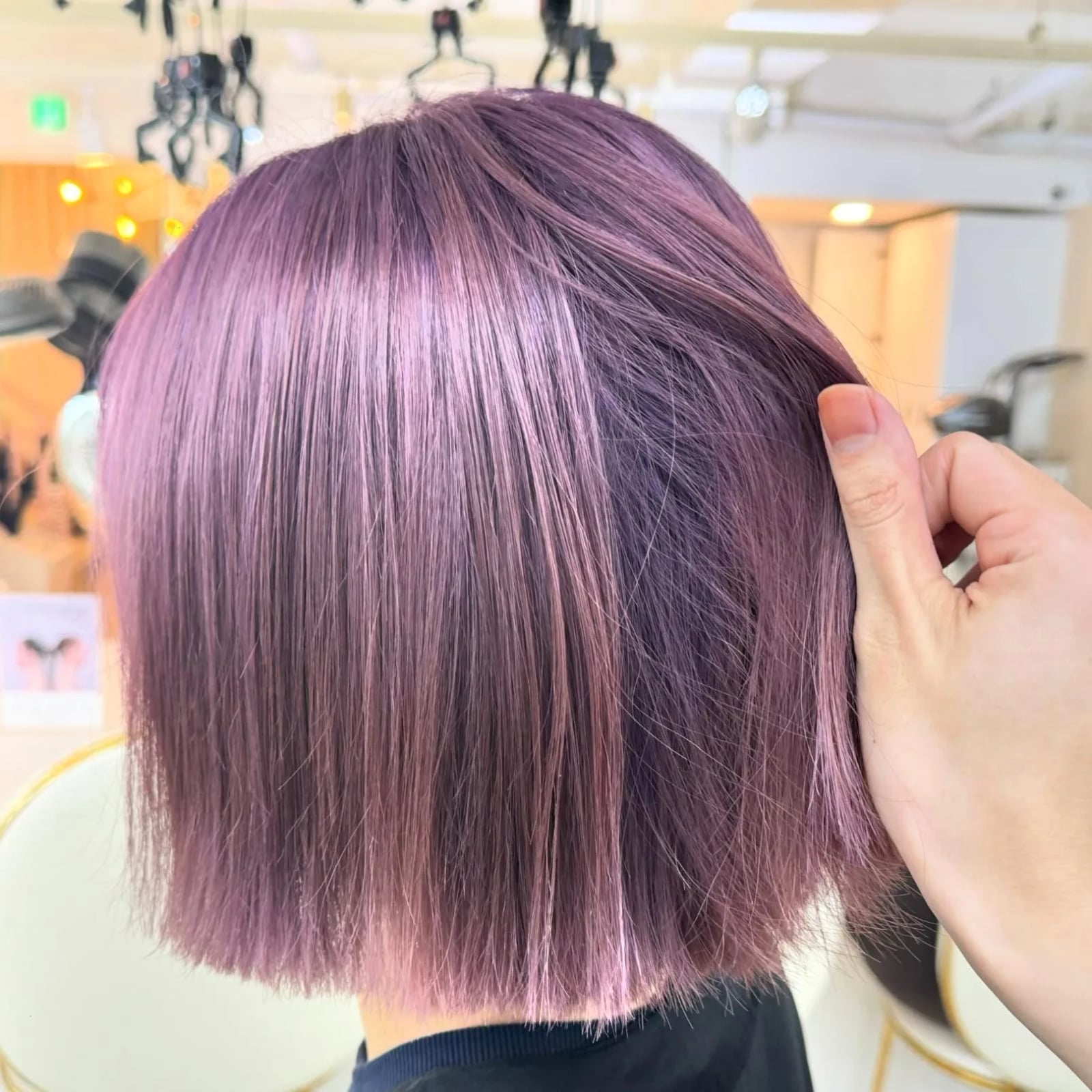
A muted purple base on a collarbone bob looks sophisticated. The subtle lighter purple highlights are fine and sparse, so the overall effect is a soft sheen. Straight, fine texture shows the color clearly because there is no wave to scatter the light. Ask your colorist for: collarbone bob, muted purple with subtle highlights. The trade-off: muted shades fade faster on fine hair. Without a regular toning shampoo, the purple can lean gray within two weeks. A blunt bob also needs trims every six to eight weeks to keep the line crisp.
Silver Purple With Lavender Highlights
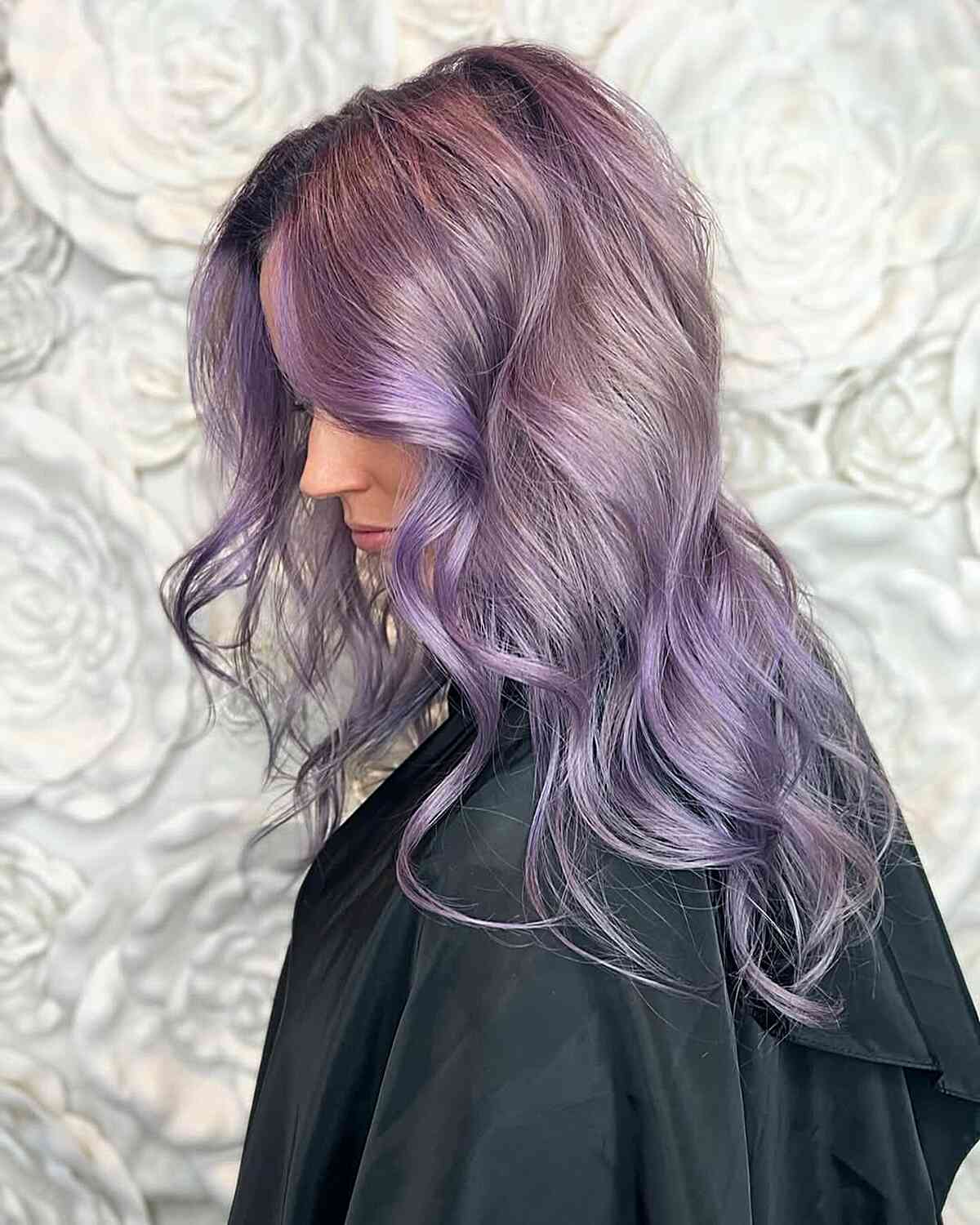
How do you get a silver purple that does not look like a faded violet? You ask for a silver purple base with lighter lavender highlights painted into the layers. The silver base provides the foundation; the lavender pieces add dimension so the color looks multidimensional. Curtain bangs on a collarbone length frame the face without shortening the overall line. Ask your colorist for: silver purple base, lavender highlights, curtain bangs.
Fine, wavy texture needs a light hold to keep the wave pattern defined. A small amount of sea salt spray on damp hair, then air-dry or diffuse for a soft bend. The layers should be trimmed every eight to ten weeks to keep the ends healthy and the curtain bangs on target. A purple shampoo used once a week will keep the silver from warming up.
Deep Violet With Subtle Undertones
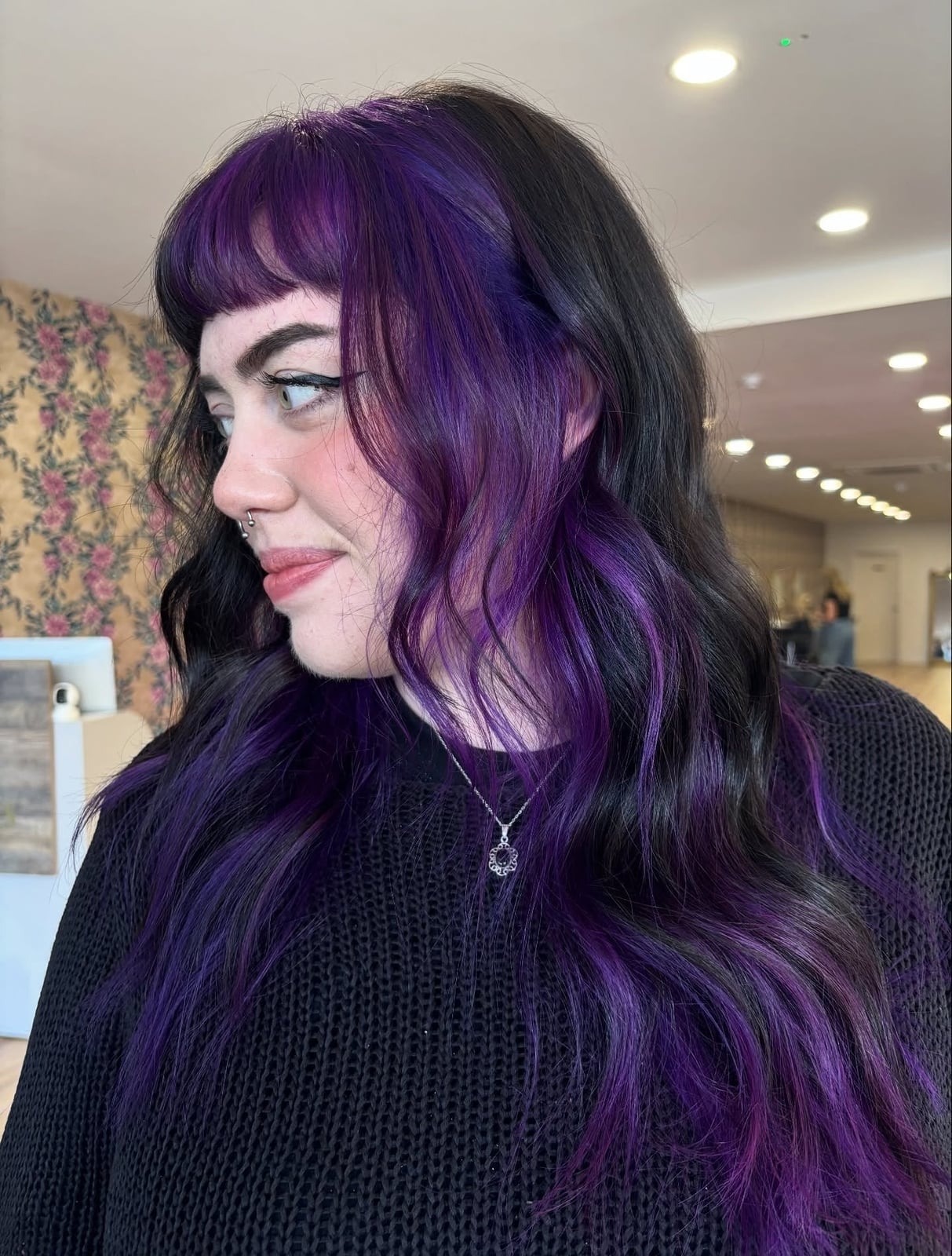
A deep violet shade on shoulder-length, thick, wavy hair works because the color has subtle dimension. The lighter violet undertones are visible only when the wave turns, so the hair appears dark purple from the front and reveals depth as you move. The middle part keeps the color distribution even. Ask your colorist for: deep violet with subtle lighter violet undertones. Thick hair holds the pigment well, and a wide-tooth comb on wet hair is the only detangling tool you need. Avoid excessive heat styling to preserve the glossy finish that makes this shade work.
Dark Base With Purple Ombre
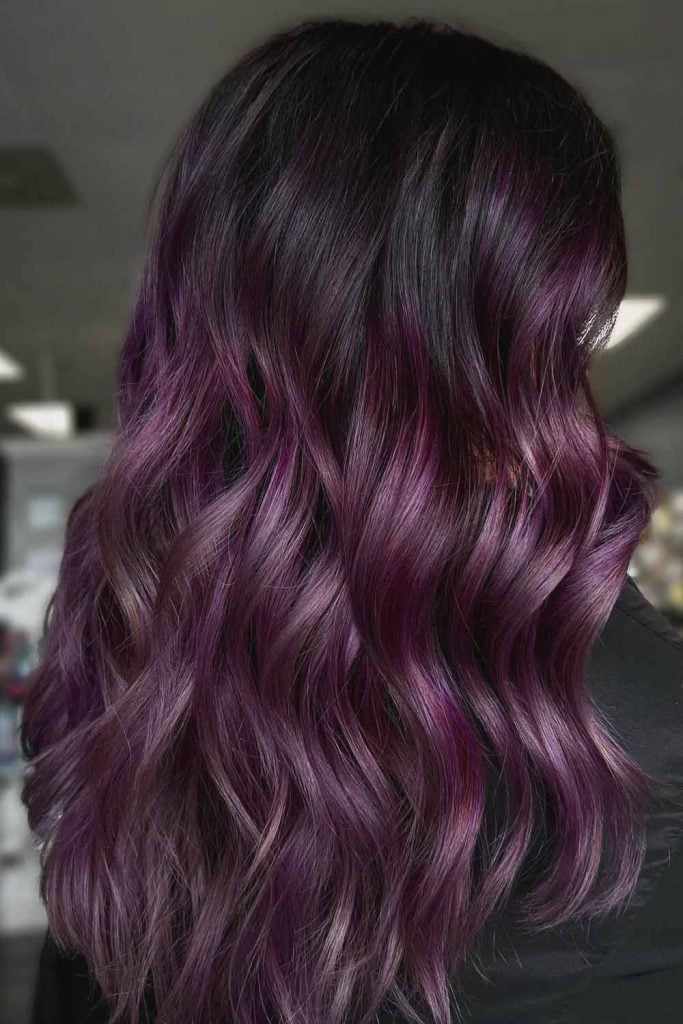
An ombre from a dark base into vibrant purple is a less intense way to wear the color because the roots stay your natural shade and the purple starts around the cheekbone or below. On mid-back length, thick wavy hair, the transition is gradual enough that the dark base anchors the look and the purple feels like an accent without a full commitment. The middle part and loose waves show the color shift from every angle. Ask your colorist for: dark base to vibrant purple ombre.
This technique requires a salon visit: the colorist sections the hair and lightens the ends before applying the purple, so the blend looks smooth and not like a grown-out all-over color. Diffuse the waves for volume without heat damage, and let the natural wave pattern do the work. A subtle ombre grows out gracefully, so you can stretch salon visits to ten or twelve weeks. It works for everyday wear and for occasions where you want the color to peek out when you move.
Purple Balayage on Dark Hair
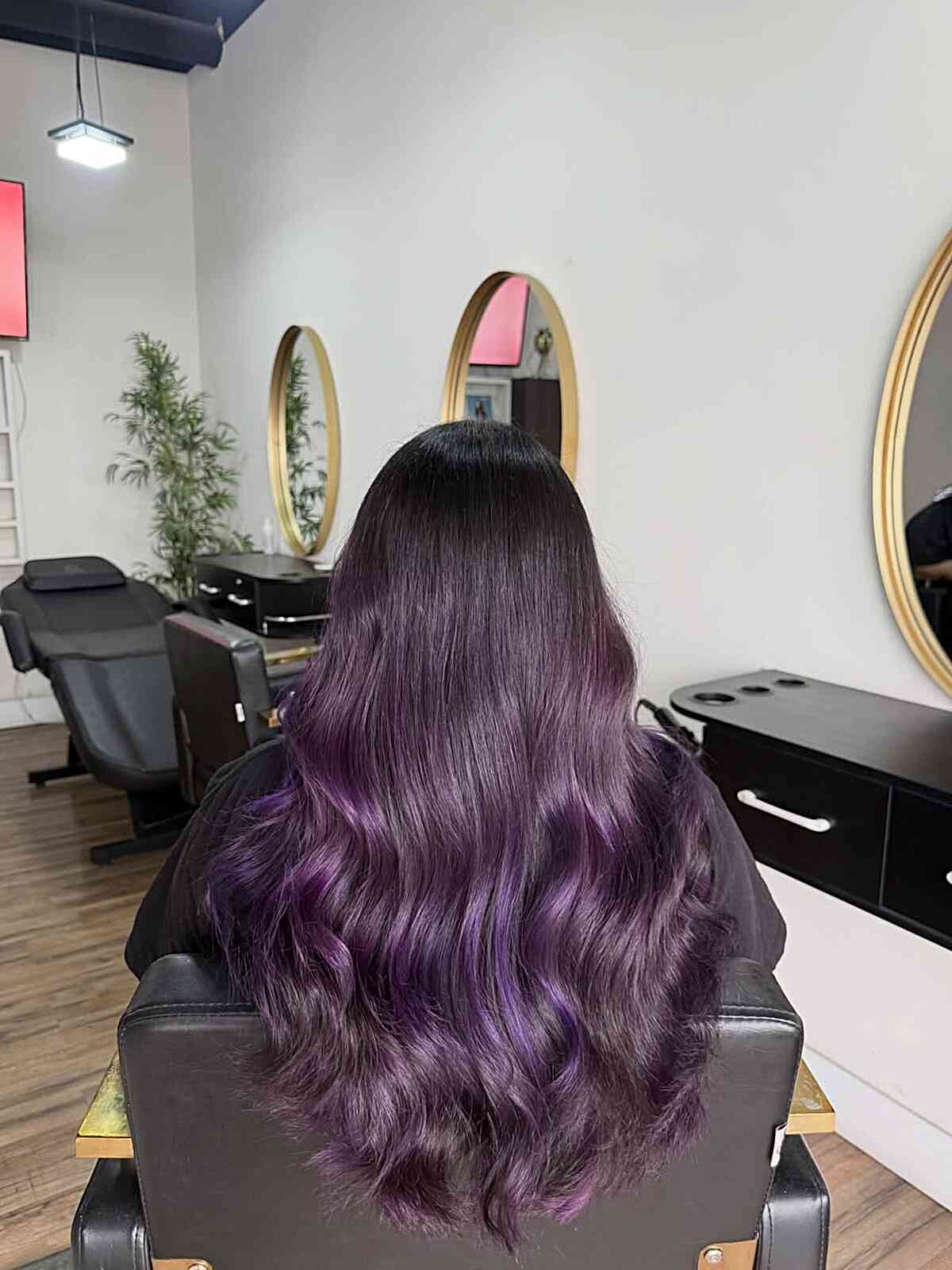
An ombré gives you a hard line where the color starts; a balayage is softer, painted on so the dark base blends upward into the purple without a clear border. On this mid-back length, the thick wavy texture carries the dimension well, making the transition look lived-in from day one. Ask your colorist for: dark base with purple balayage.
The technique works best on hair that already has some wave, since straight strands can make the painted sections read as stripes. A loose wave with a curling wand takes about 20 minutes and a heat protectant. Plan for a toner refresh every six to eight weeks to keep the purple from turning muddy against the dark base.
Dark Brown With Deep Purple Balayage
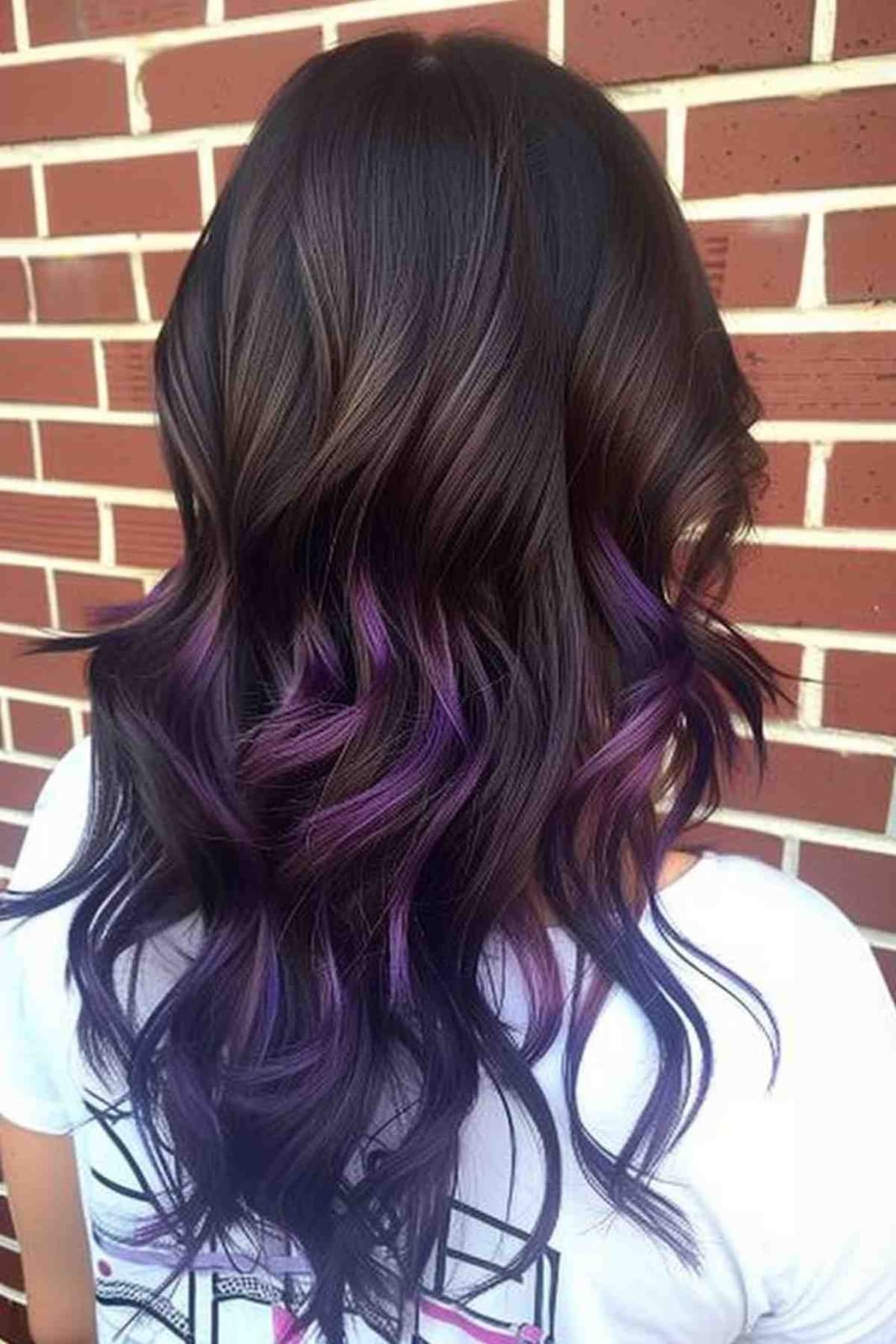
The dark brown base acts as a neutral anchor, so the deep purple balayage becomes a rich accent without a full color commitment. On collarbone-length, medium-density wavy hair, the soft layers and middle part let the purple peek through without overwhelming the cut. Ask your colorist for: dark brown base with deep purple balayage. This combination suits medium-density wavy hair because the purple stays concentrated on the lengths and ends, leaving the roots untouched. If your hair is very fine or pin-straight, the balayage can look sparse; thicker textures hold the pigment more visibly.
Purple Balayage on Collarbone Length Hair
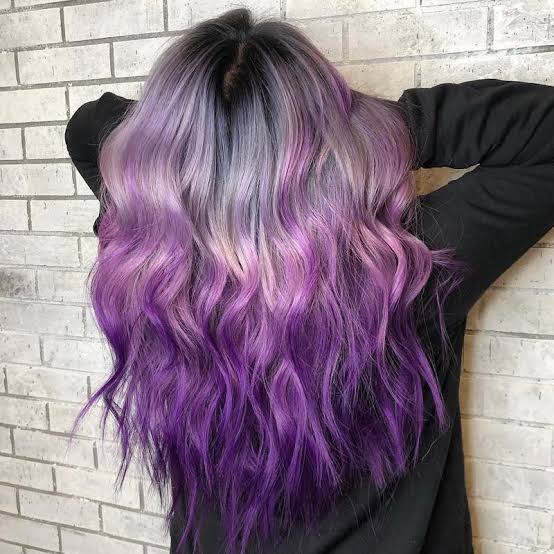
The darker root zone on this collarbone length is not an accident; it is the part of the balayage that buys you grow-out time. The purple tones lighten toward the ends, so even as the hair lengthens, the transition stays soft rather than abrupt. Ask your colorist for: collarbone length purple balayage. The honest drawback is that the lighter purple ends fade faster than the darker sections near the root, which means a single toner appointment can fix the ends while leaving the base alone. A sea salt spray is all the styling it needs to keep the wave pattern loose and the color transitions visible.
Vibrant Purple With Pink Highlights
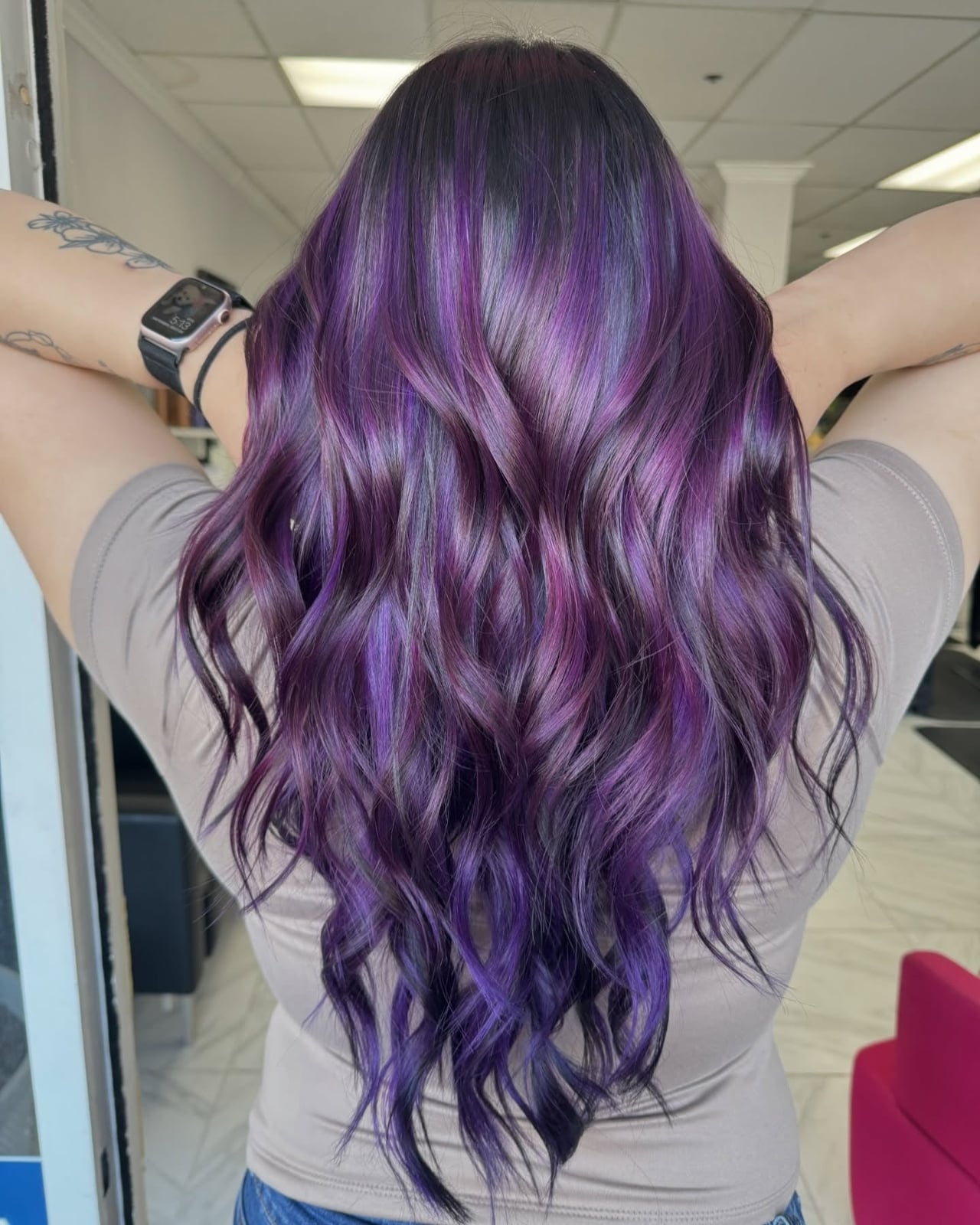
So you want purple, but you also want pink, and you do not want it to look like a craft project. The solution is to ask for a vibrant purple base with lighter purple and pink highlights through the ends, not painted in chunky sections. Ask your colorist for: vibrant purple with pink and lighter purple highlights. This is the exact phrasing that gets you a dimensional blend without two separate colors fighting for attention.
- Specify that the pink should be a few shades lighter than the purple so it reads as highlight, not a second color.
- Request that the highlights be concentrated through the mid-lengths, leaving the under layers mostly purple for depth.
- Mention that you want a soft transition, not a stripe effect.
Purple to Pink Ombre
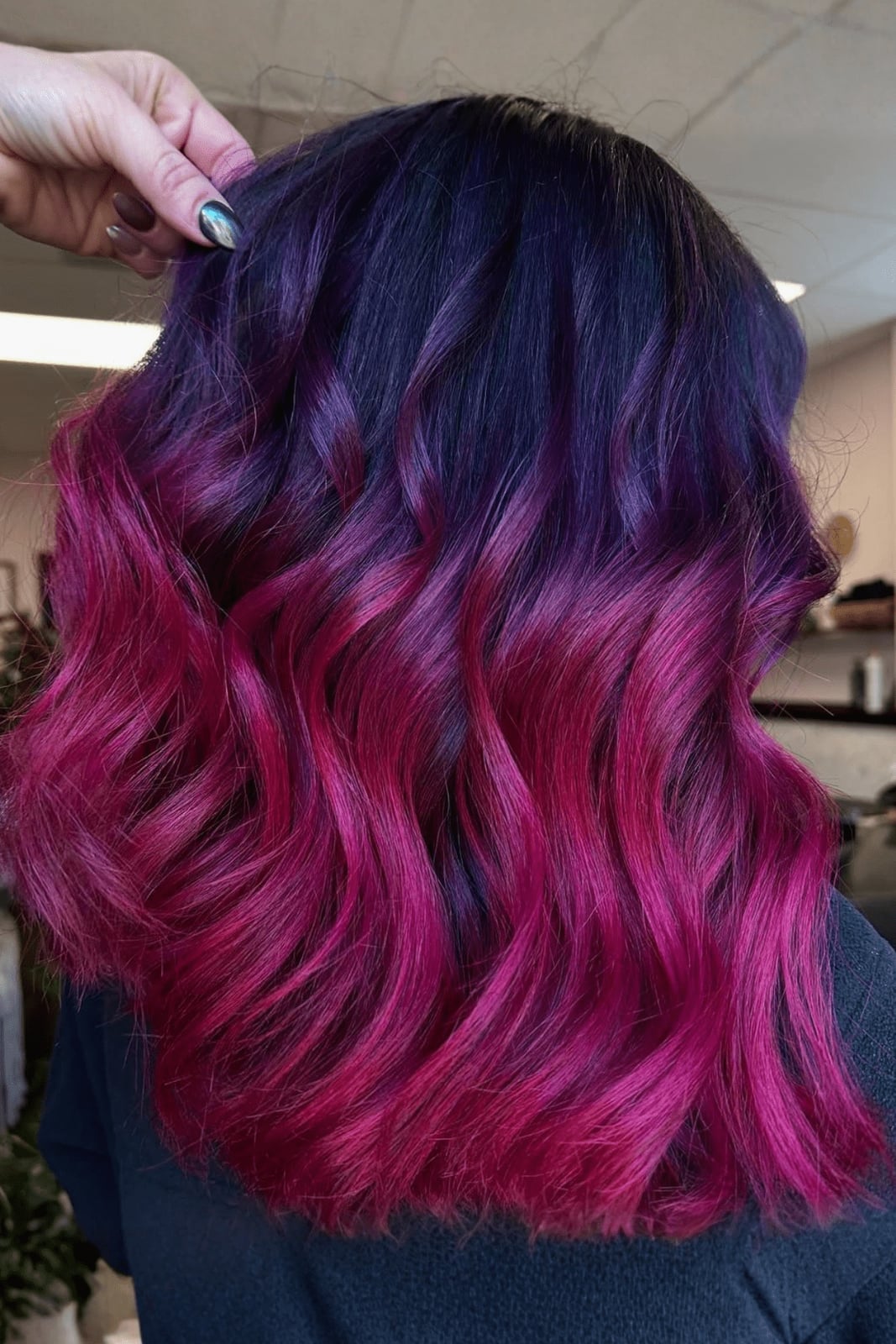
The technique requires pre-lightening the ends to a pale yellow so the pink takes cleanly, which adds about an hour to the appointment. A wavy style helps the gradient blend, so a curling iron or braid-out is your friend between washes. Use a color-depositing conditioner in a pink tone every other wash to keep the ends from fading into coral.
Split Dye: Deep Purple and Light Pink
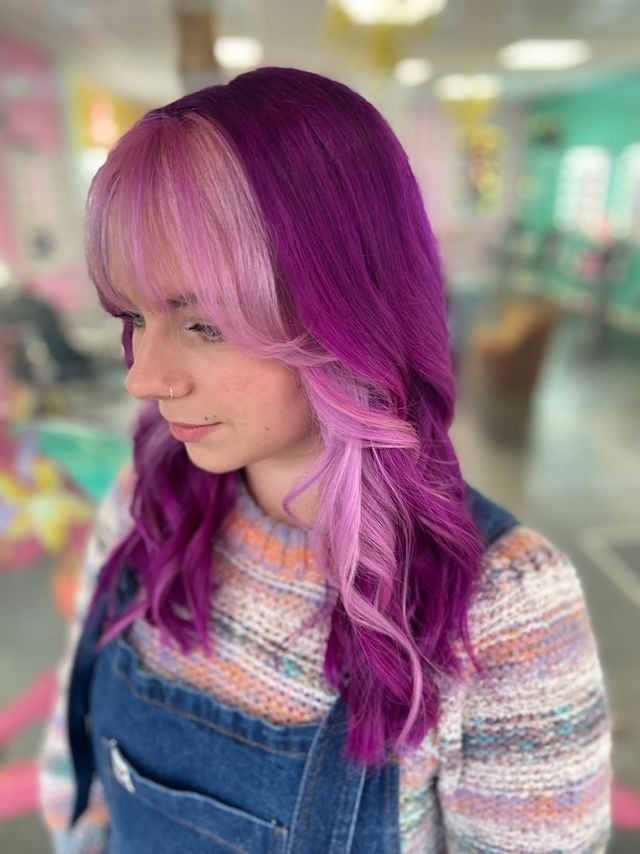
A split dye puts a deep purple on one side of collarbone-length wavy hair and a light pink on the other, with curtain bangs to frame the divide. An ombre blends gradually, but this technique commits to two distinct colors that meet at the middle part. Ask your colorist for: split dye, deep purple and light pink. This requires a salon visit, not a weekend DIY, because each half needs its own formula and processing time. Style with loose waves so the colors shift as you move.
Pink and Purple Split Dye
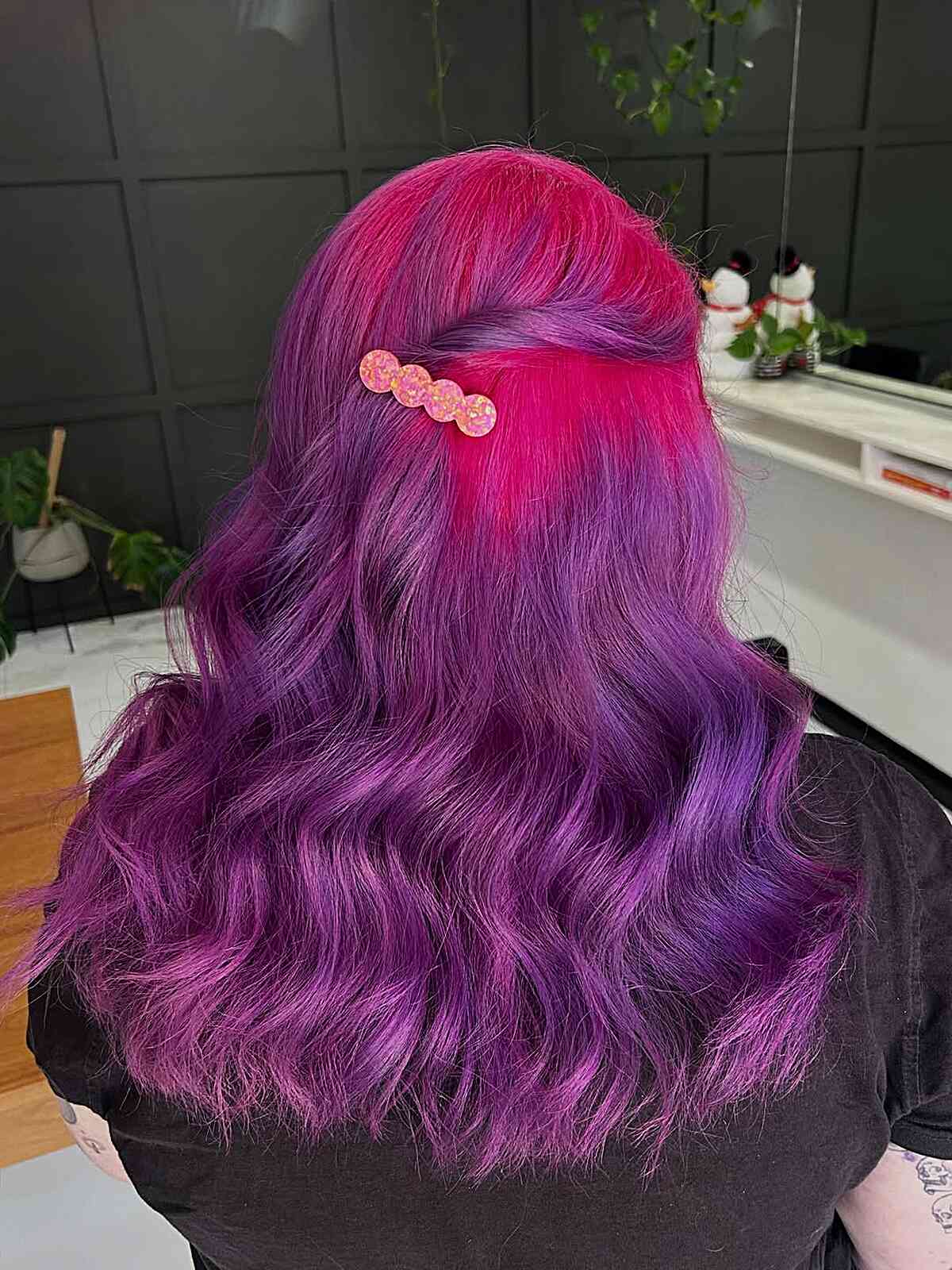
From the back, a pink and purple split dye on collarbone-length wavy hair is a clean vertical line of two vibrant colors. One side is a hot pink, the other a deep purple, and the middle part makes the contrast clear. Ask your colorist for: pink and purple split dye. The upkeep is a challenge: two bright shades fade at different rates, so one side can look washed out while the other still pops.
Medium-density wavy hair holds the pigment well, but expect a toning appointment every four weeks to keep pink from turning peachy and purple from drifting toward lavender. A side part can emphasize the split when you want the full effect, or hide one side when you need a break from the drama.
Purple to Pink Gradient
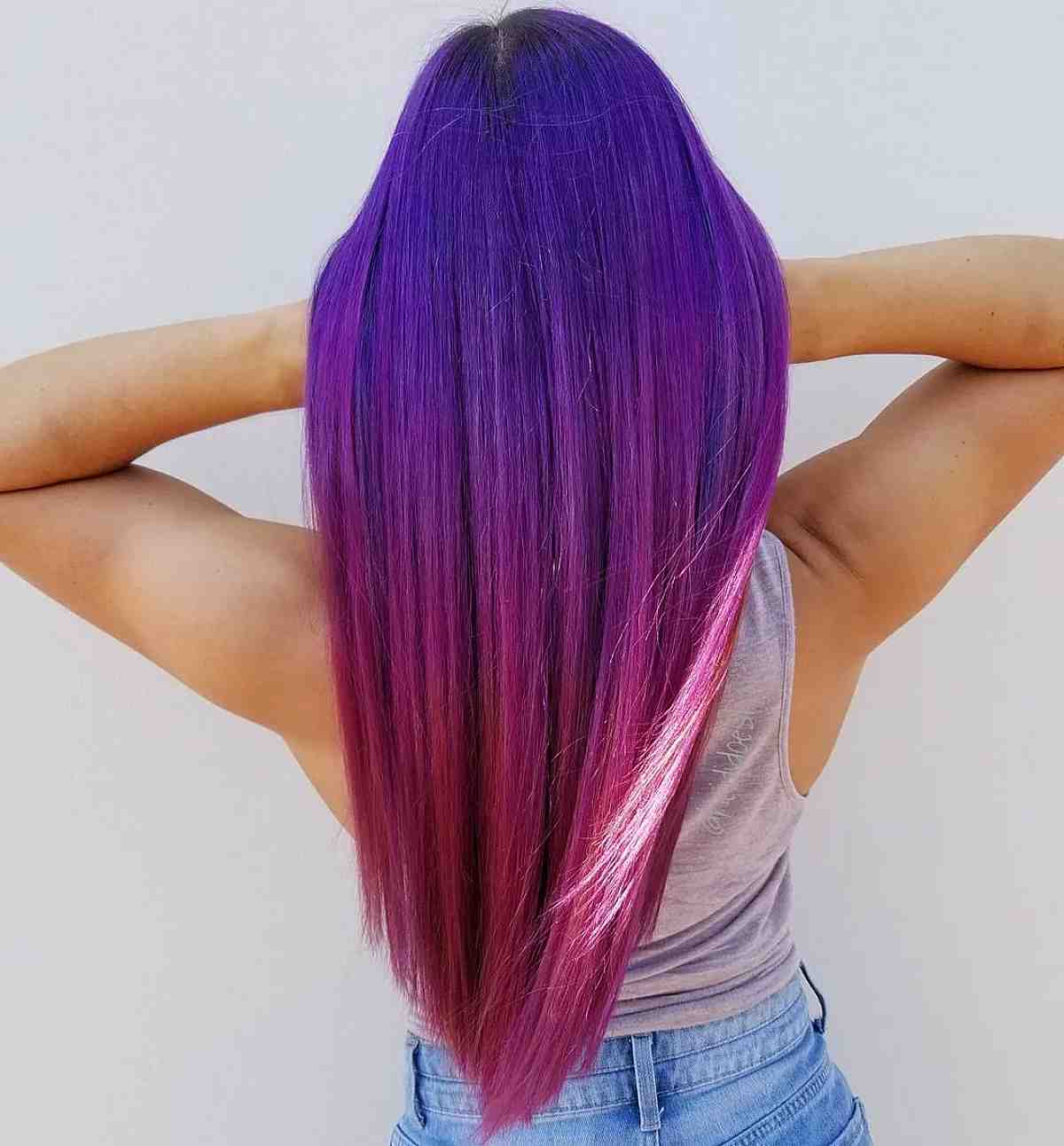
A purple to pink gradient on mid-back length straight hair starts deep violet at the roots and shifts to bright pink at the ends. The transition happens over several inches, so the color change feels seamless rather than abrupt. Ask your colorist for: deep purple to vibrant pink gradient. Thick, straight texture is ideal here because smooth, glossy strands show the progression of shade without texture interrupting the line.
The gradient holds its definition for about six weeks before the pink begins to soften into a pastel. A flat iron keeps the hair poker straight so the color banding stays crisp from root to tip. A middle part lets both sides mirror each other, which is the point of a gradient over a side-swept ombre.
Chalky Pastel Purple and Pink Blend
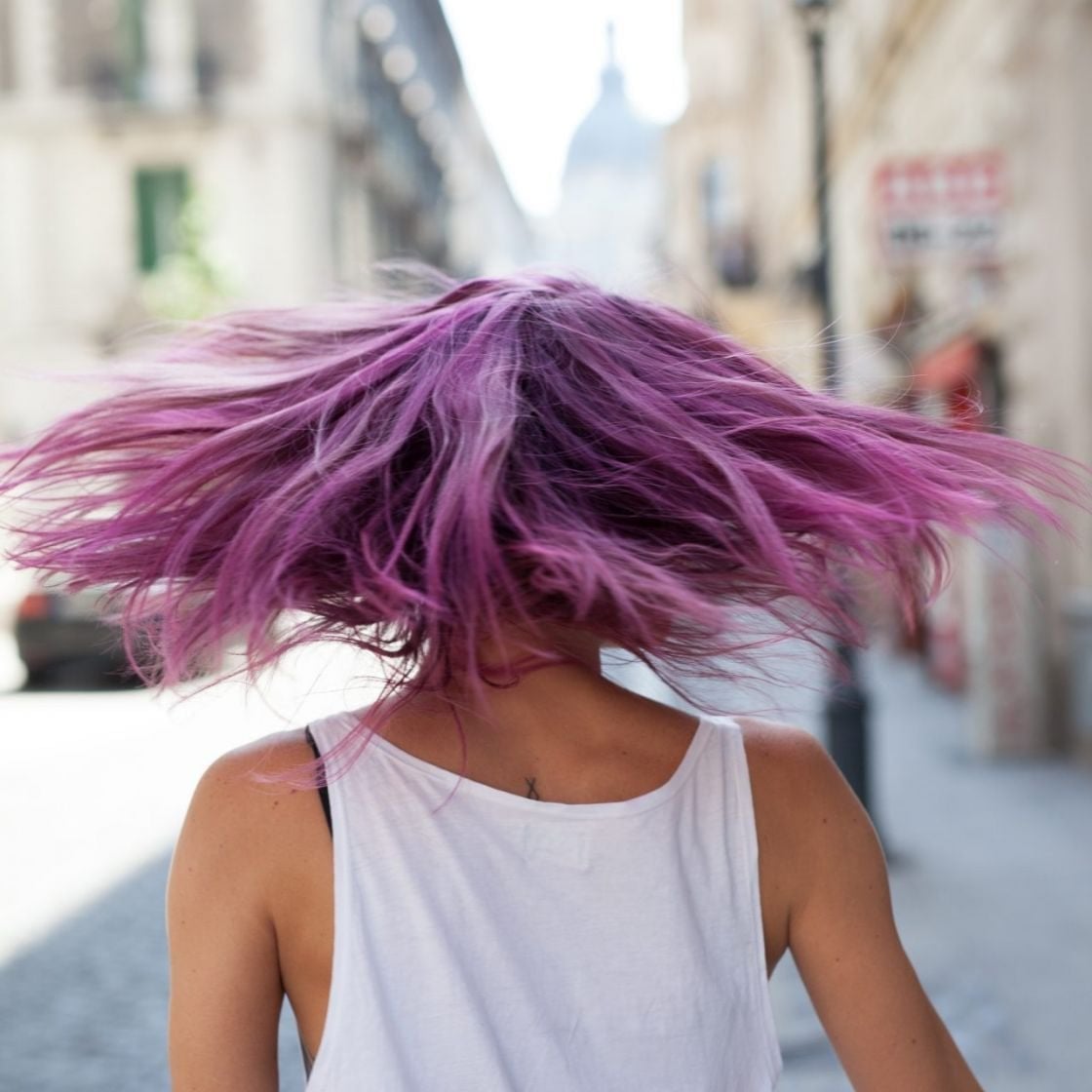
A chalky pastel purple and pink blend on long, layered wavy hair looks like it was dusted with powder rather than painted on. The color sits softly on the hair, with no hard lines between the lavender and cotton-candy tones. Ask your colorist for: chalky pastel purple and pink blend. The effect relies on an air-dried, tousled texture, so skip the flat iron and let thick, wavy hair do its thing.
A texturizing spray adds the grip that keeps the pastel shades from looking washed out in direct light. This is a salon process because the hair needs to be pre-lightened to a pale blonde before the pastel tones will register. The payoff is a color that moves with you rather than sitting flat and uniform.
Pastel Purple With Darker Roots
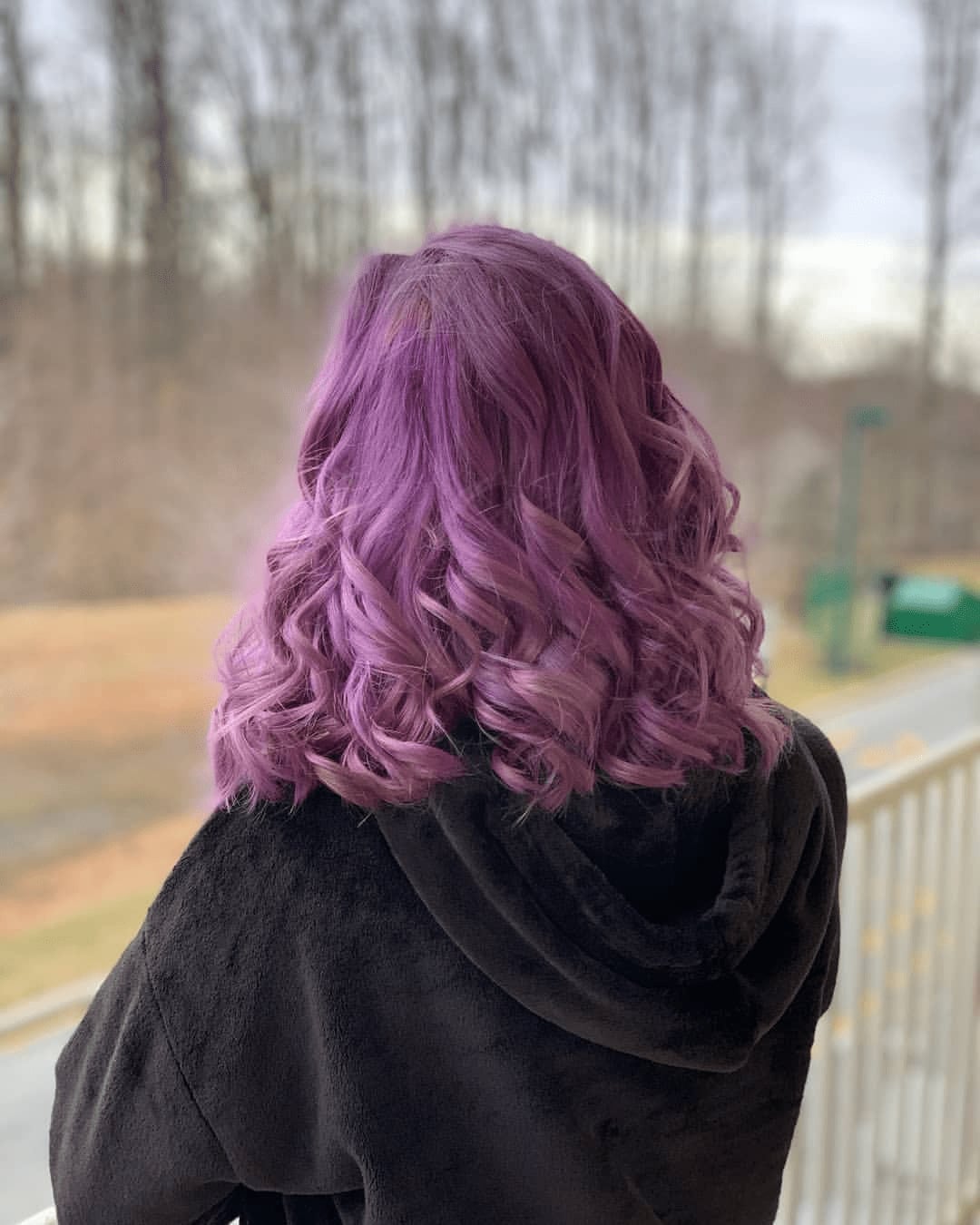
How do you get pastel purple without the high-maintenance grow-out? The answer is a darker purple root that transitions into a soft lavender pastel through the mid-lengths and ends. Ask your colorist for: pastel purple with darker purple roots. Shoulder-length, thick, wavy hair in loose curls shows the gradient beautifully, with the darker root giving the pastel something grounded to emerge from.
The darker root buys you about six to eight weeks between touch-ups, compared to the three weeks a full pastel would demand. A curling wand adds definition to the waves, and the color fade is more graceful because the root was never lighter than the ends. Toning every four to six weeks keeps the pastel from going muddy.
Final Thoughts
For a lower-maintenance approach to purple, opt for balayage or ombre techniques that allow for softer grow-out. If you desire a bold, all-over color, be prepared for more frequent toning and root touch-ups. Purple hair offers a spectrum of expression; choose the shade that speaks to you.
- Use color-safe shampoos and conditioners to preserve vibrancy.
- Wash hair with cool water to minimize color stripping.
- Incorporate a purple toning conditioner weekly to maintain hue.
- Deep condition weekly to combat dryness from chemical treatments.
- Schedule salon visits for touch-ups or color maintenance every 6-8 weeks.


