Hair Type Chart Explained: How to Read Your Curl Pattern
Unlock your best hair! Learn how to read the Andre Walker Hair Type Chart to identify your curl pattern and choose the right products for your unique hair.

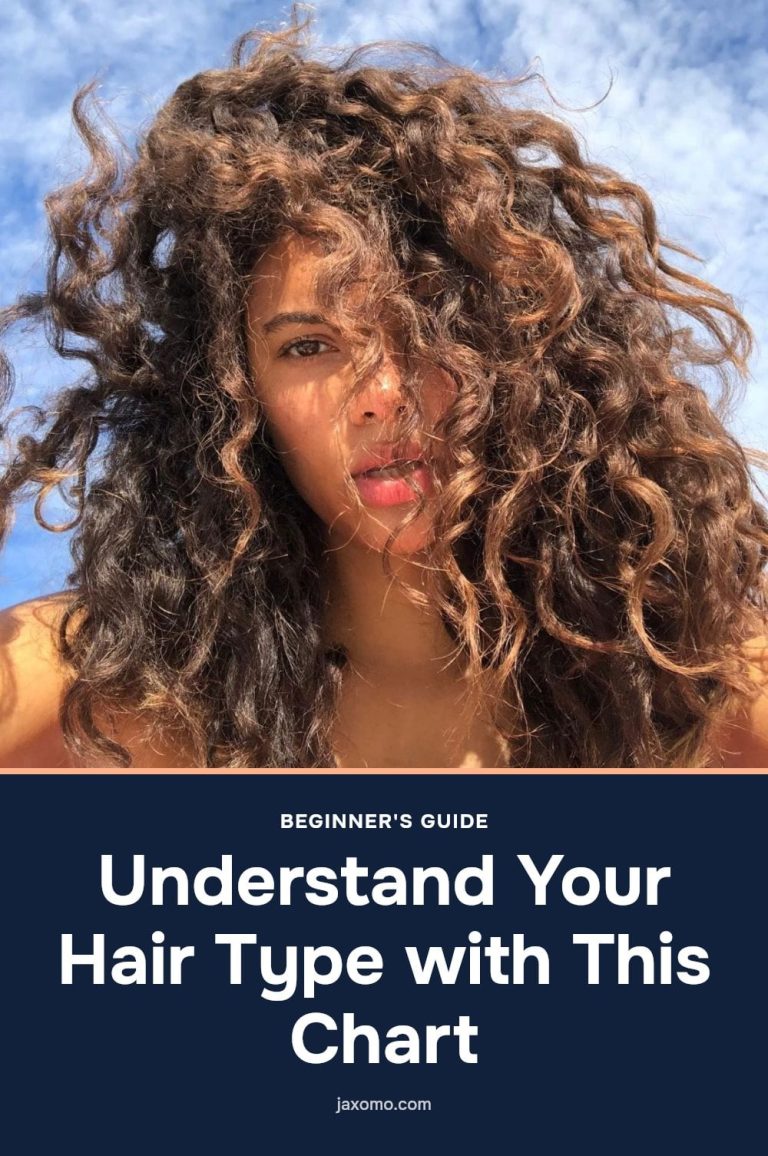
Ever looked at your hair and wondered why some products work for your friend but fall flat on you? The answer often starts with your curl pattern. This article breaks down the most common hair type chart, the Andre Walker system, so you can finally understand your natural texture and pick the right routine for it.
We will cover how to identify your type, what each category means, and why other factors like porosity and density matter just as much.
Key Takeaways
- Wash and air-dry your hair with no products to see your true curl pattern.
- Type 1 is straight, Type 2 is wavy, Type 3 is curly, and Type 4 is coily or kinky.
- Subcategories A, B, and C describe the tightness or size of your curls or waves.
- Your hair type can change over time due to hormones, age, or chemical treatments.
- Consider porosity, density, and texture alongside curl pattern for the best routine.
What is a Hair Type Chart?
A hair type chart is a classification system that sorts natural hair texture, mainly by curl pattern, so you can choose products and styling methods that actually work for you. The Andre Walker Hair Typing System is the most common reference. It groups hair into four main types (1 through 4) and splits each into subcategories A, B, and C based on how tight the curl or wave is.
Essentials for Identifying Your Hair Type
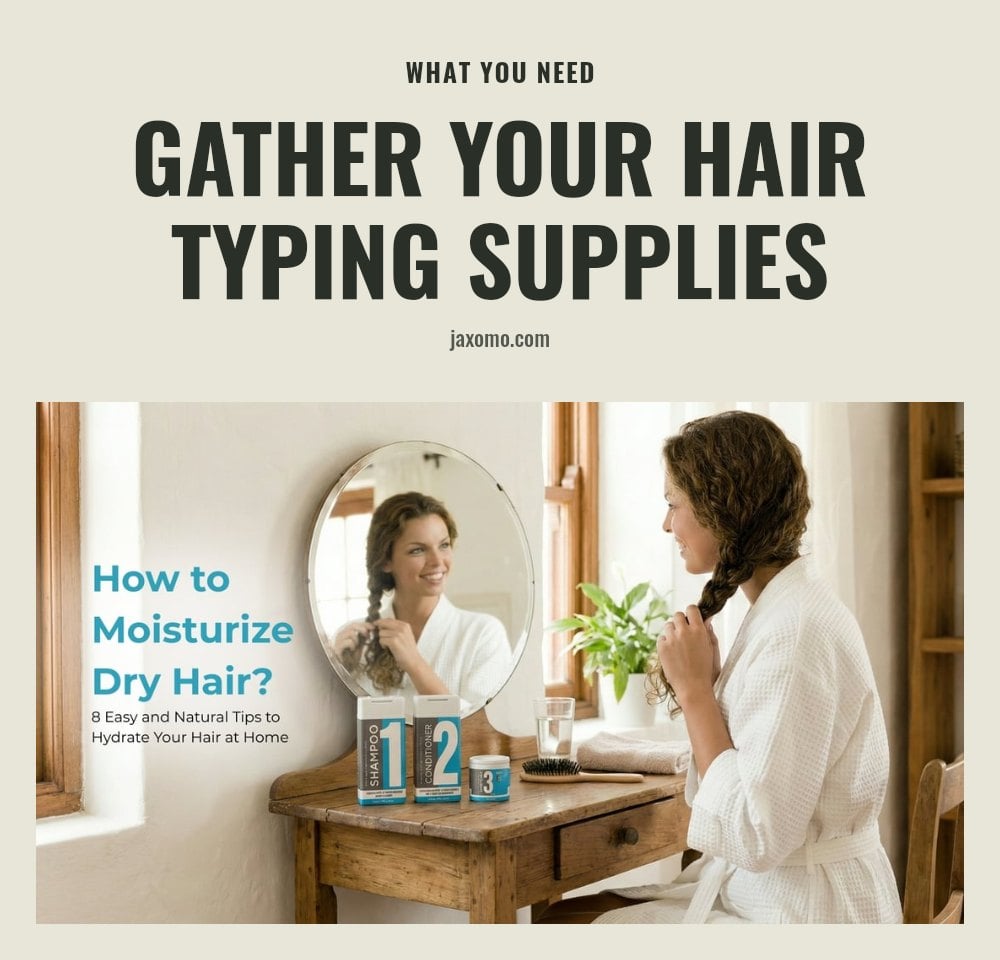
To type your hair accurately, you need two things: clean, wet hair and a mirror. Start with freshly washed hair that has no styling products in it, that’s the only way to see your true natural pattern. A mirror lets you check all angles, especially the back and crown where the curl shape can differ.
How to Determine Your Hair Type
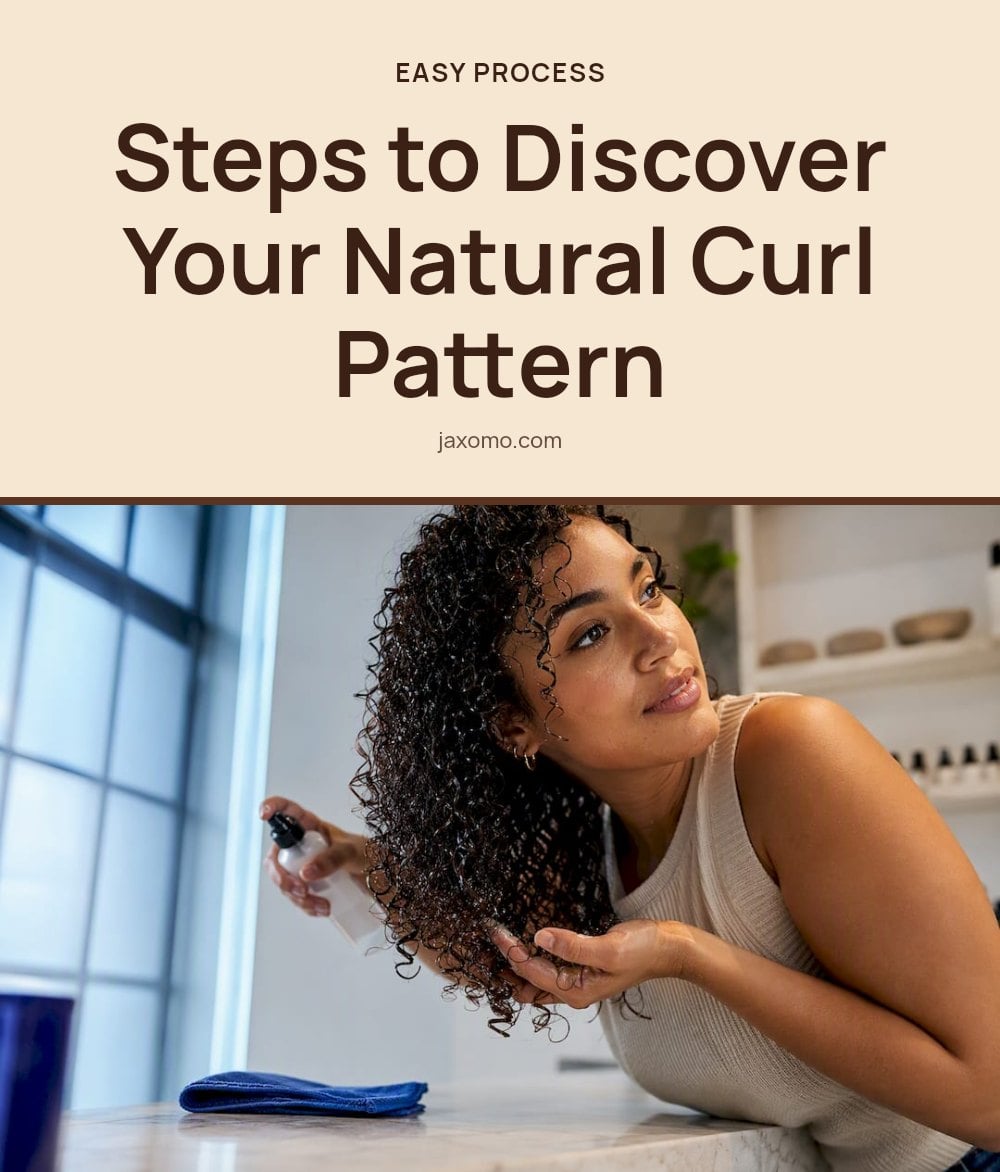
- Wash and leave wet: Shampoo and condition your hair as usual, then let it air dry without any product. The natural pattern shows best when hair is damp and free of gels, creams, or heat styling.
- Observe the overall shape: Look at the form your hair takes as it dries. Does it hang straight, form loose S-shapes, bounce into distinct loops, or coil tightly? That tells you the main type: straight, wavy, curly, or coily.
- Check curl tightness and size: Once you see the pattern, look closer. Are the waves wide and loose or more defined? Are the curls large and soft or small and springy? The tightness and diameter of the curl or wave determine the subcategory (A, B, or C).
Understanding the Andre Walker Hair Typing System
Type 1: Straight
Type 1 hair has no natural curl. Subcategory 1A is pin-straight and fine. 1B has a bit more body but still lies flat. 1C shows a slight bend or wave, especially near the ends.
Type 2: Wavy
Type 2 hair forms an S-shape. 2A is fine with loose, barely-there waves. 2B has medium waves that are more defined. 2C is thick with defined waves that sometimes include a few coils.
Type 3: Curly
Type 3 hair creates distinct loops or spirals. 3A curls are large and loose. 3B curls are springy and medium-sized. 3C curls are tight corkscrews that are densely packed.
Type 4: Coily / Kinky
Type 4 hair has very tight patterns. 4A forms S-pattern coils. 4B has a zig-zag shape with less defined curl. 4C is extremely tight and dense with a zig-zag coil that shrinks significantly.
Common Hair Typing Mistakes to Avoid
One of the biggest mistakes is mixing up curl pattern (your hair type) with strand thickness (texture) or how much hair you have (density). These are separate traits, and each affects your routine differently. Another common error: trying to type hair when it is dry or full of styling products. Product buildup and dryness hide your natural pattern, so always start with clean, wet hair.
You might also find different curl patterns on different parts of your head. That is normal, not a sign you are doing it wrong. Use the dominant pattern as your guide, but don’t expect one uniform type from root to end. Finally, don’t get fixated on fitting perfectly into one subcategory. The chart is a starting point, not a strict rule. Let it steer your product choices and techniques, but adjust based on how your hair actually responds.
Beyond the Chart: Other Factors for Hair Care

Your curl pattern is only part of the picture. Three other factors change how your hair behaves and what products it needs.
- Hair Porosity: This measures how easily your hair absorbs and holds moisture. Low-porosity hair repels water and needs lightweight products; high-porosity hair soaks up moisture quickly but loses it fast, so rich creams or leave-ins work better.
- Hair Density: This is the number of strands on your scalp, described as thin, medium, or thick. Low-density hair benefits from light gels and volume-boosting methods; high-density hair can handle heavier butters and more product.
- Hair Texture: This refers to the thickness of individual strands, categorized as fine, medium, or coarse. Fine strands need gentle handling and lighter formulas; coarse strands can take richer oils and stronger hold products.
My tip: Check porosity first. It often makes the biggest difference in how a product performs on your hair.
Frequently Asked Questions
Can your hair type change over time?
Yes, your hair type can change. Hormonal shifts, aging, pregnancy, and chemical treatments like coloring or relaxing can alter your curl pattern. It is not unusual to see a different texture from one season of life to another.
Is hair type the same as hair porosity?
No, they are different. Hair type describes your curl pattern, while porosity measures how well your hair absorbs and holds moisture. You can have any curl type with low, medium, or high porosity, and each combination needs a slightly different approach to hydration.
What is hair density and why does it matter?
Hair density is the number of strands per square inch on your scalp. It affects how heavy or voluminous your hair looks and how much product you need. Low-density hair may feel thin and get greasy faster, while high-density hair can feel thick and take longer to dry.
How do I know if I have multiple hair types?
It is common to have more than one curl pattern on your head. After washing and air-drying, look at different sections, such as the nape of your neck, crown, and front. If some areas form waves and others form tight curls, you simply have a mix of types and can treat each section accordingly.
Should I use different products for different hair types on my head?
Yes, if the curl patterns vary significantly. You can apply a lighter product to the wavier sections and a richer cream or gel to the curlier or coiler parts. This targeted approach helps each area get the moisture and hold it needs without weighing down the looser sections.
Final Thoughts
Start by observing your clean, wet hair to find your main curl type and subcategory. Use that as a guide, but remember that your hair’s needs also depend on how porous, dense, and thick each strand is. My tip: revisit your type every year or after any major change like coloring or hormonal shifts, your hair may surprise you.