100 Goal Setting Tips that Actually Work
Unlock your potential with 100 actionable goal setting tips. Learn how to define, plan, and achieve your aspirations for a more fulfilling life.


You have big dreams, but turning them into reality can feel overwhelming. Goal setting is the bridge between where you are now and where you want to be, and it works best when you have a clear, repeatable system. This article covers 100 actionable tips for defining, planning, and sticking to goals that actually move the needle, so you can stop spinning your wheels and start making real progress.

Key Takeaways
- Write your goals down and make them SMART: Specific, Measurable, Achievable, Relevant, and Time-bound.
- Break every big goal into 3 to 5 smaller milestones with weekly tasks.
- Review your progress every Sunday for 15 minutes and adjust monthly.
- Focus on no more than three major goals at a time to avoid overwhelm.
- Celebrate each milestone you hit to keep your motivation strong.
What is Goal Setting and Why Does It Matter?
Goal setting is the process of defining specific objectives and creating a plan to achieve them. It provides focus, boosts motivation, and helps you turn your aspirations into reality. Effective goal setting involves defining objectives, planning, and tracking progress. My tip: start with one clear goal to avoid feeling scattered.
Mastering the Art of Defining Your Goals

Start with these prompts to define goals that actually stick.
- Specific: Replace “get fit” with “run a 5K in 10 weeks.”
- Measurable: Add a number so you know when you have done it.
- Achievable: Check that you have the time and resources to reach it.
- Relevant: Choose a goal that matters to your life right now.
- Time-bound: Set a deadline to create urgency and focus.
- Align with values: Pick goals that match what you care about most.
- Find your why: Ask “why do I want this” three times in a row.
- Write it down: Put the goal on paper or in a digital note.
- Use present tense: Phrase it as if you are already doing it.
- Keep it positive: Say “eat more vegetables” not “stop eating junk.”
- Limit to three goals: Focus your energy on a handful at a time.
- Check your calendar: Make sure the deadline fits your schedule.
- Visualize the result: Picture what success looks and feels like.
- Name the benefit: Write how achieving it will improve your day.
- Test for realism: Ask if you can start working on it this week.
- Adjust wording: Swap “someday” for a specific month or date.
- Share with one person: Say it out loud to make it more real.
- Review your values list: Cross off any goal that clashes with them.
- Use a single sentence: Keep the goal short enough to memorize.
- Revisit the why monthly: Reconnect with your reason to stay committed.
Strategies for Planning and Action
Turn your defined goal into a roadmap with these action steps.
- Break it down: Divide the goal into 3 to 5 smaller milestones.
- Set weekly tasks: Choose one or two actions you can do each week.
- Add process goals: Focus on habits like “exercise 3 times a week.”
- Create a timeline: Map each milestone to a specific week or month.
- Identify obstacles: List two things that could slow you down.
- Plan solutions: Decide how you will handle each obstacle ahead of time.
- Use a calendar: Block time for each action step on your schedule.
- Start with the first step: Pick the easiest task and do it today.
- Set a daily minimum: Commit to 10 minutes of progress every day.
- Group similar tasks: Batch related actions to save mental energy.
- Include buffer days: Leave extra time for unexpected delays.
- Review weekly: Check your progress every Sunday and adjust.
- Pair process and outcome: Track both what you do and what you achieve.
- Write action triggers: Link each task to a cue like “after coffee.”
- Limit daily tasks: Keep your to-do list to three items per day.
- Use a checklist: Mark off completed steps to see your momentum.
- Plan for low energy: Schedule harder tasks for your peak hours.
- Build in rest: Take one day off per week to avoid burnout.
- Test one method: Try a new planning technique for two weeks.
- Adjust the plan: Change steps if they feel too hard or too easy.
Staying Motivated and Tracking Progress
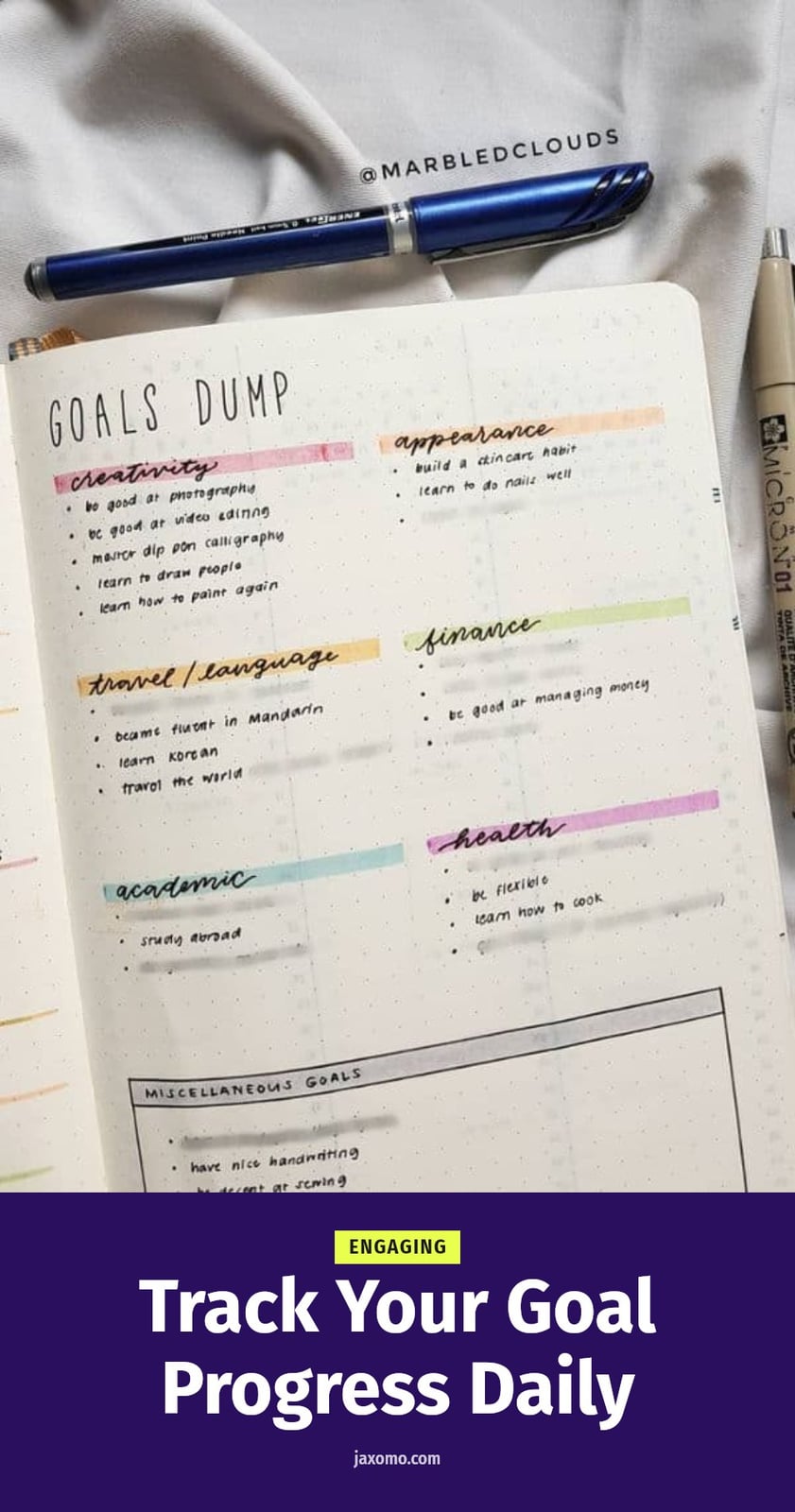
Keep your momentum going with these tracking and motivation tips.
- Review weekly: Spend 15 minutes each Sunday checking your progress.
- Adjust monthly: Tweak deadlines or steps if your situation changes.
- Celebrate small wins: Treat yourself after each milestone you hit.
- Use a vision board: Pin images of your goal where you see them daily.
- Track with an app: Log progress in a habit tracker or planner app.
- Share your goal: Tell a friend to create gentle accountability.
- Set a check-in buddy: Text someone every Monday with your update.
- Reward effort, not just results: Acknowledge showing up consistently.
- Keep a progress log: Write one sentence each day about what you did.
- Use a whiteboard: Draw a simple chart and erase tasks as you finish.
- Take a photo weekly: Document changes to see growth over time.
- Create a ritual: Light a candle or play music during your review time.
- Join a group: Find an online community working on similar goals.
- Set micro-rewards: Earn a small treat after every five tasks done.
- Focus on streaks: Try to keep a chain of daily actions unbroken.
- Write a win list: Jot down three things you accomplished each week.
- Use color coding: Mark completed steps in green, pending in yellow.
- Schedule quarterly reviews: Every three months, reassess your whole plan.
- Pair tracking with habit: Log progress right after your morning coffee.
- Forgive missed days: Reset tomorrow instead of quitting after a slip.
Overcoming Challenges and Common Pitfalls
Setbacks and common mistakes are part of the process, but you can handle them with these strategies.
- Reframe setbacks: Ask what the situation taught you instead of dwelling on failure.
- Limit your goals: Focus on no more than three major goals at a time.
- Replace vague objectives: Swap “save money” for “save $50 per week.”
- Ignore others’ timelines: Delete social media accounts that trigger comparison.
- Plan for obstacles: List three possible barriers and one solution for each.
- Adjust, don’t abandon: Change your deadline or method when circumstances shift.
- Build resilience: Repeat a short mantra like “I can adapt” during tough days.
- Focus on your own progress: Track only your numbers, not anyone else’s.
- Learn from mistakes: Write one sentence about what you would do differently.
- Break vague goals into specifics: Turn “eat healthier” into “add one vegetable to dinner.”
- Set process goals first: Commit to the action, not just the outcome.
- Use a weekly review: Check your goal list every Sunday to catch drift early.
- Remove willpower reliance: Place your gym bag by the door the night before.
- Redefine success: Measure effort and consistency, not just the final result.
- Forgive one slip: Resume your plan the next day without guilt.
- Keep a setback log: Note what happened and what you learned in two lines.
- Reduce your goal count: Drop any goal that no longer fits your priorities.
- Practice acceptance: Say “this is where I am now” to move forward.
- Seek one piece of feedback: Ask a mentor for one suggestion on your approach.
- Celebrate a small fix: Acknowledge each time you correct a course mid-month.
Tools and Habits for Long-Term Success

These tools and daily habits help you keep your goals alive for the long haul.
- Use a paper journal: Write your top three goals each morning.
- Try a digital planner: Sync your goal deadlines with your calendar app.
- Set a daily reminder: Schedule a 10-minute alert to review your action steps.
- Keep a vision board: Pin images and words that represent your long-term vision.
- Adopt a growth mindset: Replace “I can’t” with “I haven’t learned this yet.”
- Balance short and long goals: Pair one weekly task with one annual milestone.
- Integrate goal time: Use your morning coffee break to plan one action.
- Use a whiteboard: Write your monthly goal where you see it every day.
- Create a weekly ritual: Spend 15 minutes every Sunday mapping the week ahead.
- Track habits with an app: Log your daily process goals in a habit tracker.
- Review quarterly: Set aside two hours every three months for a major check-in.
- Pair goals with routines: Attach a new goal to an existing habit, like stretching after brushing teeth.
- Focus on learning: After a task, note one thing you learned for next time.
- Set a monthly theme: Pick one focus area, such as “consistency” or “patience.”
- Use a calendar for deadlines: Mark each milestone as a recurring event.
- Keep a success log: Write one win per day to reinforce progress.
- Schedule buffer time: Add 20 percent extra time to each deadline for surprises.
- Practice daily reflection: Ask “what one step moved me forward today?”
- Share your system: Tell a friend which tool you use to stay accountable.
- Rotate tools seasonally: Switch between a journal and an app to keep it fresh.
Frequently Asked Questions
What is the best way to track my goals?
The best method is the one you will actually use. A paper journal works well for morning check-ins, while a digital planner with calendar reminders suits people who prefer notifications. The key is to track consistently, whether that means checking off completed steps or noting what you learned from a missed task.
How often should I review my goals?
Review your goals weekly for 15 minutes to check progress and adjust the coming week’s tasks. Do a deeper monthly review to tweak deadlines or steps if your situation has changed. A major quarterly or annual review helps you realign your goals with your long-term vision.
Can I change my goals if my priorities shift?
Yes, absolutely. Life changes, and your goals should reflect your current priorities. The key is to adjust deliberately rather than abandoning everything. When you revise a goal, write down the new target and the reason for the change so you stay committed to the updated path.
What if I struggle to stay motivated?
Struggling with motivation is normal, especially during a plateau. My tip: shift your focus from the distant outcome to a small, daily process goal like exercising for 15 minutes. Also, share your goal with a trusted friend who can check in on you. If motivation stays low for weeks, it may be a sign the goal no longer aligns with your values.
Is it better to set many small goals or a few big ones?
It is better to set a few big goals and break each one into smaller milestones. Focusing on no more than three major goals at a time prevents overwhelm and lets you direct your energy where it counts. Small goals work best as steps within a larger framework, not as standalone targets.
Final Thoughts
My tip: pick one goal from your list right now and write it down using the SMART framework. Then set a 15-minute review for this Sunday. Expect that the first month will involve some trial and error as you figure out what works for you. The real magic happens when you treat goal setting as a living process, not a one-time event. You have everything you need to start today.