Peptides for Skin: Benefits and How to Use Them
Unlock youthful skin with peptides! Learn what peptides are, their anti-aging benefits, and how to effectively incorporate them into your skincare routine.

If you’re noticing fine lines and a loss of firmness, peptides might be the ingredient your routine is missing. These short chains of amino acids act as messengers, telling your skin to produce more collagen and elastin, the proteins that keep it plump and bouncy. In this article, I’ll break down what peptides are, how they work, the different types, and how to use them effectively for visible results.
Key Takeaways
- Peptides are short chains of amino acids that signal skin to produce collagen and elastin.
- Use peptide products consistently, once or twice daily, for best results.
- Apply peptide serums to clean, dry skin before heavier creams or oils.
- Expect initial results after 4 to 12 weeks of daily use.
- Pair peptides with vitamin C in the morning and a retinoid at night.
What Are Peptides and How Do They Benefit Your Skin?
Peptides are short chains of amino acids, the building blocks of proteins like collagen and elastin. They act as signaling molecules that tell your skin to produce more of these vital proteins. This improves firmness, elasticity, and reduces wrinkles. Different types of peptides target various concerns, from boosting collagen to relaxing expression lines.
How Peptides Work to Transform Your Complexion
Your skin has its own communication system. Cells send signals to each other to trigger actions like repairing damage or building new proteins. Peptides work by mimicking those natural signals. When you apply a peptide serum or moisturizer, the peptides land on your skin cells and essentially say, “It’s time to make more collagen and elastin.” Collagen gives your skin its firmness and structure, while elastin allows it to stretch and bounce back. As you age, your body naturally slows down production of both. That slowdown is what leads to fine lines, wrinkles, and sagging. By using peptides topically, you encourage your skin to keep building these essential proteins, helping maintain a firmer, smoother appearance.
Understanding Different Types of Peptides and Their Uses
Not all peptides do the same job. Each category targets a different step in the aging process.
| Type | Example | Primary Function |
|---|---|---|
| Signaling peptides | Palmitoyl pentapeptide-4 | Encourage collagen synthesis |
| Carrier peptides | Copper peptides | Deliver trace elements to skin |
| Enzyme-inhibitor peptides | Rice peptides | Slow collagen breakdown |
| Neurotransmitter-inhibitor peptides | Acetyl hexapeptide-8 | Relax facial muscles |
Signaling peptides boost collagen production, while carrier peptides deliver essential trace elements like copper. Enzyme-inhibitor peptides slow down collagen breakdown, and neurotransmitter-inhibitor peptides aim to relax facial muscles to soften expression lines.
Essential Peptide Products for Your Skincare Routine
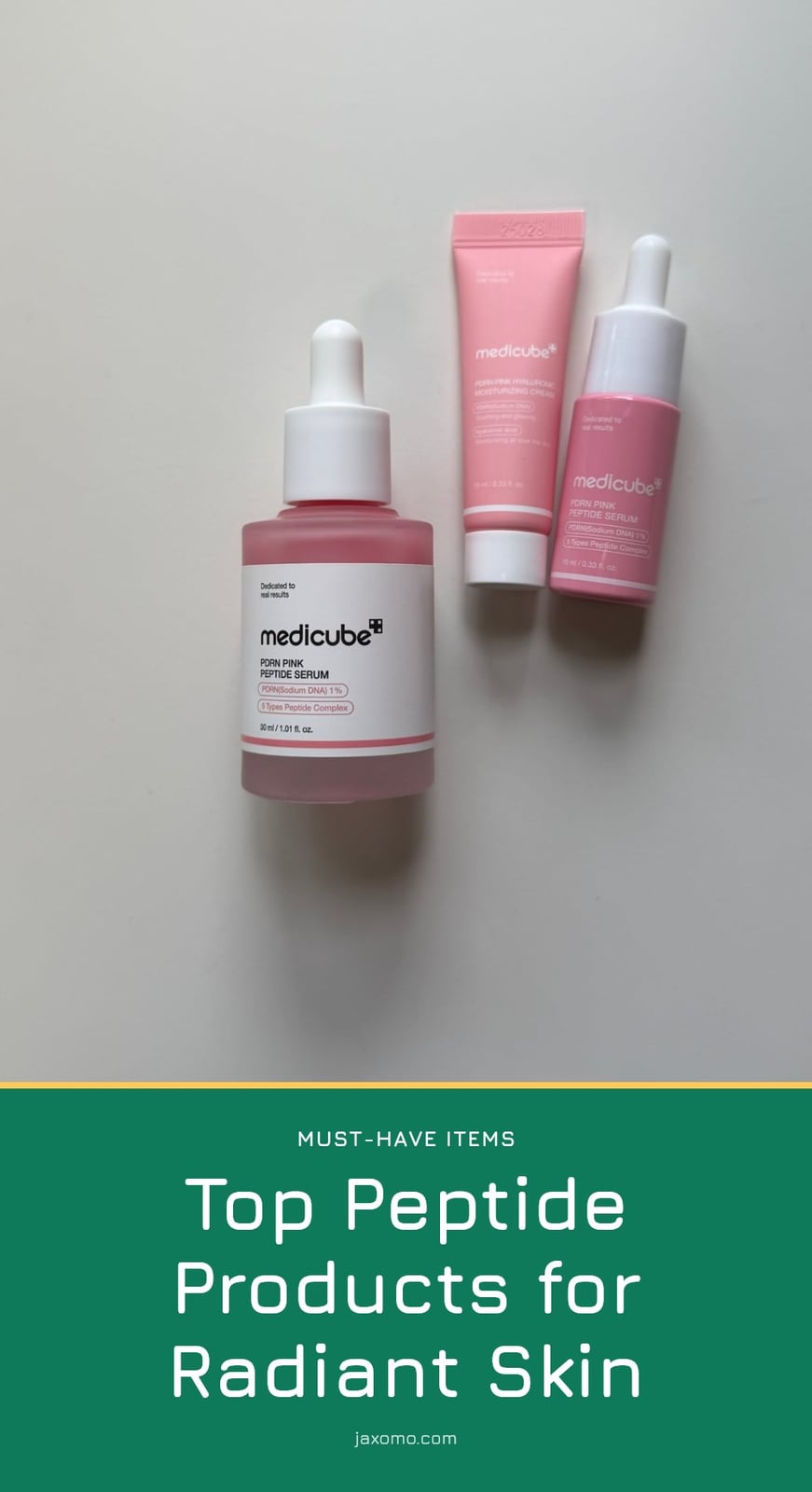
A peptide serum is your most concentrated option. It delivers a high dose of active ingredients directly to the skin, making it ideal for targeting fine lines and loss of firmness. Apply it after cleansing and before moisturizer.
A peptide moisturizer combines hydration with the benefits of peptides. It locks in moisture while continuously signaling your skin to produce collagen. This is a good all-in-one choice for daytime use.
Peptide eye creams are formulated for the thin, delicate skin around your eyes. They can help reduce the appearance of crow’s feet and puffiness. Use a small amount and pat gently with your ring finger.
How to Effectively Incorporate Peptides into Your Skincare

Start with a clean face. Use your usual cleanser and toner to remove makeup, oil, and debris, then pat your skin dry. Peptides absorb best when nothing blocks them.
- Apply your peptide serum: Dispense a few drops onto your fingertips and press gently into your face and neck. Let it absorb fully before moving on.
- Layer with hyaluronic acid: If you use a hyaluronic acid serum, apply it right after the peptide serum. The two work well together because hyaluronic acid pulls in moisture while peptides signal repair.
- Seal with a moisturizer: Follow with your regular moisturizer or a peptide-infused cream. This locks in the active ingredients and keeps your skin hydrated.
- Repeat morning and night: Consistency is key. Use peptides once or twice daily, every day, to give your skin a steady stream of signals.
Common Mistakes to Avoid When Using Peptides
Peptides are not a quick fix. Expecting visible changes in less than eight weeks will leave you disappointed. They work gradually by encouraging your skin to produce more collagen over time.
- Mistake: Relying only on peptides. A complete anti-aging routine includes sunscreen, a retinoid, and an antioxidant like vitamin C. Peptides are one piece of the puzzle, not the whole solution.
- Mistake: Treating all peptides the same. Signaling peptides boost collagen, carrier peptides deliver copper, and neurotransmitter-inhibitor peptides relax expression lines. Choose the type that matches your concern.
- Mistake: Skipping days. Inconsistent use breaks the communication cycle. Apply peptides daily for at least four to twelve weeks before judging results.
Pro Tips for Maximizing Your Peptide Skincare Results
Pair peptides with vitamin C in the morning and a retinoid at night. Vitamin C protects against free radicals, retinoids speed cell turnover, and peptides rebuild structure. Apply vitamin C on clean skin, then peptide serum, then moisturizer, and finish with SPF. At night, apply your retinoid first, then follow with your peptide product. Avoid waiting 20 minutes between them.
- Patch test first: Dab a small amount behind your ear or on your inner arm. Wait 24 hours to check for redness or irritation before using it on your face.
- Store properly: Keep peptide products in a cool, dark cabinet away from heat and direct sunlight. Heat can break down the amino acid chains and reduce effectiveness.
What to Expect: Timeline for Peptide Results
Most people notice a difference after four to twelve weeks of daily use. You may see smoother texture, fewer fine lines, and a firmer feel. Results continue to improve over several months as collagen rebuilds.
- Timeline: 4-12 weeks for initial changes, with ongoing improvement beyond that.
- Cost: Peptide products range from drugstore options under $20 to luxury serums over $100. Higher price does not always mean better results; look for a formula with a well-studied peptide like palmitoyl pentapeptide-4 or copper peptides.
When to Consult a Dermatologist About Peptides
Stop using the product and see a dermatologist if you notice redness, itching, or irritation that doesn’t go away. Seek professional advice if you have a specific skin condition like rosacea, eczema, or acne that could react to new ingredients. If you are pregnant or breastfeeding, always check with your doctor before adding any new active ingredient to your routine.
Frequently Asked Questions
Can I use peptides with Vitamin C?
Yes, you can use peptides with vitamin C. In fact, they complement each other well. Vitamin C protects against free radicals, while peptides help rebuild collagen. Apply vitamin C on clean skin first, then follow with your peptide serum, and finish with moisturizer. This layering helps both ingredients work effectively without interfering.
How long does it take for peptides to work?
Peptides are not a quick fix. Most people notice visible changes after four to twelve weeks of consistent daily use. You may see smoother texture, fewer fine lines, and a firmer feel. Results continue to improve over several months as collagen rebuilds, so stick with it for at least a few months.
Are peptides safe for sensitive skin?
Yes, peptides are generally considered safe for most skin types, including sensitive skin. However, it’s always a good idea to do a patch test when introducing a new product. If you have a specific skin condition like rosacea or eczema, consult a dermatologist before adding peptides to your routine.
What’s the difference between peptides and collagen?
Collagen is a large protein that provides structure to your skin. Peptides are smaller chains of amino acids that act as building blocks for proteins like collagen. When applied topically, peptides signal your skin to produce more collagen. So, peptides help your skin make its own collagen, rather than delivering collagen directly.
Final Thoughts
For most people, adding a peptide serum or moisturizer to your daily routine is a smart, low-risk move. My tip: pick one peptide product and use it consistently for at least eight weeks before judging the results. You can expect smoother texture and fewer fine lines after four to twelve weeks, with continued improvement over several months. Just remember, peptides work gradually, so patience and consistency are your best allies.