Create Your Own Dopamine Menu for Better Days
Discover how to create a personalized 'dopamine menu' to naturally boost your mood, motivation, and well-being. Learn to curate healthy, enjoyable activities.


Ever have those days when you just can’t seem to get going, and even the smallest task feels like a mountain? That’s where a dopamine menu comes in. It’s a simple, personalized list of healthy activities that give you a small, positive boost of motivation and mood. Think of it as your go-to toolkit for when you need a pick-me-up that doesn’t involve endless scrolling or junk food.
In this article, I’ll walk you through what a dopamine menu is, how it works, and how to build your own step by step, so you can start feeling more accomplished and energized in your daily life.
Key Takeaways
- Create a list of activities that genuinely boost your mood and motivation.
- Include a mix of quick boosts, longer activities, active, and relaxing options.
- Keep your menu visible and accessible, like a sticky note or phone note.
- Use your menu proactively when you feel a dip in motivation.
- Update your menu regularly as your preferences and energy levels change.
What Exactly Is a Dopamine Menu?
A dopamine menu is a personalized list of healthy activities that reliably give you a small, positive mood and motivation boost. Think of it as your go-to toolkit for those moments when energy dips or procrastination creeps in. It’s a proactive tool to combat low energy, procrastination, or simply enhance daily well-being by intentionally engaging in enjoyable tasks that work for you.
How Your Dopamine Menu Works to Boost Your Mood
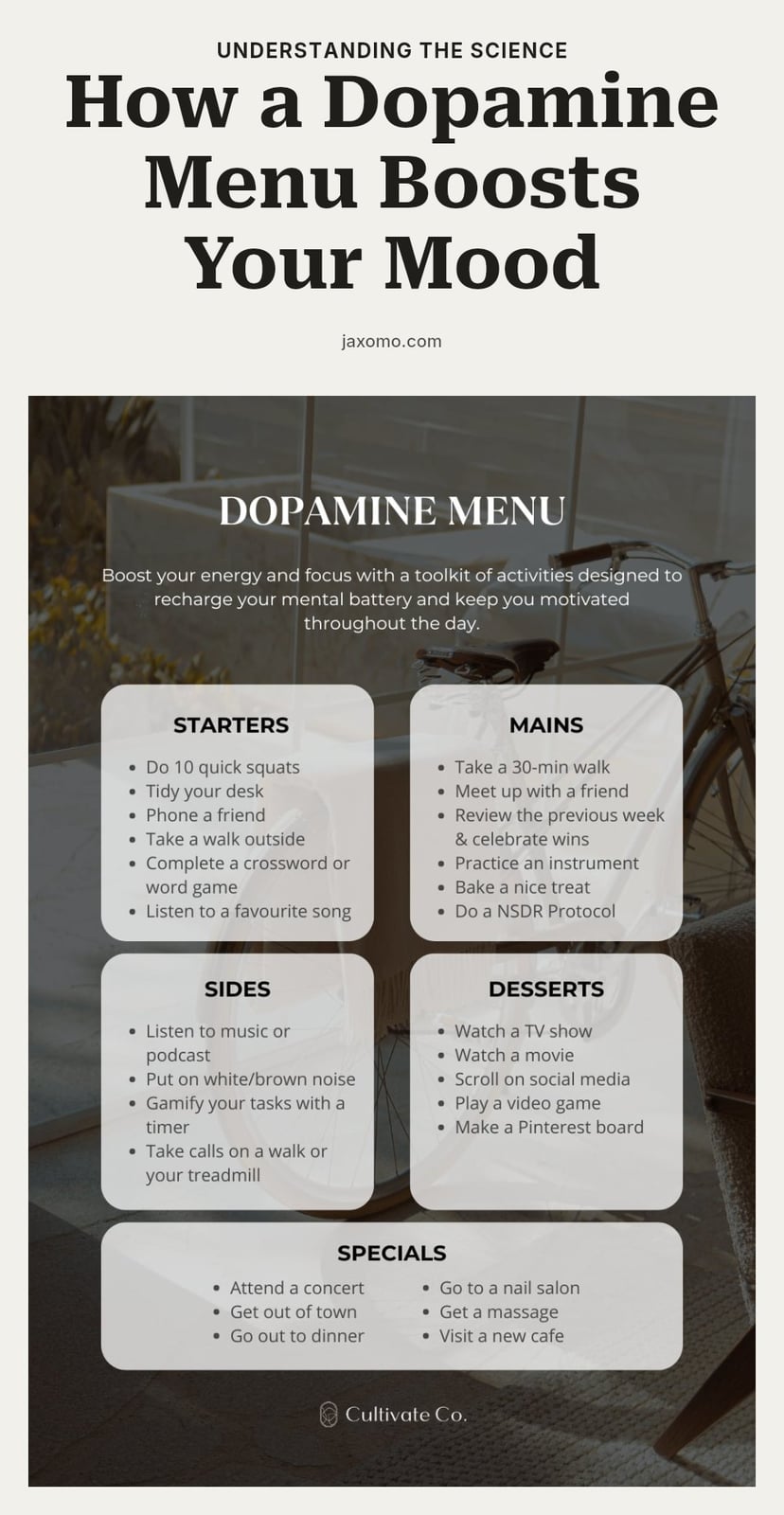
How Your Dopamine Menu Works to Boost Your Mood
Dopamine is a key neurotransmitter involved in motivation, reward, and pleasure. When you do something that gives you a sense of accomplishment, novelty, or social connection, your brain naturally releases dopamine, which makes you feel good and encourages you to repeat the behavior.
By intentionally choosing these activities, you create a positive feedback loop. Each time you complete a menu item, you reinforce the habit of taking positive action. Over time, this can help improve your mood regulation and build a more resilient mindset.
- Accomplishment: Completing a small task, like tidying a drawer, triggers a sense of achievement.
- Novelty: Trying something new, like a different route on a walk, sparks curiosity and interest.
- Social connection: Calling a friend or sending a thoughtful message boosts feelings of belonging.
What You Need to Create Your Dopamine Menu
You don’t need much to build your dopamine menu. Here’s the simple list:
- A way to list activities: Use a pen and paper, a notes app on your phone, or a digital document.
- A list of your interests: Think about what you already enjoy, like reading, cooking, or hiking.
- Simple tools for chosen activities: For example, headphones for music, a yoga mat for stretching, or a sketchbook for drawing.
That’s it. The beauty is that most menu items rely on things you already have or can easily access.
Step-by-Step: Building Your Personalized Dopamine Menu
Building your dopamine menu is a personal process. Here’s a step-by-step guide to get you started.
- Brainstorm activities: Write down anything that genuinely makes you feel good and accomplished. Think about moments when you feel a small sense of pride or joy. Don’t filter yet, just list.
- Categorize by effort and duration: Sort your list into quick (under 5 minutes), moderate (5-15 minutes), and longer (15+ minutes) options. Also note the energy required, like active versus relaxing.
- Write it down: Transfer your categorized list to a place you can easily access, such as a sticky note on your monitor or a dedicated note on your phone.
- Start small: Pick one or two menu items to incorporate into your daily routine. For example, do a 2-minute stretch after lunch or listen to a favorite song while making coffee.
- Review and adjust: After a week or two, check what works and what doesn’t. Swap out items that feel like chores and add new ones that spark interest.
Remember, breaking down larger tasks into smaller steps also gives you mini-dopamine boosts as you complete each part.
Ideas for Your Dopamine Menu Items
The best part of a dopamine menu is that you can fill it with anything that works for you. Here are ideas to get you started, grouped by type so you can grab the right one for your energy level.
Quick Boosts (under 5 minutes):
- Listen to one favorite song: Put on headphones and focus only on the music.
- Stretch or do 10 jumping jacks: A short burst of movement wakes up your body and mind.
- Write down three things you’re grateful for: This shifts your focus to the positive.
- Make a cup of tea or coffee: The ritual itself can be calming and rewarding.
- Tidy one small surface: Clearing a desk or counter gives a quick sense of order.
Active Choices (10-30 minutes):
- Take a brisk walk outside: Fresh air and movement often reset your mood.
- Do a short yoga or stretching video: Focus on how your body feels rather than perfection.
- Dance to three songs: No audience needed, just move however you like.
- Ride a bike or use a stationary machine: Repetitive motion can be meditative.
Creative Outlets (15-45 minutes):
- Doodle, paint, or color in a coloring book: The process matters more than the result.
- Write a short journal entry or a poem: Getting thoughts on paper can clear your head.
- Try a simple DIY project: Something small like making a card or arranging flowers.
Social Connections (any length):
- Call or text a friend for a quick chat: Even five minutes of real connection can lift you.
- Send a compliment or thank-you note: It boosts both you and the recipient.
- Play a board game or do a puzzle with someone: Shared focus creates a sense of togetherness.
Productive Wins (5-20 minutes):
- Complete one small task from your to-do list: Cross it off immediately for a visible win.
- Organize a single drawer or shelf: A contained project with a clear finish line.
- Reply to one email or message you’ve been avoiding: The relief afterward is real.
Your menu should reflect what genuinely makes you feel good. Try a few items from different categories and see which ones you reach for most. Personalization is what makes this tool work. No two menus need to look the same.
Pro Tips for Maximizing Your Dopamine Menu
Keep your dopamine menu somewhere you see it every day, like a sticky note on your monitor or a pinned note on your phone. The easier it is to spot, the more likely you are to use it when motivation dips.
Tip: Pair a menu item with an existing habit. Listen to a favorite podcast while folding laundry, or do five minutes of stretching right after your morning coffee. This anchoring makes the new action automatic.
Prioritize activities that give you a sense of completion, not just passive enjoyment. Finishing a small task or learning something new often delivers a more reliable boost than scrolling through videos. When you feel a slump coming, pick your menu before you reach for your phone.
Let your menu change. Swap out an item that no longer excites you for something fresh. Experimenting with new activities keeps the menu effective and prevents it from feeling stale.
Common Mistakes to Avoid When Creating Your Menu
One common mistake is filling your menu with activities that actually drain you. If scrolling social media leaves you feeling guilty or comparing yourself to others, it doesn’t belong. Instead, choose tasks that leave you with a clean sense of completion or calm.
Another pitfall is expecting every item to produce a dramatic mood shift. The boosts are often small and cumulative. A 5-minute stretch won’t transform your day, but doing it consistently across a week can shift your baseline mood.
Keeping your menu too long or overwhelming leads to inaction. Stick with 5-7 reliable options you can pick from without deliberation. Also avoid including only indulgent activities. Balance a walk or a creative project with growth-oriented items like finishing a small work task or reading a chapter.
Tip: Review your menu every few weeks. What motivated you last month might feel stale now. Swap in new activities and drop ones that no longer serve you.
When to Seek Professional Help for Low Mood
A dopamine menu is a helpful self-care tool, but it has limits. If you’ve been dealing with persistent low mood, lack of motivation, or other symptoms of depression for more than two weeks, it’s time to talk to a healthcare professional. This strategy is not a substitute for medical diagnosis or treatment for clinical mental health conditions.
Pay attention to how your menu feels in practice. If an activity starts to feel compulsive, or if using it leads to negative consequences like avoiding responsibilities or harming your well-being, seek support from a therapist or doctor. The goal is balance, not escape.
Timeline and Cost of Your Dopamine Menu
The payoff starts the moment you finish a menu activity. That small sense of accomplishment or joy is the immediate result you’re looking for. Over days and weeks of consistent use, the real benefit builds: improved mood regulation and new, positive habits that stick.
The cost is minimal to none. Your menu works by leveraging activities you already enjoy or have access to, like a walk outside, a favorite playlist, or a quick stretch. No special gear or paid subscriptions required.
Frequently Asked Questions
How quickly can a dopamine menu improve my mood?
The boost from a single menu item is immediate, like the small sense of accomplishment after finishing a quick task. Over days and weeks of consistent use, you may notice a more stable mood and better overall regulation. It’s not a magic fix, but a steady practice that builds over time.
Can a dopamine menu help with procrastination?
Yes, it can be a helpful tool. By breaking larger tasks into smaller, achievable steps and using menu items as mini-rewards, you can create positive momentum. The key is to use it proactively when you feel procrastination creeping in, not as an excuse to avoid responsibilities.
Is a dopamine menu the same as self-care?
It’s a type of self-care, but more specific. Self-care is a broad concept that includes any activity that supports your well-being. A dopamine menu is a structured list of activities chosen specifically to boost your mood and motivation, often including productive or growth-oriented tasks, not just relaxing ones.
What if I don’t feel motivated to do anything on my menu?
Start with the smallest, easiest item you have, like a two-minute stretch or listening to one song. The goal is to get a small win to build momentum. If you consistently feel no motivation, it might be a sign to talk to a professional, especially if it lasts more than two weeks.
How often should I update my dopamine menu?
There’s no set rule, but it’s a good idea to review it every few weeks or whenever you notice your preferences shifting. If an activity no longer brings you joy or feels like a chore, swap it out. Your menu should evolve with you to stay effective.
Final Thoughts
Building a dopamine menu is a personal and practical way to take charge of your daily well-being. Start small: pick just three activities you genuinely enjoy and keep them handy. The immediate reward is the small lift you feel after completing one, and over weeks of consistent use, you’ll likely notice a pattern of better mood regulation and new positive habits forming.
Remember, it’s a self-help tool, not a cure-all. If you’re dealing with persistent low mood or other symptoms of depression, reaching out to a healthcare professional is the right next step. Your menu can be a wonderful complement to that, but it’s not a substitute for expert care.
This article is for general informational purposes only and is not a substitute for professional medical or mental health advice. If you are experiencing persistent low mood, lack of motivation, or other symptoms of depression, please consult a qualified healthcare provider. A dopamine menu is a self-help tool and not a treatment for any medical condition.