Abs Workout at Home: 15 Minutes to a Stronger Core
Strengthen your core and define your abs with this effective 15-minute home workout. Learn proper form, avoid common mistakes, and get a weekly plan.

You don’t need a gym membership or fancy equipment to build a stronger core. A focused 15-minute home workout can target all your abdominal muscles, from the six-pack rectus abdominis to the deep transversus abdominis, when you prioritize proper form over speed. This article breaks down a simple, effective routine you can do anywhere, plus tips on how to make it work for you.
Key Takeaways
- Consistency 2-3 times per week builds strength faster than occasional intense sessions.
- Visible abs depend more on body fat percentage from diet than on ab exercises alone.
- Engage your deep core by drawing your navel toward your spine during every move.
- Stop immediately if you feel sharp pain in your back, neck, or abdomen.
- Combine this routine with a balanced diet and full-body exercise for best results.
Get Stronger Abs with a 15-Minute Home Workout
A 15-minute home workout can effectively target all major abdominal muscles, rectus abdominis, obliques, and transversus abdominis, when you focus on proper form. Consistency is what builds strength over time, not occasional intense sessions. My tip: combine these exercises with a balanced diet, because visible abs largely depend on your overall body fat percentage, not just how many crunches you do.
1. Warm-Up: Cat-Cow Stretch

Start on all fours with your hands directly under your shoulders and knees under your hips. Inhale as you arch your back, lifting your head and tailbone (Cow). Exhale as you round your spine, tucking your chin and tailbone (Cat). Move slowly through each position to warm up your core and spine.
- Sets and reps: 10-12 slow repetitions
- Form cue: Move from your spine, not your neck
- Make it easier or harder: Hold each position for a breath to deepen the stretch
2. Plank
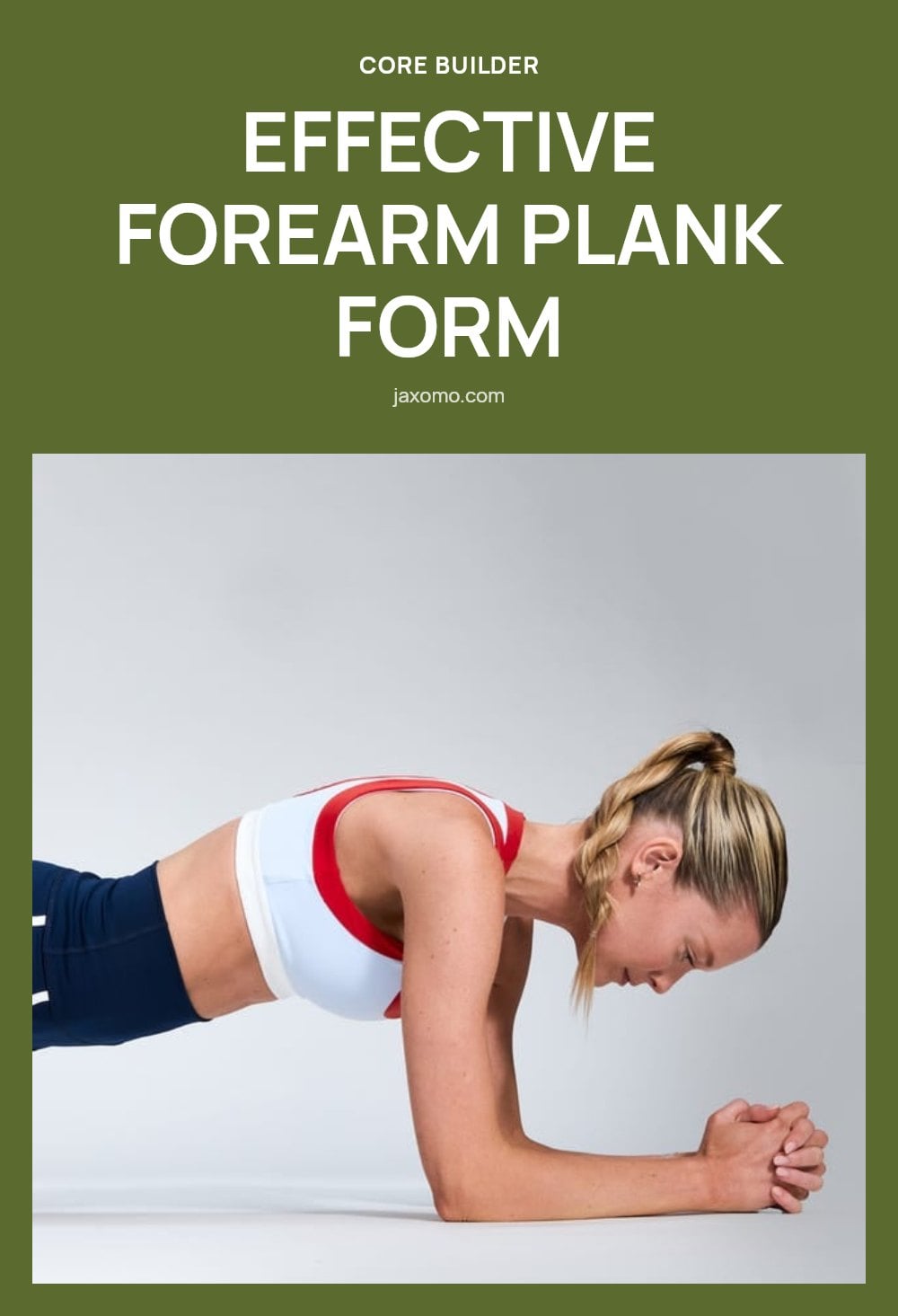
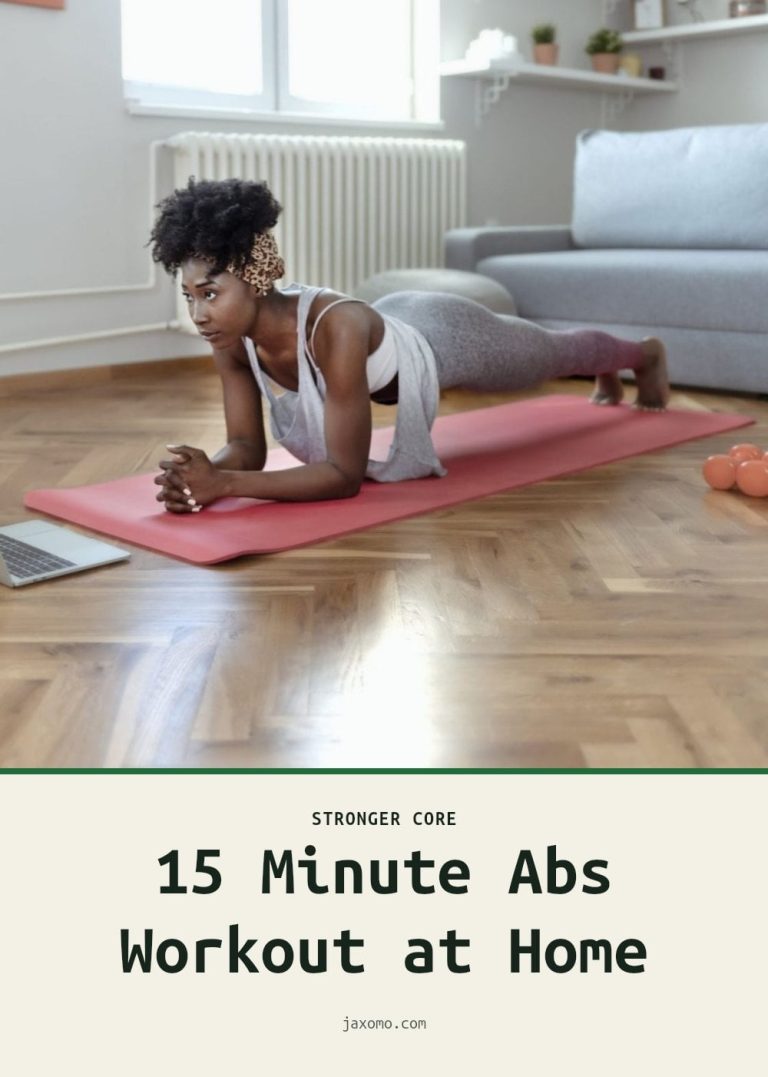
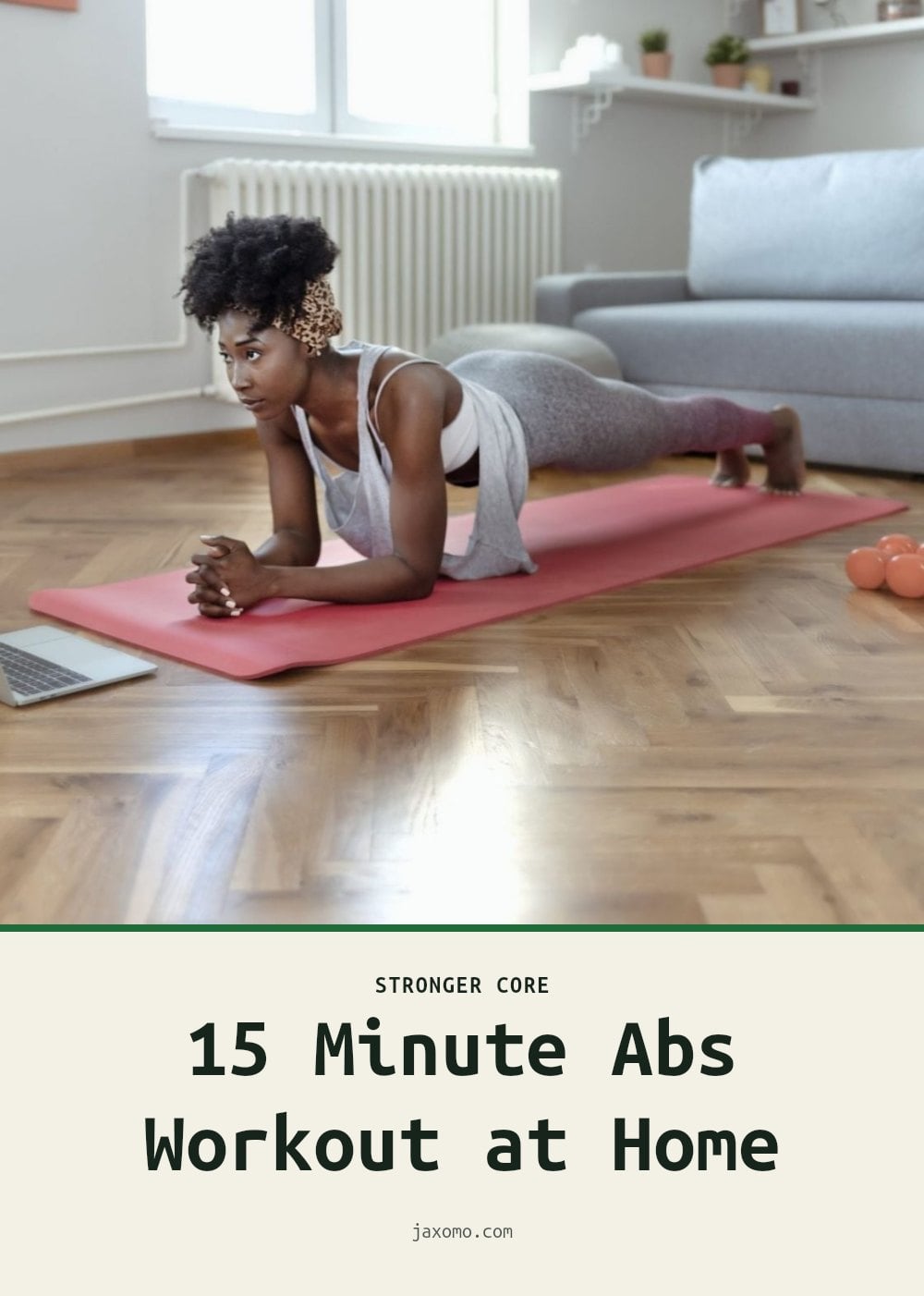
Set up with your elbows directly under your shoulders and your forearms flat on the mat. Keep your body in a straight line from your head to your heels, engaging your core by drawing your navel toward your spine. Gaze down at the floor to keep your neck neutral.
- Time: 30-60 seconds
- Form cue: Don’t let your hips sag or rise too high
- Make it easier or harder: Drop to your knees for support or lift one leg for a challenge
3. Bicycle Crunches

Lie on your back with your hands lightly behind your head and knees bent at 90 degrees. Bring your right elbow toward your left knee while extending your right leg straight out, then switch sides in a pedaling motion. Control the rotation rather than rushing through it.
- Sets and reps: 15-20 per side
- Form cue: Keep your lower back pressed into the mat
- Make it easier or harder: Slow the pace down or keep both feet off the floor throughout
4. Leg Raises
Lie on your back with your legs straight and your hands under your glutes for lower back support. Slowly lower both legs toward the floor, then raise them back up without letting your lower back arch off the mat.
- Sets and reps: 2 sets of 12-15 slow repetitions.
- Form cue: Press your lower back into the mat as you lower your legs.
- Make it easier or harder: Bend your knees to reduce difficulty, or hold a light weight between your ankles to increase it.
5. Russian Twists
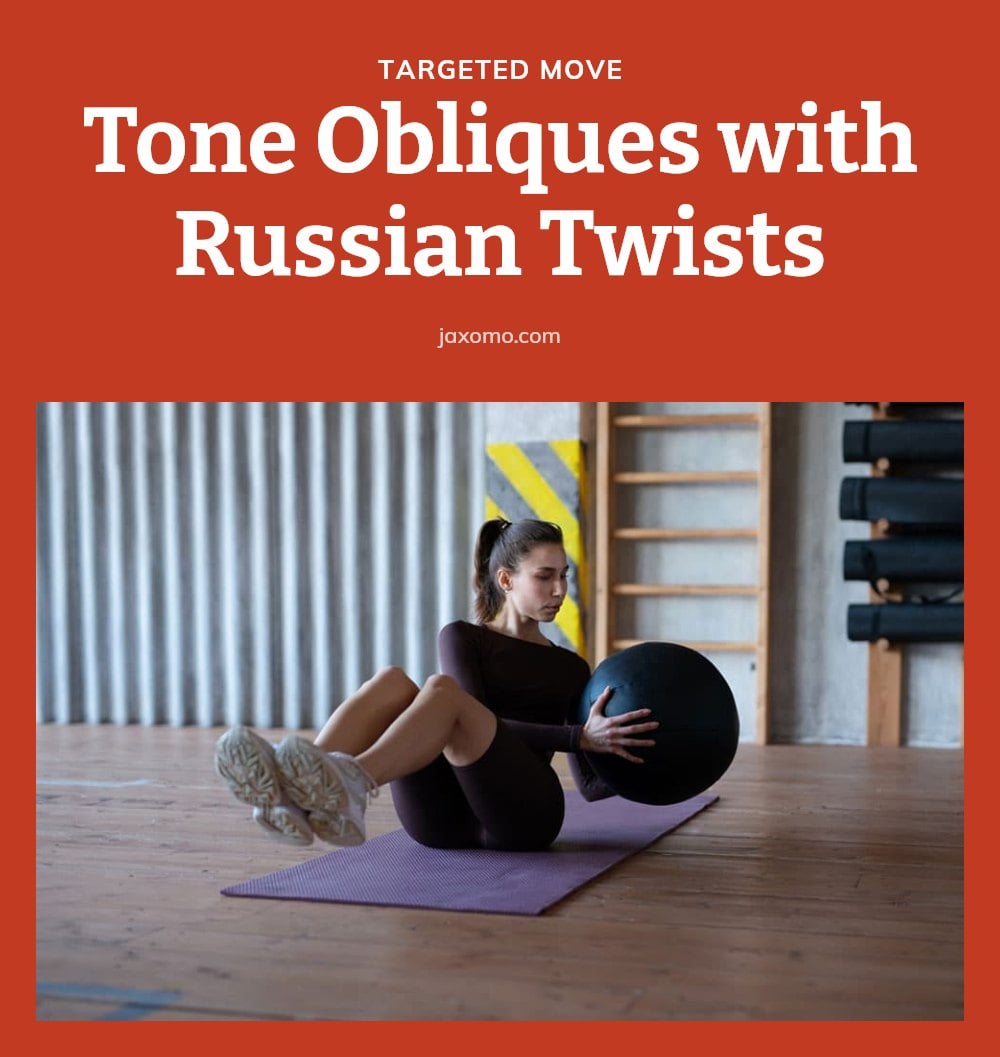
Sit on the floor with your knees bent and feet flat, then lean your torso back slightly. Twist your ribcage from side to side, touching the floor beside each hip, and let your arms follow the motion.
- Sets and reps: 2 sets of 15-20 twists per side.
- Form cue: Rotate from your torso, not just your arms, and keep your chest lifted.
- Make it easier or harder: Keep your feet planted for balance, or lift them off the floor to challenge your core more.
6. Bird-Dog

Start on all fours with your hands under your shoulders and knees under your hips. Extend your right arm forward and your left leg back at the same time, keeping your hips square to the floor. Hold for a second, then return to start and switch sides.
- Sets and reps: 2 sets of 10-12 repetitions per side.
- Form cue: Keep your core tight and avoid letting your hips rotate or sag.
- Make it easier or harder: Just lift the arm or leg at first, then add a longer hold or slow tempo for more challenge.
7. Side Plank
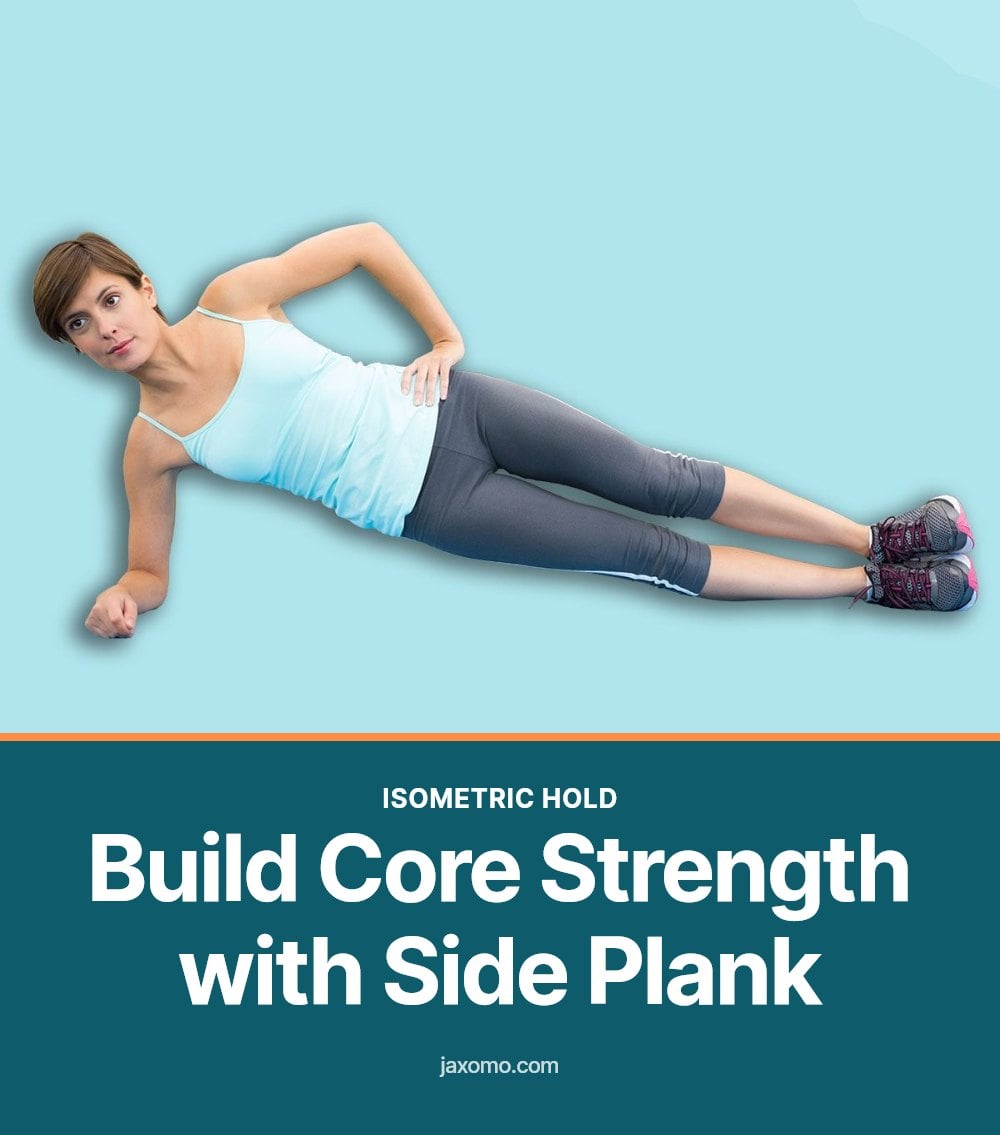
Lie on your side with your elbow directly under your shoulder and your legs stacked. Lift your hips so your body forms a straight line from head to feet, and hold. Switch sides and repeat.
- Time: 2 holds of 20-40 seconds per side.
- Form cue: Keep your hips lifted and your core braced; don’t let your hips drop or your shoulder hunch.
- Make it easier or harder: Drop your bottom knee to the floor for support, or raise your top leg for extra oblique work.
8. Cool-Down: Cobra Stretch
Lie on your stomach with your hands directly under your shoulders. Gently press your chest up off the floor while keeping your hips and legs pressed down. You should feel a stretch through the front of your torso, not compression in your lower back.
- Time: Hold for 20-30 seconds, breathing deeply.
- Form cue: Keep your elbows slightly bent and shoulders relaxed away from your ears.
- Make it easier: Lower your chest partway or place a folded towel under your hips.
Essential Tools for Your Abs Workout
You don’t need much for this workout, just a few basics that make it comfortable and easy to stick with.
- Yoga mat: Cushions your spine and joints on hard floors.
- Workout clothes: Choose stretchy, breathable fabrics that let you move freely.
- Water bottle: Keep it nearby to sip between exercises.
- Timer or stopwatch: Use your phone or a kitchen timer to track hold times and rest intervals.
Your Weekly Abs Workout Schedule
Three days a week is enough to build stronger abs, as long as you stay consistent. Muscles need recovery time to repair and grow, so space your sessions out with at least one rest day in between.
| Day | Workout | Focus |
|---|---|---|
| Monday | Full 15-minute routine | All core muscles |
| Tuesday | Rest or light walk | Recovery |
| Wednesday | Full 15-minute routine | All core muscles |
| Thursday | Rest or yoga | Flexibility |
| Friday | Full 15-minute routine | All core muscles |
| Saturday | Rest or active recovery | Recovery |
| Sunday | Rest | Full recovery |
On rest days, your muscles repair and strengthen, so skipping them actually slows your progress. If you feel sore, take an extra day off and listen to your body. Sharp pain is a signal to stop and check with a doctor.
Tip: Keep the same days each week so the routine becomes automatic. Consistency beats intensity when it comes to long-term results.
Frequently Asked Questions
How often should I do abs workouts?
Performing abdominal exercises 2-3 times per week, with at least one rest day in between sessions, is generally recommended for muscle development. Your muscles repair and strengthen during rest, so giving them recovery time is just as important as the workout itself.
Can I get visible abs without changing my diet?
Visible abdominal muscles are primarily the result of a low body fat percentage, which is achieved through a combination of diet and overall calorie expenditure. Ab exercises strengthen the muscles underneath, but spot reduction is not possible, so diet plays a significant role in revealing definition.
What is the most effective abs exercise?
Compound exercises like planks engage the core more effectively than isolation exercises like crunches alone. A well-rounded routine that includes moves targeting the rectus abdominis, obliques, and transversus abdominis, such as the ones in this workout, is the most effective approach overall.
How long does it take to see results from abs workouts?
Consistent effort 2-3 times per week can show initial strength improvements within a few weeks. Visible changes in your midsection depend on your body fat percentage and consistency, and may take several months. Patience and a balanced approach are key.
Final Thoughts
Stick with this 15-minute routine three days a week, and you can expect to feel stronger and more stable within a few weeks. Visible changes in your midsection take longer and depend heavily on your overall body fat, which diet and total calorie burn influence most. My tip: treat core work as part of a bigger picture, and you will see real, lasting progress.
This article is for general informational purposes only and does not constitute medical or professional advice. Consult a doctor before starting any new exercise program, especially if you have pre-existing conditions or injuries. Stop immediately if you experience pain and seek guidance from a qualified professional for persistent issues.